
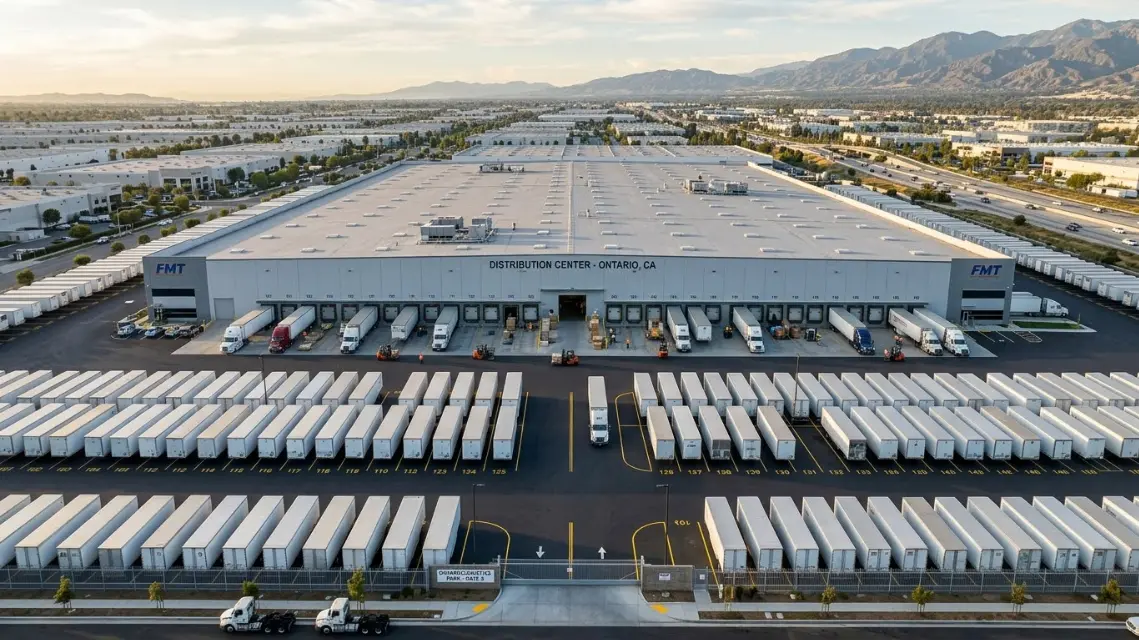
In logistics, every minute counts. From port bottlenecks to last-mile delays, companies are constantly looking for ways to cut inefficiencies and keep goods moving. But while warehouses, distribution centers, and transportation hubs get most of the attention, there is one critical space that quietly connects them all: the yard. Yard management is one of the most overlooked parts of supply chain operations, yet it plays a direct role in whether goods flow smoothly or pile up at the dock.
In high-volume freight environments, poor yard coordination leads to congestion, missed appointments, idle trucks, and safety risks that ripple through the entire operation. The solution is not always a bigger warehouse. Sometimes, it starts just outside the warehouse doors. At Logos Logistics Distribution, we see this challenge every day across California.
The Growing Problem of Warehouse Congestion
Walk into any busy distribution center during peak season and you will see the same problem everywhere. Trailers parked in loading lanes. Pallets stacked in aisles. Dock doors backed up for hours. Workers navigating around overflow inventory just to get to the product they actually need. This is warehouse congestion, and it is costing logistics operations thousands of dollars every single week.
Warehouse congestion happens when the volume of goods moving through a facility exceeds the space and resources available to handle them efficiently. It slows down picking, delays shipments, and creates safety risks for workers. As ecommerce volumes rise and supply chains become more unpredictable, congestion is no longer a seasonal problem. For many operations, it has become a daily reality.
What is Yard Storage in Logistics?
Yard storage refers to using an outdoor, secured area adjacent to or near a warehouse or distribution center to hold trailers, containers, equipment, or bulk goods. These spaces are typically paved or gravel-covered, fenced, and monitored. They serve as a buffer zone between incoming freight and the warehouse floor.
How Yard Storage Works in Supply Chain Operations
When a shipment arrives before a dock is available, or before warehouse space has opened up, it can be parked in the yard rather than sitting on a congested dock or blocking a gate. Loaded trailers are held in designated yard slots until they are ready to be processed. This helps keep traffic moving, reduces congestion, and allows managers to control when goods enter the warehouse. Rather than reacting to whatever shows up at the gate, yard storage lets teams plan ahead.
Difference Between Yard Storage and Warehouse Storage
Yard Storage Outdoor space used to hold trailers, containers, or bulk goods temporarily. It acts as a buffer for overflow or early arrivals and is less structured, with lower costs but limited protection.
Warehouse Storage Indoor, controlled space designed for organized inventory storage. It offers better security, protection, and inventory management, but is more expensive and space-limited.
What Causes Warehouse Congestion?
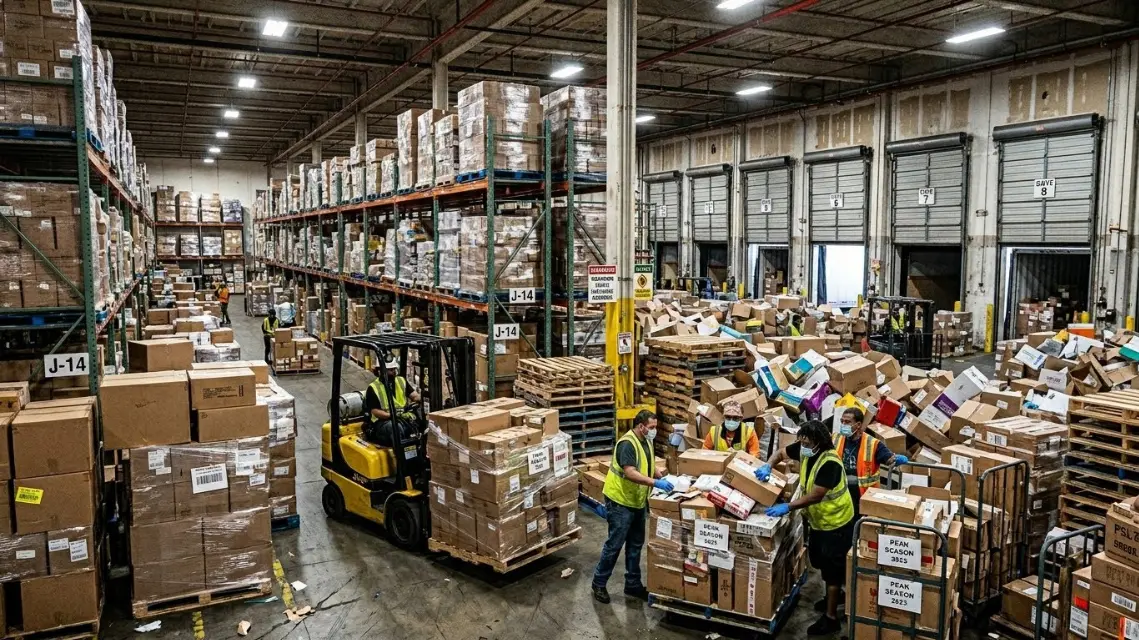
Understanding the root causes of congestion helps in choosing the right solution. Most congestion problems trace back to a few recurring issues.
Limited Warehouse Space
When a warehouse operates above 85 percent capacity, movement slows down dramatically. Workers have to relocate inventory to reach other inventory. Staging areas get used for overflow. Every task takes longer because the facility simply does not have enough room to function smoothly.
Inefficient Inventory Flow
Poor slotting, disorganized receiving processes, and slow put away procedures all cause goods to pile up in the wrong places. When inventory sits in reception for too long before being moved to storage locations, it creates bottlenecks that back up the entire operation.
Poor Dock Scheduling
Uncoordinated truck arrivals are one of the biggest contributors to warehouse congestion. When multiple carriers show up at the same time without staggered appointments, dock doors fill up, trailers queue outside the gate, and receiving teams get overwhelmed trying to process everything at once.
Lack of Real-Time Visibility
Without accurate, live data on what is in the yard, what is on the dock, and what is moving through the warehouse, managers cannot make smart decisions. Blind spots lead to missed appointments, idle trailers, and shipments sitting longer than they should.
Excess Inventory and Seasonal Peaks
Holiday seasons, product launches, and unexpected demand surges push inventory volumes beyond normal capacity. Even well-run warehouses can struggle when seasonal peaks push volumes 30 to 40 percent above baseline levels.
Can Yard Storage Help Reduce Warehouse Congestion?
Yes. Yard storage absorbs incoming freight before it enters the building, giving warehouse teams control over the pace of receiving and putaway. Trailers wait in the yard instead of blocking dock doors, floor space opens up, and the facility runs at a sustainable pace.
It works best when paired with smart scheduling and real-time tracking giving operations the flexibility to handle higher volumes without expanding indoor square footage.
Key Benefits of Yard Storage for Reducing Congestion
Yard storage helps ease warehouse pressure by creating a controlled space for managing incoming and outgoing shipments more efficiently.
Frees Up Valuable Warehouse Space
By keeping overflow inventory in trailers or outdoor containers, yard storage removes the pressure to cram goods into an already tight building. This keeps indoor capacity at a manageable level and preserves the staging and aisle space needed for efficient daily operations.
Improves Inventory Flow and Throughput
When the warehouse is not backed up with excess receiving, the team can process inbound shipments faster and more accurately. Goods move from dock to shelf more efficiently, and outbound orders ship without delay. Throughput improves across the board.
Reduces Dock Bottlenecks
Dock doors are among the most constrained resources in any warehouse. Yard storage eases that constraint by decoupling truck arrival from dock assignment. Trailers can park in the yard and wait for a dock to open rather than idling in the truck lane or leaving and returning later.
Minimizes Dwell Time and Delays
Extended trailer dwell time is expensive. Carriers charge detention fees when trucks wait beyond agreed windows. Yard storage gives operations teams the ability to manage dwell time proactively, moving trailers in and out of the yard according to actual dock availability rather than reactive scheduling.
Enhances Operational Flexibility
During slower periods, fewer yard slots are needed. During peak seasons or unexpected surges, more space can be brought online quickly without a lengthy construction project or lease negotiation. This flexibility makes yard storage a strong operational buffer for businesses with variable demand cycles.
Supports Overflow and Peak Demand Management
Retailers, ecommerce companies, and manufacturers all face demand spikes that strain warehouse capacity. Rather than turning away shipments or rushing unplanned expansions, operations can route overflow freight to the yard and stage it for controlled intake once capacity inside opens up.
The Role of Yard Management Systems (YMS)
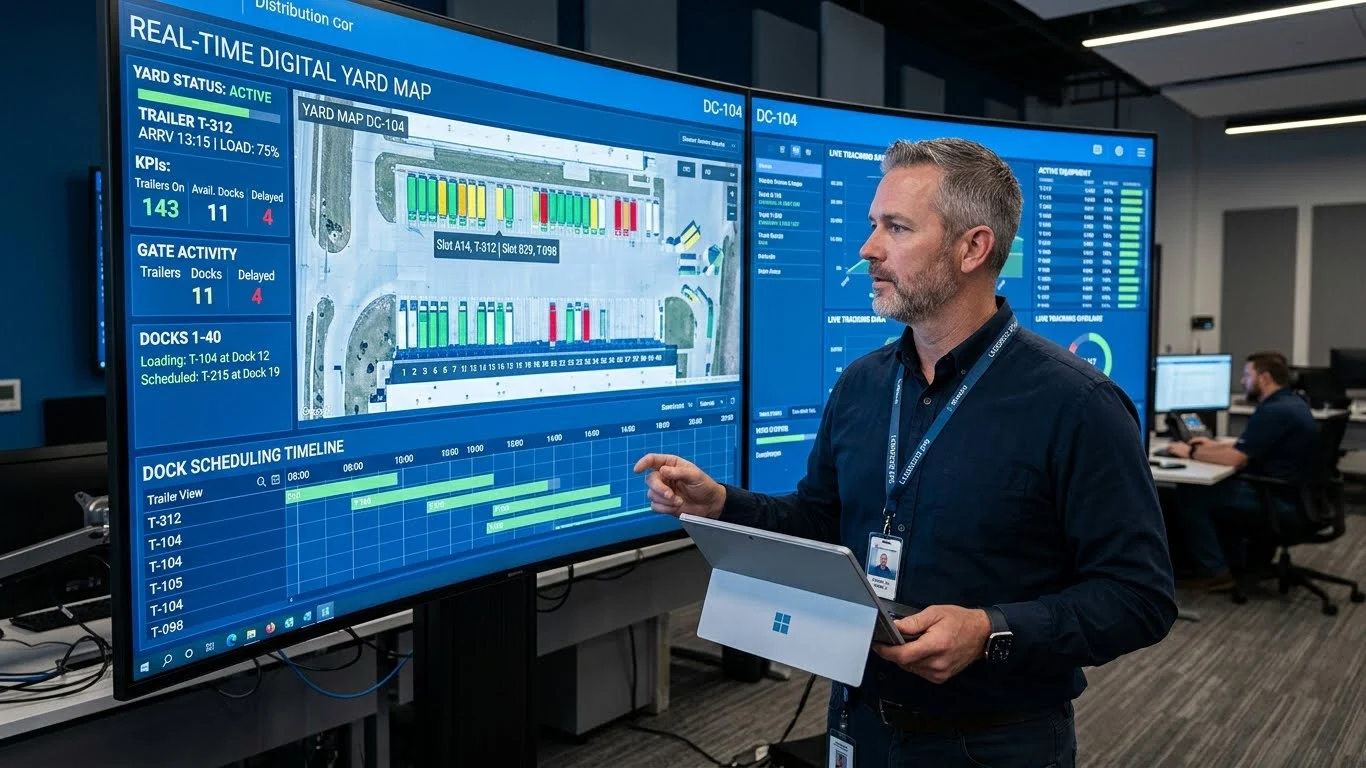
A YMS tracks trailer locations, manages slot assignments, and coordinates dock activity in real time replacing manual logs with a centralized platform. When connected to your WMS and TMS, it syncs inventory and shipment data automatically. Trailers get positioned when needed, queued for departure when done. No searching, no guesswork.
Without a YMS, yard storage is just a parking lot. With one, it becomes a managed buffer that keeps freight moving on schedule
What is a Yard Management System?
A Yard Management System is software designed to monitor and coordinate all activity in a facility’s yard and dock area. It tracks the location and status of trailers, containers, trucks. A YMS replaces manual radio communication and paper-based trailer tracking with a centralized digital platform.
How YMS Improves Yard Storage Efficiency
A YMS assigns incoming trailers to specific yard slots based on load type, dock schedule, and priority. It tracks how long each trailer has been in the yard so managers can act before detention charges accumulate. With a YMS in place, yard storage becomes a managed process rather than a disorganized holding area.
Integration with WMS and TMS
The most effective yard operations connect the YMS with the warehouse management system and transportation management system. When a shipment is marked ready for pickup in the TMS, the YMS can trigger yard trucks to position the trailer at the correct dock. When receiving is complete in the WMS, the YMS can log the trailer as empty and queue it for departure.
Real-Time Tracking and Visibility
One of the biggest yard challenges is not knowing where a specific trailer is or how long it has been sitting. A YMS solves this with real-time asset tracking, giving managers a live view of every trailer in the yard. This visibility eliminates the wasted time spent searching for loads and allows proactive decision-making instead of reactive scrambling.
Best Practices for Using Yard Storage Effectively
Yard storage works best when it’s organized, well-coordinated, and supported by clear processes that keep operations smooth and efficient.
Accurate Yard Mapping
Every parking slot in the yard should be labelled and tracked. A clear yard map, whether maintained manually or digitally through a YMS, ensures that trailers are easy to locate and that space is allocated without conflicts.
Smart Trailer and Container Allocation
Not all yard slots are equal. High-priority or time-sensitive loads should be assigned to slots closest to the dock doors they need. Heavier traffic should not block access to trailers that move frequently.
Efficient Gate and Dock Scheduling
Gate management and dock scheduling work together with yard storage. Pre-registering inbound carriers, assigning arrival windows, and matching trailer arrivals to dock availability prevents the yard from becoming a disorganized overflow lot.
Real-Time Monitoring and Automation
Automated gate systems, license plate readers, and camera-based tracking tools give yard managers live data without manual check-ins. This reduces gate processing time and keeps yard activity visible at all times.
Staff Training and Process Optimization
The physical infrastructure of yard storage is only as good as the people managing it. Training yard staff on proper check-in procedures, slot assignments, and handoff protocols ensures that the system runs cleanly even during high-volume periods.
Common Challenges of Yard Storage
Yard storage works well when managed properly, but a few common issues can undermine it.
- Visibility Without tracking, trailers go unaccounted for, detention fees pile up, and dock teams waste time hunting loads. Even a basic slot assignment system helps.
- Security Open yards need perimeter fencing, gate access control, and cameras to reduce theft risk.
- Weather Yard storage is best for durable goods. Climate-sensitive inventory stays inside.
- Team Coordination When dock, yard, and transport teams work in silos, things fall through the cracks. A shared scheduling platform and clear handoff responsibilities fix most of this.
Industries That Benefit Most from Yard Storage
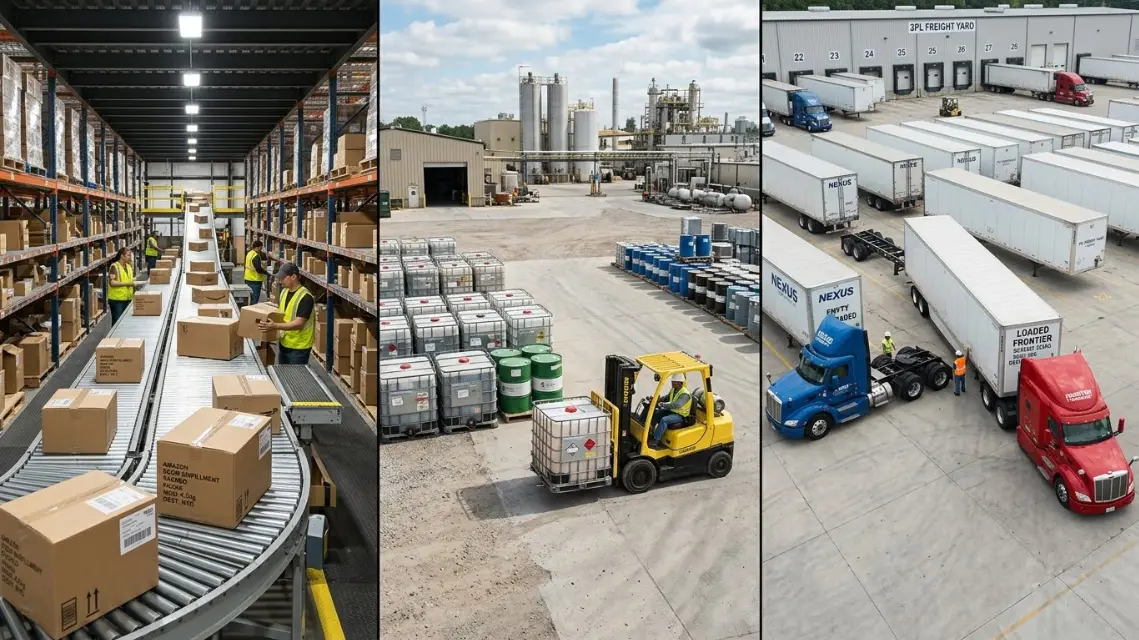
Retail and eCommerce: Seasonal peaks in retail create massive inventory surges. Yard storage lets distribution centers accept inbound products without halting operations, staging goods for controlled intake over several days rather than flooding the dock all at once.
Manufacturing: Manufacturers often hold inbound raw materials or outbound finished goods for just-in-time delivery windows. Yard storage keeps those shipments close to the production facility without taking up floor space inside the plant.
Logistics and Transportation: 3PL providers and freight carriers use yard storage as drop trailer programs, where carriers leave loaded trailers and pick up empty ones without waiting for live unloading. This dramatically reduces dwell time and improves carrier capacity utilization.
Cold Storage and FMCG: While temperature-sensitive goods need refrigerated docks and indoor storage, the management of reefer trailers and staging of non-perishable FMCG products in yard areas supports faster throughput on chilled docks where time is critical.
How Yard Storage Reduces Congestion
Yard storage keeps incoming freight out of the building until the warehouse is ready for it. Trailers stage in the yard instead of backing up at dock doors, giving receiving teams control over timing and pace. The result: fewer dock bottlenecks, more usable floor space, and smoother inventory flow throughout the day.
Struggling with Warehouse Congestion? Logos Logistics Distribution Can Help.
Logos Logistics Distribution, based in Ontario, CA, specializes in yard storage and warehouse management solutions for businesses across the Inland Empire, Los Angeles, and Southern California. Whether you are dealing with seasonal peaks, dock bottlenecks, or overflow freight, our team builds a solution around your operation.
Call us today or book a free consultation to get a clear plan for reducing warehouse congestion at your facility.
Conclusion
Warehouse congestion is costly, but it is solvable. Yard storage gives operations a flexible, affordable way to absorb freight, reduce dock bottlenecks, and keep the warehouse floor running smoothly.
Paired with a YMS and connected to your WMS and TMS, it is faster to implement and cheaper than warehouse expansion and scales easily with demand. For operations dealing with seasonal peaks, growth-related capacity pressure, or recurring dock congestion, yard storage is one of the most practical tools available.
Frequently Asked Questions
Can yard storage completely replace warehouse space?
No. It works alongside warehouse storage for overflow, staging, and durable goods. Anything climate-sensitive or high-security stays inside.
Is yard storage cost-effective?
Yes. Outdoor space costs far less per square foot than enclosed warehouse space, making it ideal for seasonal overflow without a major capital commitment.
How does yard storage improve efficiency?
It keeps freight in the yard until the warehouse is ready, preventing dock bottlenecks and giving receiving teams control over timing and pace.
What types of goods can be stored in a yard?
Containers, trailers, construction materials, and palletized durable goods. Climate-sensitive or fragile inventory belongs indoors.
Does yard storage require a YMS?
Not at the basic level, but a YMS makes it significantly more effective by tracking trailers, managing slots, and coordinating dock scheduling automatically.