
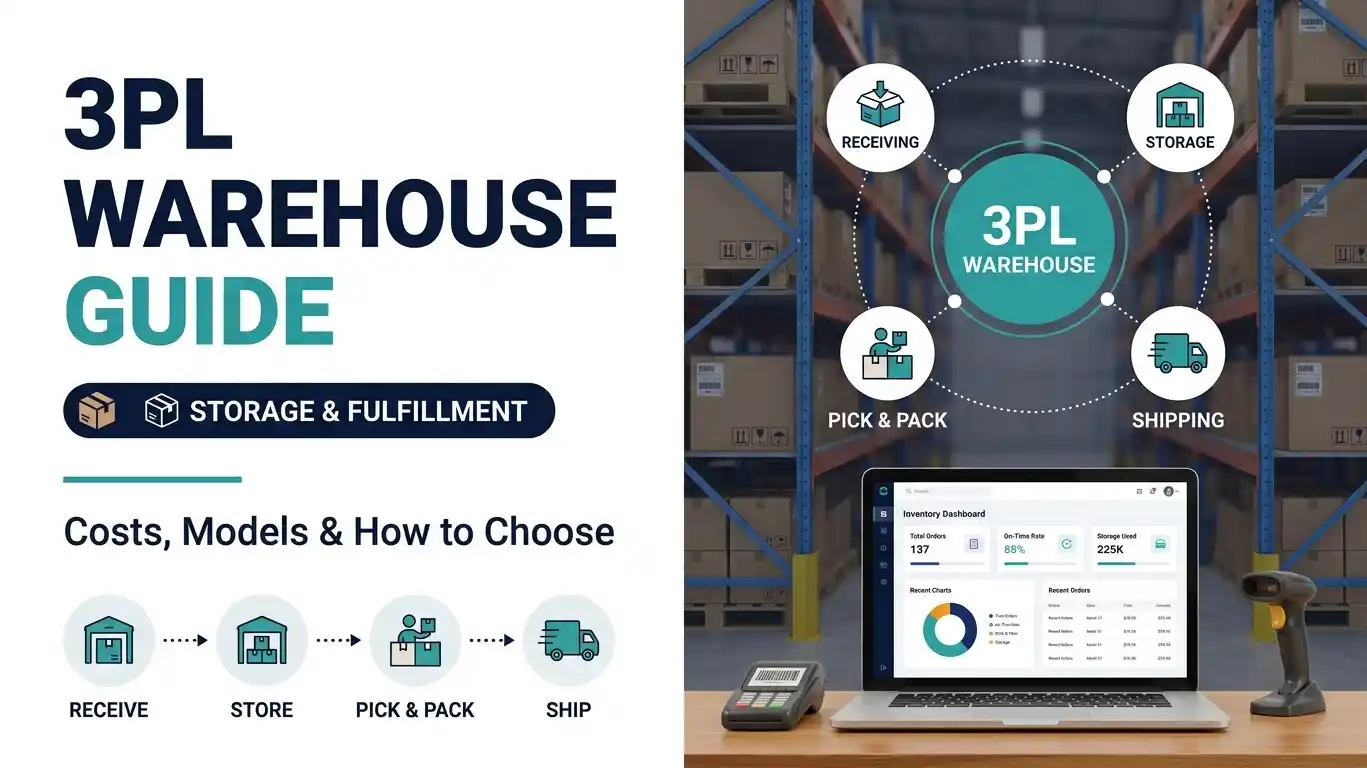
Managing storage and fulfillment in-house works well at low order volumes. But as a business grows, inventory consumes more space, orders speed up, and fulfillment errors become more common. Many businesses eventually reach a point where running their own warehouse costs more time and money than it saves.
A 3PL warehouse handles storage, order fulfillment, and shipping on your behalf. At Logos Logistics Distribution in Ontario, CA, we support e-commerce brands, retailers, and multi-channel sellers with these services. This guide explains how 3PL warehouses work, what to look for in a provider, and when it makes sense for your business.
Why 3PL Is Growing Fast
The numbers behind third-party logistics adoption tell a clear story. According to Armstrong and Associates, over 90 percent of Fortune 500 companies use 3PL providers for at least part of their logistics. For growing e-commerce brands, the turning point typically comes around 100 to 200 orders per month, when in-house fulfillment starts eating into the time and resources needed to run the actual business. At that volume, the cost of managing your own warehouse often exceeds the cost of outsourcing it.
What Is a 3PL Warehouse?
A 3PL warehouse is a facility operated by a third-party logistics provider that stores inventory and manages order fulfillment for businesses. Instead of handling warehousing yourself, you send your products to the 3PL, and they take care of storage, packing, and shipping.
When a customer places an order, the 3PL picks, packs, and ships it on your behalf. Many 3PL warehouses also offer specialized services such as e-commerce fulfillment, retail distribution, cold storage, or freight handling, depending on business needs.
Warehousing Models: Which One Are You Looking At?
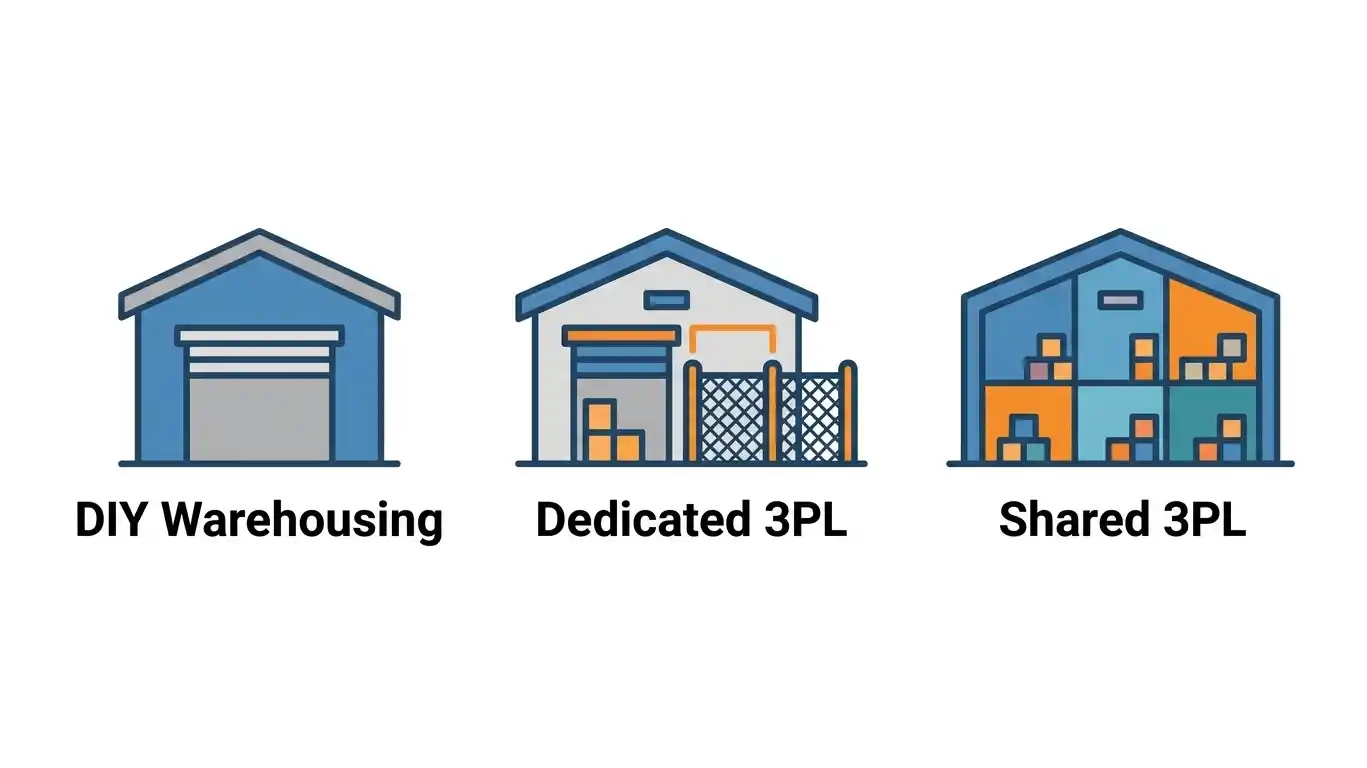
Before deciding whether a 3PL is right for you, it helps to understand the three main warehousing models most businesses consider.
DIY Warehousing You lease your own space, hire your own staff, and manage all operations yourself. This gives you full control but requires significant upfront investment and ongoing overhead, regardless of your order volume.
Dedicated or Contract 3PL A provider dedicates a portion of their facility exclusively to your business. This works well for large brands with consistent, high volumes that need customized setups and guaranteed space.
Shared 3PL Multiple businesses share the same warehouse space and staff. Costs are distributed across clients, making this model far more affordable and flexible for growing businesses. This is the most common starting point for e-commerce brands and mid-sized retailers.
 How 3PL Warehouses Work
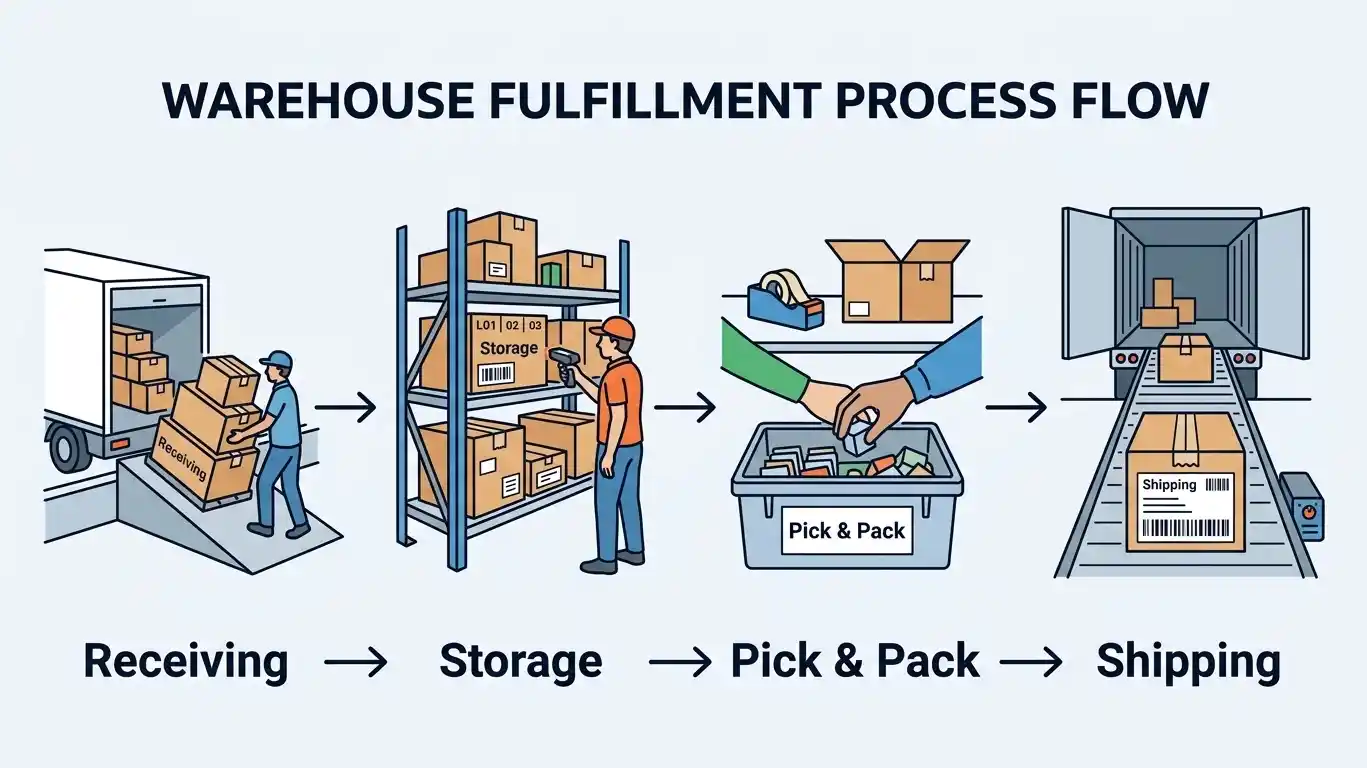
3PL warehouses manage the entire fulfillment process, from receiving and storing inventory to picking, packing, shipping orders, and handling returns on behalf of businesses.
Inventory Receiving and Storage When inventory arrives at a 3PL warehouse, it is received, inspected, and entered into the warehouse management system. Products are stored based on demand, with fast-moving items placed closer to packing areas. Real-time tracking ensures accurate inventory visibility throughout.
Order Picking, Packing, and Shipping When a customer places an order, it is sent directly to the 3PL system. A warehouse associate picks the item, packs it to your requirements, and ships it using the selected carrier and service level. Most 3PLs integrate with e-commerce platforms and carriers, so orders move from placement to shipment automatically.
Returns and Reverse Logistics Returns are a normal part of e-commerce. 3PL warehouses receive returned items, inspect them, and restock sellable products while handling damaged goods as per your policy. This keeps returns organized and ensures your inventory counts stay accurate.
Services Provided by 3PL Warehouses
A full-service 3PL warehouse typically covers the following:
Inventory Receiving
Inbound shipments are counted, inspected, and logged into the warehouse management system upon arrival.
Storage
Products are organized and stored in secure, climate-appropriate areas based on size, demand, and handling requirements.
Pick and Pack
When orders come in, warehouse staff pick the correct items and pack them according to your specifications, including branded packaging if needed.
Shipping
The 3PL selects the carrier, generates labels, and dispatches orders. Most providers work with multiple carriers to offer competitive rates.
Kitting and Assembly
Some providers bundle products together or assemble kits before shipment, useful for subscription boxes, gift sets, or promotional bundles.
Returns Processing
Returned items are received, inspected, sorted, and restocked or disposed of according to your return policy.
Benefits of Using a 3PL Warehouse
Outsourcing fulfillment changes more than just where your inventory sits. It directly impacts how fast you ship, how accurate your orders are, and how much room you have to actually grow the business.
Faster Order Fulfillment
Professional fulfillment operations are built for speed, with organized layouts, trained staff, and automation. Orders move from placement to shipment quickly, improving customer satisfaction and reducing complaints.
Improved Inventory Accuracy
Warehouse management systems track every movement of each item, keeping inventory counts accurate and up to date. Discrepancies are flagged early, giving you clear visibility into stock levels at all times.
Greater Operational Efficiency
When storage and fulfillment are outsourced, your team can focus on product development, marketing, and customer service instead of managing logistics and packing boxes.
Easier Business Scalability
Scaling an in-house warehouse requires longer leases, more staff, and extra equipment. With a 3PL, you simply increase your volume since the infrastructure is already in place.
Businesses That Benefit Most From 3PL Warehouses
E-Commerce Brands E-commerce businesses often manage high order volumes, many SKUs, and fast shipping demands. A 3PL warehouse helps remove fulfillment bottlenecks that slow down growing online brands.
Retail Businesses Retailers manage bulk inventory across multiple locations and need precise timing for deliveries. A 3PL with retail distribution experience ensures products reach the right place on time, whether for store restocking or direct-to-consumer orders.
Multi-Channel Sellers Selling across multiple channels like your website, Amazon, wholesale, and retail adds fulfillment complexity. A 3PL with multi-channel capabilities centralizes all orders into one streamlined fulfillment process.
Seasonal and High-Growth Businesses Businesses with seasonal demand need flexible storage and fulfillment that can scale up during peak periods and scale back during slower months, without requiring extra staff, space, or long-term overhead.
Common Fulfillment Challenges 3PL Warehouses Solve
Inventory Management Issues Running out of storage space slows operations and limits growth by restricting new inventory. A 3PL warehouse provides professional storage capacity without the need for a long-term facility lease.
Delayed Order Processing In-house fulfillment often struggles during demand spikes. A 3PL is built to handle high volumes and stays staffed and structured to ensure orders are processed on time, even during peak periods.
Increasing Order Volumes Growth is the goal, but increasing order volumes can strain operations. A 3PL scales with your business without requiring you to build additional infrastructure.
3PL Warehouse Pricing: What You Can Expect to Pay
3PL pricing varies widely depending on the provider, your order volume, and the services you need. Most providers charge separately for receiving, storage, pick and pack, shipping, and returns, so your total cost depends on how much inventory you hold and how many orders you ship each month.
As a general rule, businesses that ship more orders end up paying less per order because of volume efficiencies. It’s worth asking for a full fee breakdown before signing with any provider, since some 3PLs also charge onboarding or setup fees to get your account and integrations running.
3PL Warehouse vs. In-House Warehousing
Choosing between a 3PL warehouse and in-house warehousing depends on your operational needs, available resources, and long-term growth goals.
Operational Control In-house warehousing gives you full control over processes, staff, and decisions. A 3PL offers less direct control but brings expert management and established systems. For most growing businesses, the trade-off is worthwhile.
Cost Structure In-house warehousing comes with fixed costs, including rent, equipment, utilities, and staff salaries, regardless of how many orders you ship that month. A 3PL converts those fixed costs into variable costs that go up and down with your order volume. This means you are not paying for space and staff you are not using, which significantly reduces risk during slow periods.
Resource Requirements Running your own warehouse requires significant capital for space, equipment, and staff, along with ongoing management effort. A 3PL shifts this overhead away from your business so capital can be redirected toward growth.
Flexibility and Growth Potential In-house operations scale slowly, requiring more space and staff over time. A 3PL can handle increased volume immediately with existing infrastructure, making it a more flexible option for growing businesses.
Key Features to Look for in a 3PL Warehouse
Warehouse Management Systems (WMS) A strong WMS manages inventory tracking, picking, packing, shipping labels, and reporting. Without it, both accuracy and efficiency decline quickly.
Real-Time Inventory Visibility Real-time visibility into inventory levels, order status, and fulfillment activity helps you make faster decisions and supports better purchasing and inventory planning.
Platform and Carrier Integrations Your 3PL should integrate directly with your sales platforms and shipping carriers. This removes manual data entry, speeds up order processing, and reduces errors between systems.
Security and Inventory Protection A 3PL should have strong security measures including access controls, surveillance, and clear handling procedures to prevent loss, theft, and inventory discrepancies.
Signs It Is Time to Move to a 3PL Warehouse
- Storage capacity has reached its limit, with no room to expand without major disruption
- Fulfillment errors are increasing, including wrong items, missed shipments, and preventable delays
- Order volumes are growing faster than current operations can comfortably support
- Your team is spending more time packing and managing inventory than growing the business
How to Choose the Right 3PL Warehouse
Choosing the right 3PL warehouse means evaluating performance, pricing, and contract terms, not just facility size. Start by asking for their order accuracy rate and on-time shipping rate. Industry benchmarks sit around 99% accuracy and 95-99% on-time shipping, so a provider hesitant to share their numbers is a red flag.
Get a full fee breakdown before signing, including receiving, storage, pick and pack, shipping, and onboarding costs. Hidden fees usually surface only after your inventory is already in their warehouse.
Check the contract terms closely: minimum commitment length, exit notice period, and what happens to your inventory if you leave. A confident provider won’t need to lock you into a long-term deal to earn your business.
Finally, ask for a current client reference. References reveal how a 3PL performs under pressure, especially during peak season, in a way a sales call never will.
Who’s Responsible If Something Goes Wrong?
Before signing with any 3PL, it’s worth understanding where their responsibility ends and yours begins. Most reputable providers carry insurance covering their buildings, equipment, and staff, and they’re responsible for fixing their own mistakes, like shipping the wrong item or damaging product through improper handling.
That said, the 3PL typically isn’t liable for “acts of God” such as natural disasters, and most contracts cap their financial responsibility for product damage at a set amount. The bulk of inventory risk usually falls on you as the owner, which is why many businesses add a rider to their existing insurance policy listing the 3PL facility as a covered location.
The key is getting this spelled out clearly in writing before you sign. Ask what happens if a shipment is damaged in transit versus damaged in storage, and what the claims process actually looks like. A provider who can walk you through this without hesitation has likely handled it before.
Conclusion
If your storage is maxed out, orders are going out late, or your team is stuck managing logistics instead of growing the business, the current setup is already costing you more than you realize.
A 3PL warehouse removes that ceiling. When storage, fulfillment, and shipping are handled for you, your time and resources go back to what actually moves the business forward. The right partner grows with you, handles the volume spikes, and keeps orders moving without the overhead of running it yourself.
 Find a 3PL Warehouse Built for Fast Reliable Fulfillment
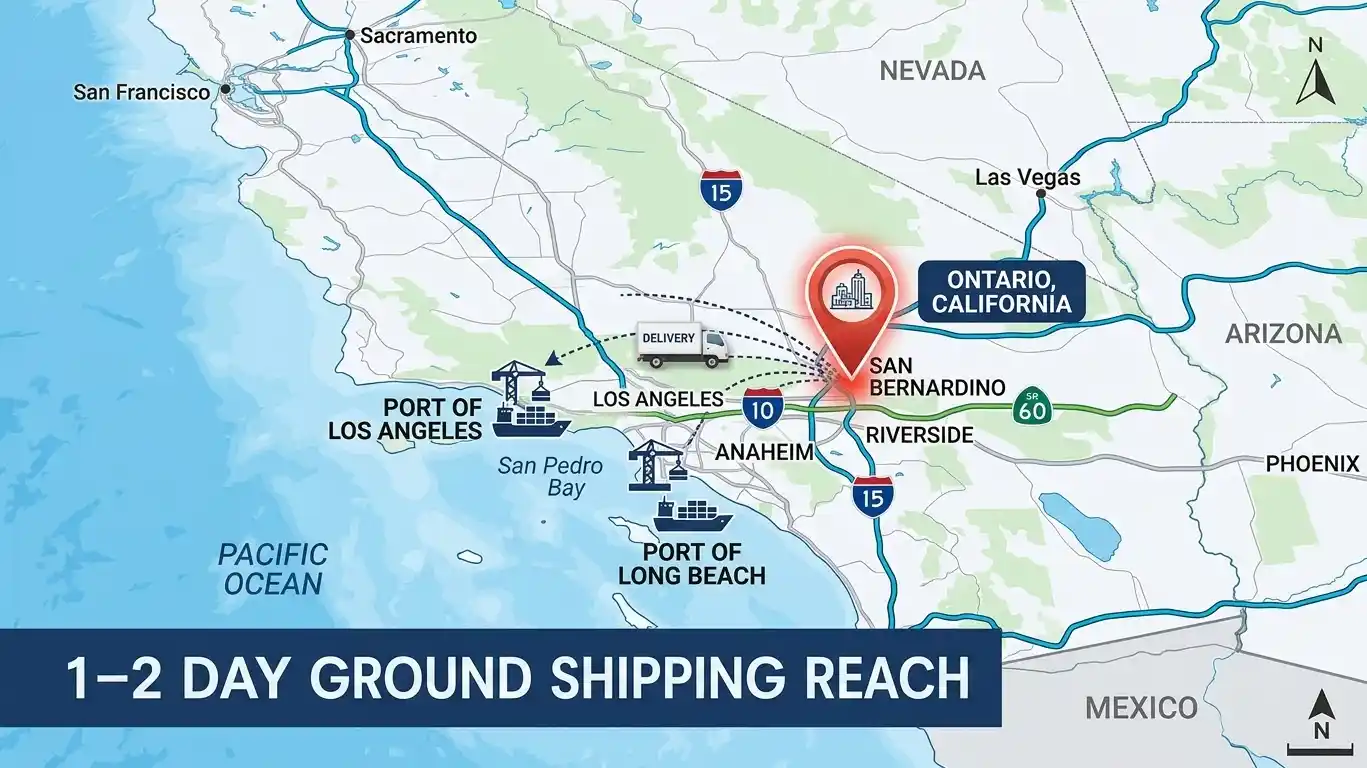
The Inland Empire offers direct access to the Port of Los Angeles and the Port of Long Beach, two of the largest ports in the country, plus connections to I-10, I-15, and SR-60. That means ground shipping can reach a large share of the US population within one to two days.
At Logos Logistics Distribution in Ontario, CA, our 3PL warehouse supports e-commerce brands, retailers, and multi-channel sellers who need fast, scalable fulfillment. Contact us today to see how our 3PL warehouse can scale with your business.
Frequently Asked Questions
What services do 3PL warehouses provide?
3PL warehouses handle the full fulfillment cycle including receiving, storage, pick and pack, shipping, and returns. Many also offer value-added services like kitting, custom labeling, and branded packaging depending on the provider and your product type.
How do 3PL warehouses manage inventory?
Inventory is tracked through a warehouse management system that logs every unit from the moment it arrives to the moment it ships. Most providers give clients access to a real-time dashboard so you can check stock levels, order status, and movement history without contacting the warehouse directly.
Can a 3PL warehouse handle returns?
Yes, returns processing is a standard 3PL service. The warehouse receives the returned item, inspects its condition, restocks sellable units, and handles unsellable goods based on your instructions. This keeps your inventory count accurate and your return process consistent.
When should a business use a 3PL warehouse?
The clearest sign is when fulfillment starts slowing down growth. Common triggers include running out of storage space, rising error rates, order volumes above 100 to 200 per month, and an internal team stretched too thin to focus on anything beyond packing and shipping.
Are 3PL warehouses suitable for small businesses?
Many 3PL providers work with small and growing businesses, not just large brands. The key is finding a provider whose minimum order requirements and pricing model fit your current volume, while also offering the capacity to scale as your business grows.