
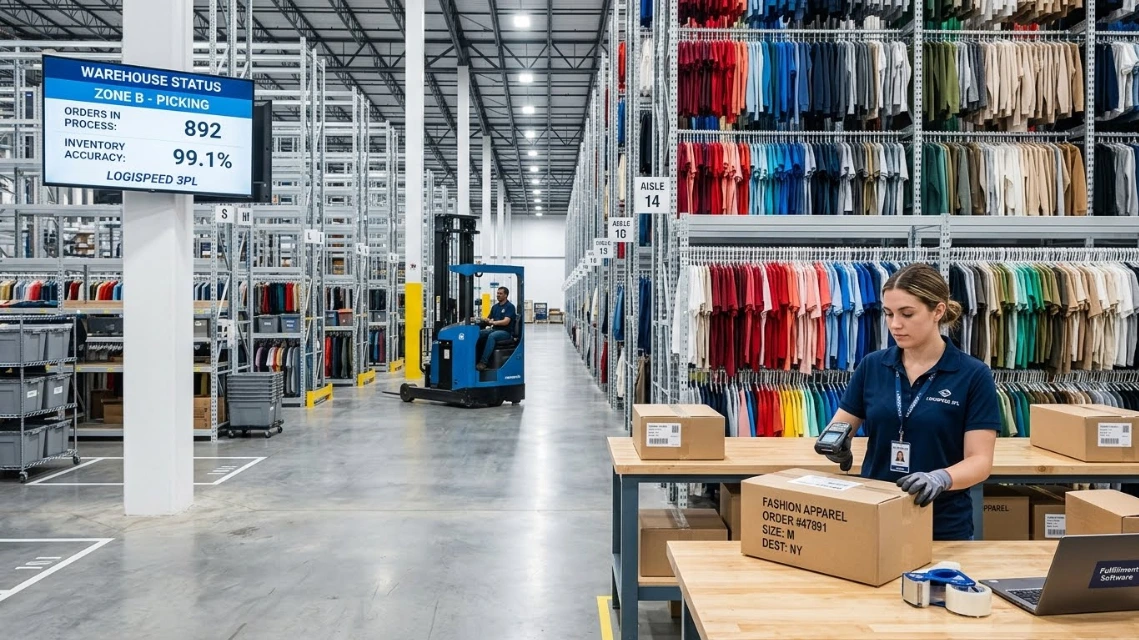
Most clothing brands hit the same wall. Orders grow and the garage fills up. The founder who started it all is now spending every waking hour fighting logistics instead of building the business. The brands that scale past that wall are not always the ones with the best products. They are the ones with the smartest logistics. This guide explains exactly how third-party logistics helps apparel brands scale faster, reduce costs, and turn fulfillment into a competitive advantage.
If your brand is ready to scale and you want a logistics partner that understands the apparel industry, contact Logos Logistics Distribution in Ontario, CA today and let us help you build a fulfillment operation that grows with you.
What Is Third-Party Logistics (3PL) in Apparel Fulfillment?
A 3PL is a company that handles your warehousing, order fulfillment, and shipping so your team can focus on growing the brand. For apparel brands, this includes managing size and color variations, seasonal inventory, returns, and branded packaging.
The process is simple. Your inventory goes to the 3PL warehouse. When a customer orders, the 3PL picks, packs, and ships it directly to them. You get real-time visibility into stock and orders without touching a single box.
What a 3PL Does for Clothing Brands
A third-party logistics provider (3PL) is a company that handles your storage, packing, and shipping for you. Instead of running your own warehouse and managing deliveries, you let a specialist take care of it. This gives you more time to focus on growing your brand.
For apparel brands, a 3PL does more than just store and ship products. It handles the extra complexity of fashion, like managing different sizes, colors, seasonal stock, and customer returns. It also helps make sure orders are packed and delivered in a way that meets customer expectations.
How Apparel Fulfillment Works with a 3PL
The process is simple. Your products are sent to the 3PL warehouse, where they are stored and organized. When a customer places an order, the 3PL picks, packs, and ships it directly to them. You can track inventory, orders, and returns in real time without handling anything yourself.
Why Apparel Brands Need 3PL to Scale Faster
A 3PL gives apparel brands the infrastructure and expertise to handle that complexity without building it themselves. It is time to consider one if orders are growing faster than your team can handle, shipping delays are becoming common, warehouse space is running out, or you are spending more time on logistics than on the brand.
The Logistics Challenge in Fashion eCommerce
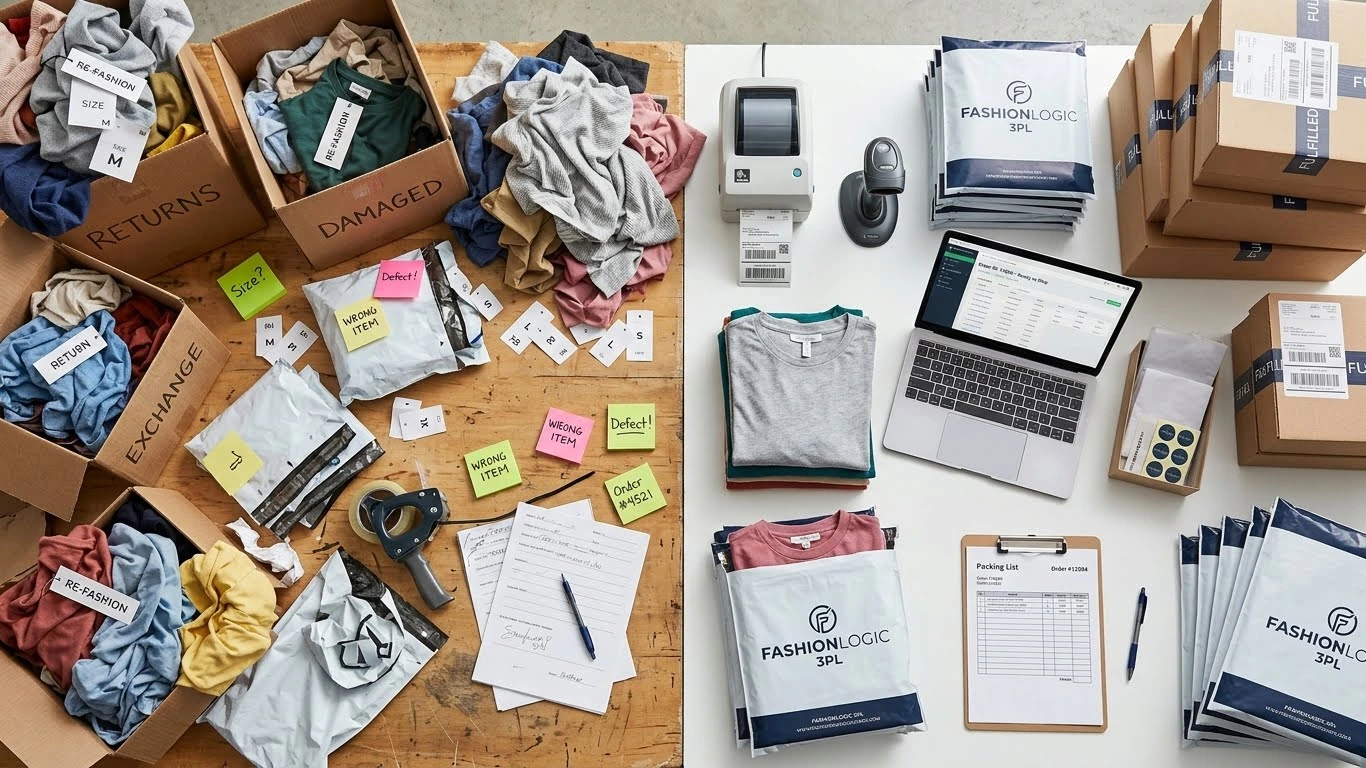
Fashion eCommerce comes with three major logistics challenges. Return rates can reach 20 to 50 percent, far higher than most other categories. Seasonal demand can multiply order volumes overnight, and without the right infrastructure, operations break down fast. SKU complexity adds even more difficulty, with a single style often carrying 30 to 40 size and color variants that all need to be managed accurately.
Signs It Is Time to Hire a 3PL
It is time to make the move if orders are growing faster than your team can handle, shipping delays are becoming a regular complaint, warehouse space is running out, returns have no clear system, or you are spending more time on logistics than on building the brand.
Key Ways 3PL Helps Apparel Brands Scale
These are the ways 3PL Helps Apparel Brands Scale:
Streamline Operations and Reduce Complexity
Outsourcing warehousing and fulfillment removes the operational weight from your business. Your team stops spending time on picking, packing, and managing warehouse staff and puts that energy back into product development, marketing, and brand growth.
Improve Order Fulfillment Speed and Accuracy
3PLs use barcode scanning and automated systems to verify every item before it ships. This reduces mis-shipments, speeds up processing, and improves the customer experience directly.
Optimize Inventory Management Across Channels
Real-time inventory tracking keeps stock levels accurate across every sales channel whether you sell on Shopify, Amazon, or your own website. This prevents overselling, reduces stockouts, and supports smarter purchasing decisions.
Reduce Shipping Costs with Smart Logistics
3PLs ship large volumes across many clients giving them bulk carrier rates that individual brands cannot access. That saving gets passed on to you, lowering your per-shipment cost significantly.
Enable Global Expansion
A 3PL with strategically located warehouses removes the complexity of international shipping, customs, and local delivery networks, making new market entry faster and more affordable.
Handle Returns Efficiently
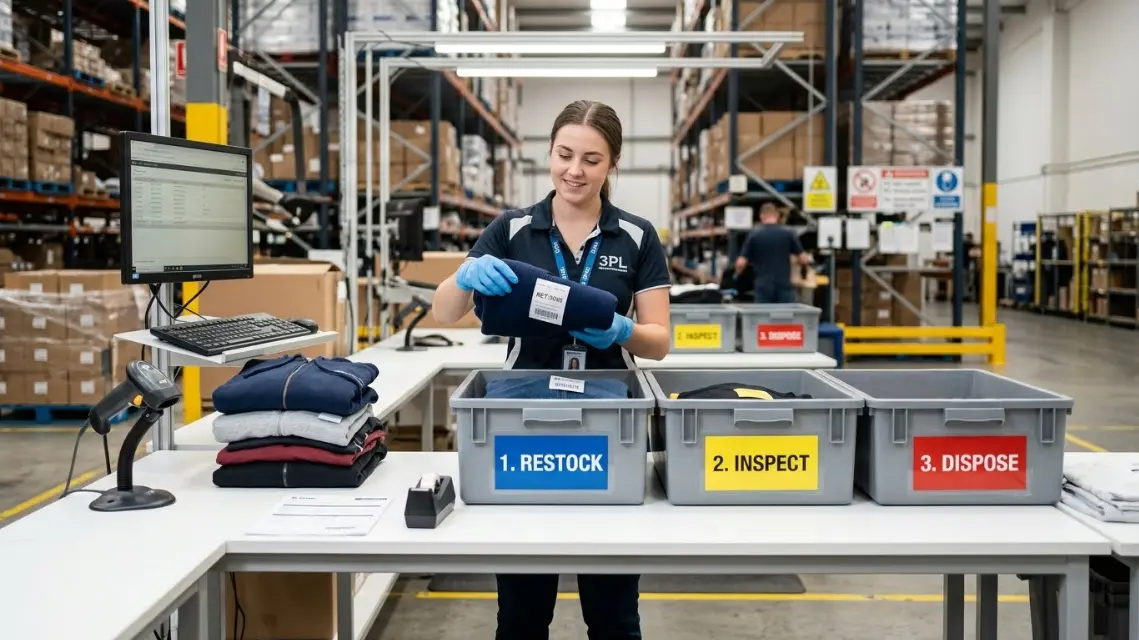
Returned items are received, inspected, and restocked quickly. A structured returns process keeps inventory accurate, recovers value from returned stock, and gets refunds to customers faster.
Scale Flexibly During Peak Seasons
A 3PL already has the staff, space, and systems to absorb Black Friday and holiday demand spikes. You scale up when needed and scale back when it passes without any hiring or space costs.
Benefits of Outsourcing Apparel Fulfillment to a 3PL
Outsourcing fulfillment to a 3PL makes your operations easier and more efficient. It saves time because you no longer have to pack orders or manage a warehouse. It reduces costs by avoiding storage, staff, and shipping expenses.
- Cost Savings and Efficiency Outsourcing eliminates fixed warehouse costs and permanent staff. You pay for what you use, making it far more financially efficient than building in-house infrastructure.
- Access to Advanced Technology 3PLs invest in warehouse management systems, automation, and analytics tools that most brands cannot justify buying alone. You get access to all of it as part of the service.
- Better Customer Experience Fast, accurate deliveries with custom packaging and branded inserts create an unboxing experience that builds loyalty and drives repeat purchases.
- With strategically located warehouses and strong carrier relationships, a 3PL can consistently meet next-day and two-day delivery expectations that most in-house operations cannot.
- Focus on Brand Growth When logistics is handled by a specialist, your team gets their time back to focus on new collections, marketing, and the things that actually build the brand.
How 3PL Technology Drives Apparel Brand Growth
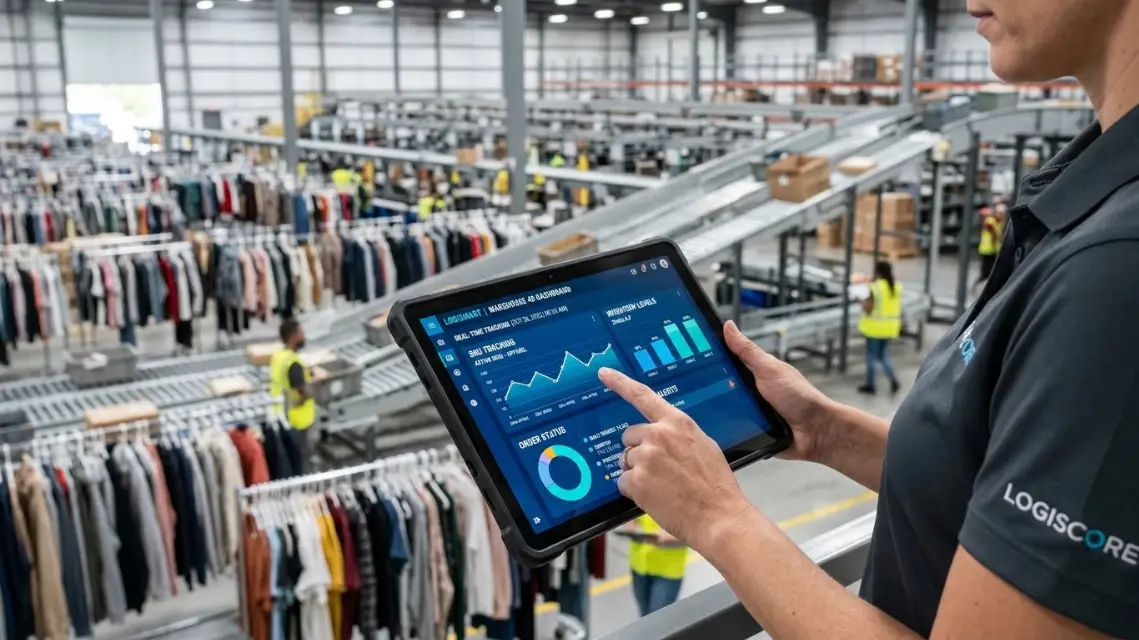
3PLs use smart systems to track inventory, manage orders, and speed up shipping. This helps your brand scale faster, reduce errors, and deliver orders on time without handling everything yourself.
Warehouse Management Systems
A WMS tracks every item by SKU, location, and quantity. For apparel brands with hundreds of size and color variants, it ensures the right item is picked every time and gives real-time stock visibility across all channels.
Real-Time Tracking and Visibility
Brands can see where every order is at any point in the process. Customers receive automatic tracking updates. This reduces support inquiries and builds a more professional post-purchase experience.
Data Analytics for Demand Forecasting
3PLs use historical sales data and seasonal trends to help brands order the right quantities at the right time. For fashion brands where timing is everything, accurate forecasting is a genuine competitive advantage.
Best Practices for Apparel Brands Using 3PL
Follow these key strategies to make the most of your 3PL partnership and scale your apparel brand efficiently.
Choose a Fashion-Specialized 3PL
Not all 3PLs understand apparel. A general logistics provider may handle boxes efficiently but struggle with garment care, size sorting, and return processing specific to clothing. Choose a 3PL with proven experience in fashion fulfillment and the systems to manage SKU complexity properly.
Maintain Inventory Accuracy
Send your inventory to the 3PL with clean, accurate data. Every SKU should be clearly labeled and organized before it arrives at the warehouse. Poor inventory data at the start creates problems that are difficult and expensive to fix later.
Optimize Product SKUs
Work with your 3PL to review and rationalize your SKU range. Too many slow-moving SKUs tie up warehouse space and increase fulfillment complexity. Regular SKU analysis keeps your inventory lean and your fulfillment operation efficient.
Plan for Seasonal Demand
Share your seasonal forecasts with your 3PL well in advance. Give them the information they need to prepare staff, space, and carrier capacity before your peak periods arrive. The earlier you communicate demand plans, the better prepared your 3PL will be to deliver.
Build a Strong Returns Process
Work with your 3PL to design a return workflow that is fast, accurate, and customer-friendly. A clear returns process keeps your inventory accurate, recovers value from returned items, and ensures customers receive refunds quickly enough to maintain their trust.
How to Choose the Right Apparel 3PL Partner
Tips to select a logistics partner that fits your brand, simplifies fulfillment, and supports growth.
Industry Experience in Fashion
Ask potential 3PL partners specifically about their experience with apparel brands. How do they handle garment storage? How do they manage size and color sorting? What is their process for returns? Experience with clothing logistics is non-negotiable.
Technology and Integrations
Make sure the 3PL integrates seamlessly with your existing sales channels and eCommerce platforms. Whether you sell on Shopify, Amazon, or your own website, your 3PL should connect to all of them with real-time inventory updates and automated order processing.
Scalability and Flexibility
Your 3PL should be able to grow with you. Ask how they handle sudden volume spikes, what their capacity limits are, and how quickly they can scale up during peak periods. A partner that cannot keep up with your growth is not the right long-term fit.
Pricing and Transparency
Understand exactly what you are paying for before signing any agreement. Ask for a detailed breakdown of all fees including receiving, storage, pick and pack, shipping, and returns processing. Hidden fees are a common issue with 3PL contracts and need to be identified upfront.
Customer Support and Communication
A 3PL that does not communicate well is a liability. You need a partner who is responsive, proactive, and easy to reach when something goes wrong. Test their communication during the sales process. How quickly do they respond? How clearly do they answer questions? That behavior will continue after you sign the contract.
Common Mistakes to Avoid When Scaling with 3PL
Choosing the cheapest provider is the most costly mistake. Low-cost 3PLs cut corners on accuracy and technology. The cost of errors and delays far exceeds any savings on the fulfillment fee. Ignoring technology capabilities creates problems as volumes grow. A 3PL without a strong WMS and eCommerce integrations will slow you down rather than speed you up.
Poor onboarding sets the relationship up to fail. Brief your 3PL thoroughly on your products, brand standards, and customer expectations before your first shipment arrives. Lack of communication is also common. Treat your 3PL as a business partner, not just a vendor. Regular check-ins and shared data make the relationship more effective for both sides.
Real-World Example: Scaling a Fashion Brand with 3PL
A mid-size clothing brand fulfilling orders from a rented warehouse with three staff members was taking 48 to 72 hours to process orders. Shipping costs were high and returns were piling up with no system in place.
After partnering with a fashion-specialized 3PL, order processing dropped to same-day. Shipping costs fell 18 percent through bulk carrier rates. Returns were processed within 24 hours. Freed from daily logistics, the brand launched two new product lines and expanded into a new market within 12 months.
Future of Apparel Fulfillment and 3PL
AI and automation are becoming standard in leading 3PL facilities. Brands that partner with forward-thinking providers now will benefit from robotic picking, automated sorting, and AI-powered forecasting without investing in it directly. Same-day and next-day delivery expectations are growing.
A 3PL with strategically placed warehouses makes fast delivery achievable for brands of all sizes. Sustainable logistics is also rising in importance. Leading 3PLs are investing in eco-friendly packaging, carbon-neutral shipping, and ecommerce programs that help brands resell returned items rather than sending them to landfill.
Ready to Scale Your Apparel Brand?
Logistics should not be the thing that holds your apparel brand back. At Logos Logistics Distribution in Ontario, CA, we provide end-to-end fulfillment solutions built specifically for growing fashion and clothing brands. From warehousing and pick and pack to shipping and returns management, we handle everything so you can focus on building your brand. Contact our team directly to schedule a free consultation and find out how we can help your brand scale faster.
Conclusion
Logistics is not just a back-end function. For apparel brands trying to grow, it is a make-or-break part of the business. A 3PL partner transforms fulfillment from a bottleneck into a competitive advantage. It gives you faster delivery, lower costs, better inventory control, and the time to focus on what your brand actually does best.
The brands that scale successfully in fashion eCommerce are the ones that stop trying to do everything themselves and start building the right partnerships. A third-party logistics provider is one of the most impactful partnerships a growing clothing brand can make.
Frequently Asked Questions
What is a 3PL in apparel fulfillment?
A 3PL handles warehousing, order fulfillment, and shipping on your behalf. In apparel, a specialist 3PL also manages size and color variants, garment care, returns, and branded packaging.
When should a clothing brand use a 3PL?
When orders are growing faster than your team can handle, shipping delays are becoming common, warehouse space is running out, or you are spending more time on logistics than on the brand itself.
How much does apparel fulfillment cost?
Costs vary based on order volume, SKU complexity, and services included. Most 3PLs charge separately for receiving, storage, pick and pack, shipping, and returns. Always ask for a full breakdown before committing.
Can a 3PL handle returns?
Yes. Returns management is a core service. Items are received, inspected, and either restocked, repackaged, or disposed of. A good returns process keeps inventory accurate and gets sellable items back on sale quickly.
Is 3PL worth it for small brands?
Yes, especially for growing brands. Most 3PLs scale with you as order volumes increase. The savings on shipping, time saved on operations, and improved customer experience make it a worthwhile investment for most brands handling more than a few hundred orders per month.