

Amazon FBA is changing again, and 2026 will be one of the most disruptive years sellers have faced in a long time. Between rising fees, service cuts, tighter inventory limits, and new reimbursement rules, many brands are rethinking how much control they want to hand over to Amazon.
If you sell apparel, footwear, or physical products through Amazon, these updates are not small adjustments. They directly affect margins, cash flow, inventory planning, and operational risk. Sellers who prepare early will protect profit and flexibility. Sellers who ignore the changes may feel the impact during peak season when it is hardest to recover.
This guide breaks down the most important Amazon FBA changes announced for 2025 and 2026, explains what they actually mean in practice, and outlines how sellers can adapt using hybrid fulfillment or FBM strategies with partners like Logos Logistics & Distribution.
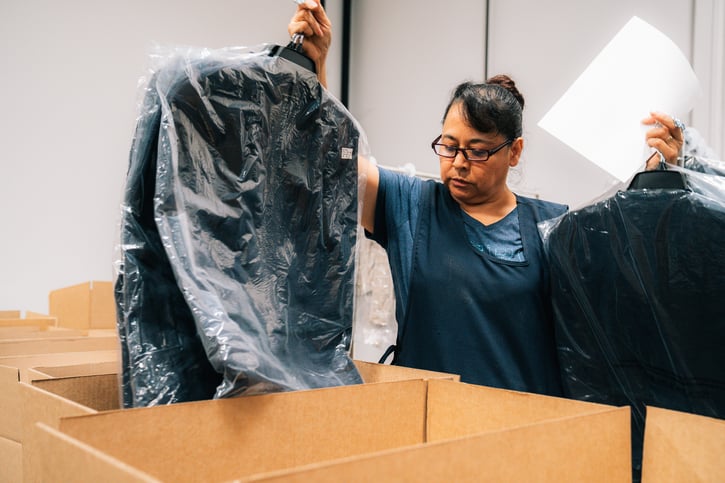
Amazon FBA fee increases are coming in 2026
Amazon has signaled another round of FBA fee increases for 2026. According to industry reporting, sellers should expect average per unit increases of around $0.08, with more detailed fee structures still being finalized.
While $0.08 may sound small, it compounds quickly at scale. For brands shipping tens or hundreds of thousands of units per year, this adds up to thousands of dollars in additional fulfillment cost without any improvement in service.
For apparel and footwear brands already dealing with thin margins, rising ad costs, and higher production expenses, these increases push many SKUs closer to breakeven. This is one of the main reasons sellers are now modeling hybrid strategies that combine FBA with FBM or third party fulfillment outside Amazon.
Many brands are using this moment to evaluate alternatives such as multi channel fulfillment solutions that give them more pricing stability and flexibility outside Amazon’s fee structure.
Amazon is ending FBA prep and labeling services in the US
One of the most significant operational changes is Amazon’s decision to end FBA prep and labeling services in the United States starting in 2026. This means sellers will be responsible for all labeling, poly bagging, bundling, and prep work before inventory reaches Amazon.
For years, many sellers relied on Amazon to handle last mile prep tasks. With this service removed, sellers must either build prep operations internally or partner with a 3PL that understands Amazon requirements.
This change increases operational responsibility but also opens the door to more control. Brands that move prep upstream can standardize packaging, reduce errors, and avoid delays caused by Amazon rejecting inbound shipments.
Logos Logistics supports Amazon sellers by handling prep, labeling, kitting, and inbound compliance before inventory reaches Amazon fulfillment centers. This approach helps sellers stay compliant while avoiding Amazon’s prep service removal.

AI tools are improving forecasting but do not eliminate risk
Amazon has introduced new AI powered tools such as the Seller Assistant, designed to help sellers forecast demand, manage inventory levels, and optimize inbound shipments.
These tools can be helpful, especially for newer sellers or brands scaling quickly. They offer insights into sales trends, inventory velocity, and restock timing. However, they do not remove the underlying constraints of FBA.
Sellers are still subject to storage limits, fee increases, and inbound delays. AI can guide decisions, but it cannot override Amazon’s capacity rules or policy changes.
Many advanced sellers use Amazon’s AI tools for forecasting while keeping inventory staged at external warehouses like Logos Logistics. This gives them flexibility to respond quickly without overcommitting stock to FBA.
Tighter inventory limits are affecting Prime Day and Q4 planning
In mid 2025, Amazon enforced tighter inventory limits by reducing storage allowances from six months of forecasted sales to five months. While this may seem minor, it significantly impacts brands that rely on forward stocking for Prime Day and Q4.
Lower storage limits mean sellers must restock more frequently and risk stockouts if inbound shipments are delayed. It also increases exposure to peak season congestion when warehouses and carriers are at capacity.
Brands that stage inventory outside Amazon can feed FBA gradually while keeping reserve stock accessible. This reduces risk and allows better response to sudden demand spikes.
Reimbursement policy changes increase seller responsibility
A March 2025 update changed how Amazon reimburses sellers for lost or damaged inventory. Reimbursements are now based on sourcing cost rather than selling price, with sellers given the option to provide their own cost data or use Amazon’s estimates.
This puts more pressure on sellers to maintain accurate cost records and documentation. Without proper data, reimbursements may fall short of true replacement cost.
For high value items, especially apparel with multiple components, this policy shift can materially affect recovery when inventory issues occur.
Working with a fulfillment partner that tracks inventory at a detailed level helps sellers document sourcing costs and reduce exposure when Amazon errors occur.
Platform instability highlights the need for diversification
In December 2025, some FBA listings were temporarily hidden regionally due to a system issue. While the issue was resolved, it reminded sellers how dependent their revenue is on Amazon’s systems.
Even short disruptions can result in lost sales, ranking drops, and advertising inefficiencies. Sellers with FBM, Shopify, or wholesale channels were able to continue shipping while others waited.
This is one of the strongest arguments for diversifying fulfillment and sales channels rather than relying solely on FBA.
FAQs about Amazon FBA changes
Should I stop using Amazon FBA in 2026? ▾
Most sellers will not abandon FBA completely. Instead, many are adopting hybrid strategies using both FBA and FBM supported by partners like Logos Logistics to reduce risk and cost.
How do I prepare for the end of FBA prep services? ▾
You will need a prep capable warehouse that understands Amazon requirements. Logos Logistics handles labeling, prep, and inbound compliance so sellers stay operational after 2026.
Can I save money by using FBM? ▾
Yes. Many high volume sellers reduce total fulfillment costs by 10 to 20 percent by shifting part of their volume to FBM through external fulfillment partners.
Does Logos integrate with Amazon Seller Central? ▾
Yes. Logos integrates with Amazon, Shopify, and other platforms to manage inventory, orders, and tracking from one central system.
Final thoughts on Amazon FBA in 2026
Amazon FBA is not disappearing, but it is becoming more expensive, more restrictive, and more demanding for sellers. The brands that win in 2026 will be the ones that plan early, control inventory flow, and reduce dependency on a single fulfillment model.
Logos Logistics & Distribution helps Amazon sellers prepare for these changes by providing prep, storage, FBM fulfillment, and scalable infrastructure outside Amazon. To see how this fits your business, explore our Amazon and ecommerce logistics services or connect with our team through the contact page.
Submit a comment