
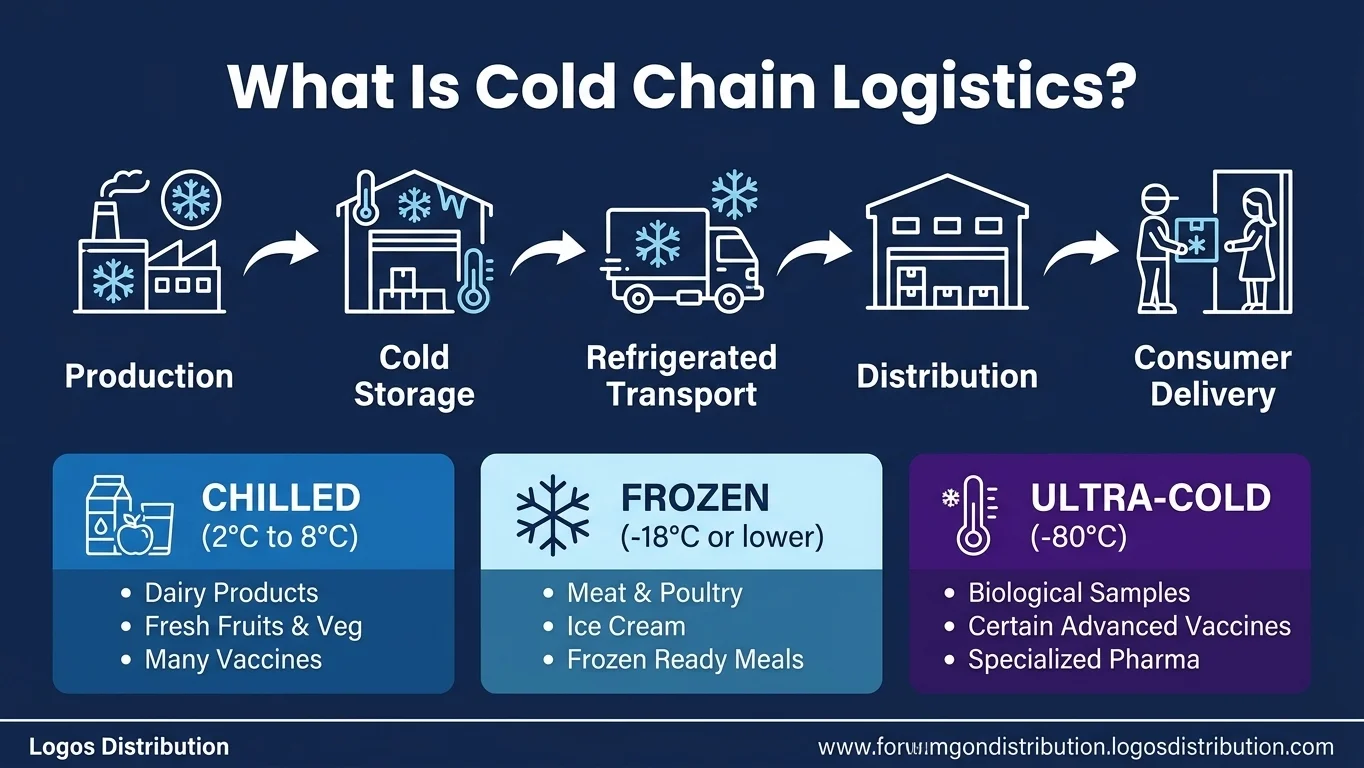
Cold chain logistics is the process of storing and transporting temperature sensitive products in a controlled environment, from the moment they’re produced until they reach the end consumer. It covers everything from fresh produce and dairy to vaccines, pharmaceuticals, and certain chemicals, any product that loses value or safety if its temperature isn’t carefully managed.
When cold chain logistics works, food stays fresh, medicines stay effective, and consumers stay safe. When it breaks down, even briefly, products spoil, vaccines lose potency, and businesses face real financial and regulatory consequences. That’s why cold chain logistics is treated as essential infrastructure across food, healthcare, and pharmaceutical industries, not an optional add-on.
Below, we break down how cold chain logistics actually works step by step, the key components that keep it running, the temperature standards different products require, and the best practices and technology companies use to keep every shipment safe from production to last mile delivery.
What Is the Purpose of the Cold Chain?
The purpose of the cold chain is to keep sensitive products like pharmaceuticals, vaccines, and perishable foods within a controlled temperature range from production until they reach the consumer. It protects product safety, preserves effectiveness, extends shelf life, reduces waste, and keeps businesses compliant with food and drug regulations. Improper temperature management remains one of the leading causes of vaccine waste worldwide, which is why the cold chain is treated as a safety system rather than a logistics convenience.
Ensuring Safety and Effectiveness Keeping vaccines, medicines, and food within their required range prevents bacterial growth, spoilage, and loss of potency.
Extending Shelf Life Controlled cooling slows degradation in perishables, giving businesses more time to distribute before expiration.
Maintaining Product Quality Consistent temperatures preserve flavor, texture, and chemical stability.
Ensuring Regulatory Compliance A properly managed cold chain helps companies meet standards like Good Distribution Practices, avoiding fines and recalls.
Reducing Waste and Financial Loss Preventing spoilage directly cuts discarded product, protecting both margins and supply.
Introduction to Cold Chain Logistics
In today’s world cold chain logistics is not optional. Food safety, healthcare, and pharmaceutical industries all depend on it completely. When it works well everything runs smoothly.
When it breaks down even for a short time the consequences can be serious. Products spoil, medicines lose effectiveness, and consumers face real health risks.
How Cold Chain Logistics Works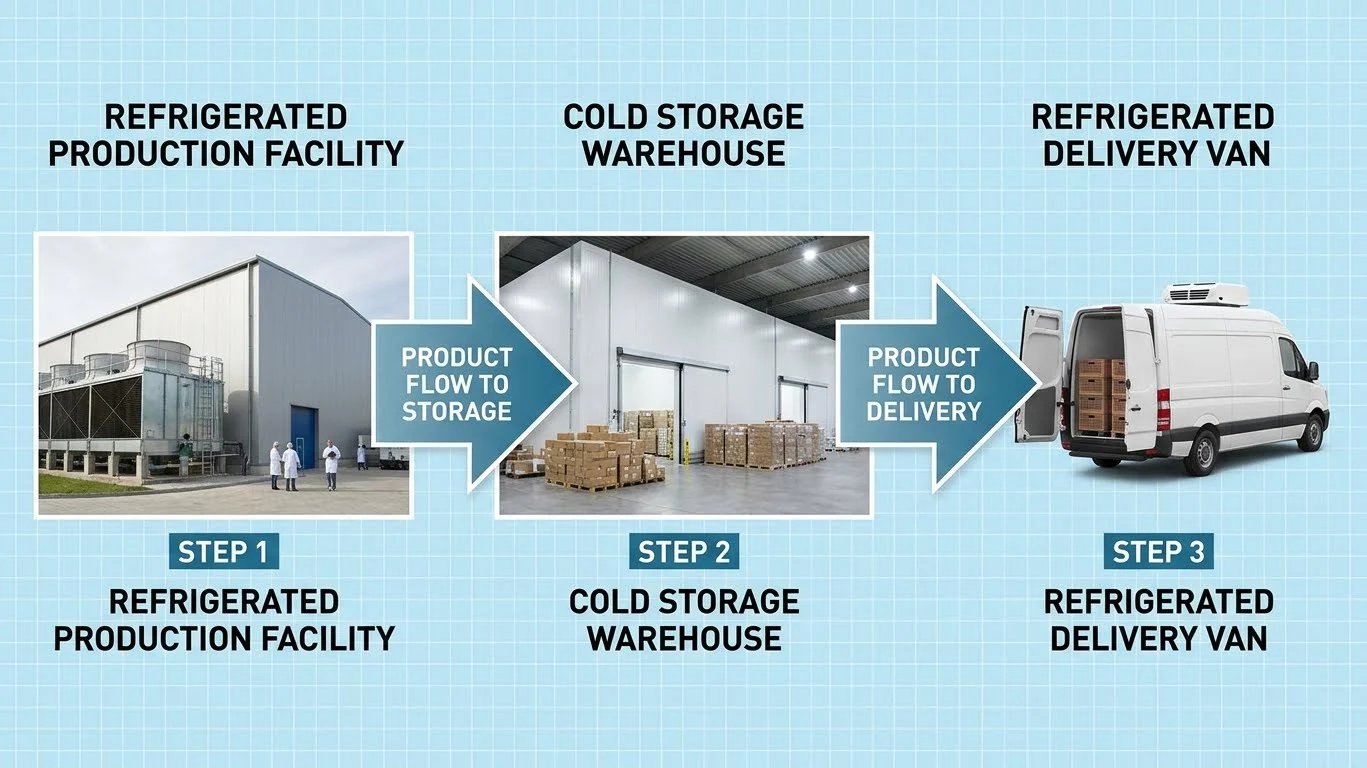
Cold chain logistics works by keeping products at the right temperature at every single step of their journey. Here is a simple breakdown of how the process works.
Production and Pre-Cooling As soon as a product is made it is quickly cooled down to its required temperature. This first step is critical because it stops the product from spoiling early.
Storage Products are then moved into cold storage warehouses. These are specially designed facilities that maintain the right temperature and humidity until the product is ready to be transported.
Transportation Products are loaded into refrigerated trucks or containers and moved to their destination. Every transfer point is a risk so the temperature is monitored closely the whole time.
Distribution and Last Mile Delivery This is the final step. Products are delivered to stores, pharmacies, or directly to consumers using smaller refrigerated vehicles or insulated packaging. This is often the hardest part of the cold chain to manage.
Monitoring and Control Throughout every step temperature sensors and tracking systems record conditions in real time. If the temperature shifts an alert is triggered immediately so the problem can be fixed before any damage is done.
Step-by-Step Process
- Production and Pre-Cooling As soon as a product is made it is quickly cooled down to its required temperature. This stops spoilage early.
- Cold Storage Products are moved into temperature-controlled warehouses until they are ready to be transported.
- Transportation Products are loaded into refrigerated trucks or containers and moved toward their destination.
- Distribution and Last Mile Delivery Products are delivered to stores, pharmacies, or consumers using refrigerated vehicles or insulated packaging.
- Monitoring and Control Temperature sensors track conditions at every step. If anything shifts an alert is triggered immediately so the problem can be fixed right away.
What Are the Key Components of Cold Chain Logistics?
Cold chain logistics relies on five components: temperature-controlled storage, refrigerated transportation, protective packaging, real-time monitoring systems, and regulatory compliance. If any one of them fails, the entire chain can break down.
Temperature-Controlled Storage Products are stored in cold warehouses that maintain the right temperature and humidity at all times using powerful refrigeration systems and real time monitoring.
Refrigerated Transportation Refrigerated trucks, reefer containers, and temperature controlled air freight keep products at the required temperature throughout the entire journey.
Packaging and Insulation Insulated containers, gel packs, and dry ice protect products from temperature changes during handling and transit.
Monitoring and Tracking Systems IoT sensors and data loggers record temperature continuously. If anything shifts outside the safe range an alert is triggered immediately.
Compliance and Quality Control Cold chain operations must follow strict regulations set by the FDA and WHO. Regular audits and staff training keep everything safe and up to standard.
Handling Procedures Validated procedures for loading, unloading, and transferring products protect against breaches caused by human error, one of the most common points of failure in an otherwise well-designed cold chain.
Active vs. Passive vs. Hybrid Cold Chain Systems
Cold chain systems fall into three categories based on how they maintain temperature: active, passive, and hybrid. Active systems use powered mechanical refrigeration, passive systems rely on insulated packaging and cooling agents with no electricity, and hybrid systems combine both for added reliability.
Active Systems These use powered, mechanical equipment such as reefer trucks, refrigerated containers, and cold storage warehouses to continuously regulate temperature. Active systems can maintain precise temperatures over long distances and extended periods, but they depend on a constant power source and are more expensive to operate.
Passive Systems These rely on insulated packaging combined with cooling agents like dry ice, gel packs, or phase change materials to hold a temperature range without any electricity or moving parts. Passive systems are commonly used for last-mile delivery and smaller shipments, such as a single vaccine cooler or a meal kit box, where plugging into power isn’t practical.
Hybrid Systems These combine active and passive elements, for example, an insulated container with a phase change material backup riding inside a refrigerated truck. Hybrid systems are typically reserved for high-value or highly sensitive shipments, such as biologics or cell therapies, where a single point of failure could destroy the product.
Types of Products That Need Cold Chain Logistics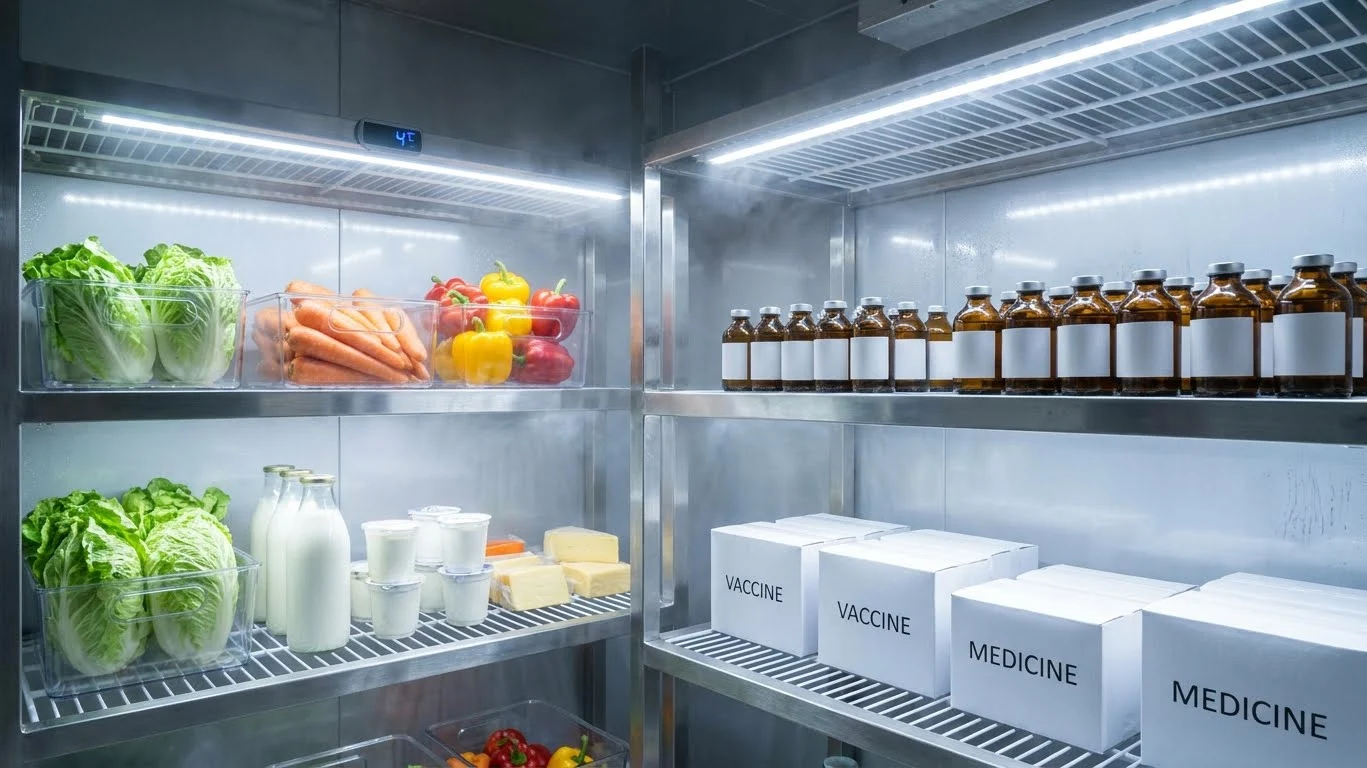
Products that require cold chain logistics include fresh produce, dairy, meat, and seafood, pharmaceuticals and vaccines, frozen goods, and certain chemicals and biologics such as lab specimens and transplant organs. These products lose safety, quality, or effectiveness if exposed to temperatures outside their required range.
Fresh Produce, dairy, meat, seafood, and frozen foods all need to be kept at the right temperature to stay safe and fresh for consumption.
Pharmaceuticals and Vaccines Many medicines and vaccines lose their effectiveness if exposed to the wrong temperature even briefly. A vaccine that was stored too warm may look fine but no longer work at all.
Dairy, Meat, and Frozen Goods These are some of the most common cold chain products. Milk, cheese, poultry, and frozen meals all require consistent refrigeration from production to the store shelf.
Chemicals and Biologics Certain industrial chemicals and biological materials like laboratory specimens, tissues, and organs for medical transplant also require strict temperature control to stay stable and safe.
Industries That Rely on Cold Chain Logistics
The industries that rely most heavily on cold chain logistics are healthcare and pharmaceuticals, food and agriculture, biotechnology, and retail and e-commerce. Food and agriculture is the largest user, since nearly every step from farm to store shelf requires temperature-controlled handling. These needs generally map to three chain types: the tightly regulated pharmaceutical and vaccine chain (2°C to 8°C, sometimes ultra-cold or cryogenic), the food and beverage chain (chilled and frozen tiers), and a smaller specialized chain for organ transplants, sensitive chemicals, cut flowers, and electronics.
Healthcare and Pharmaceuticals
Hospitals, clinics, and pharmacies rely on cold chain logistics to receive medicines, vaccines, and biological materials in perfect condition. A break in the chain can mean wasted medication and serious health risks.
Food and Agriculture
This is the largest user of cold chain logistics. Every step from farm to supermarket shelf involves temperature controlled handling. Retailers, food manufacturers, and restaurants all depend on it daily.
Biotechnology
Biotech companies need cold chain logistics for laboratory materials, clinical trial products, and research specimens that must be kept at precise temperatures at all times.
Retail and E-Commerce
Online grocery delivery and meal kit services are growing fast. Consumers now expect fresh products delivered directly to their door which makes reliable cold chain logistics more important than ever.
What Are the Cold Chain Temperature Standards?
Cold chain temperature standards fall into three ranges: chilled (2°C to 8°C) for fresh produce, dairy, and most vaccines; frozen (-18°C or lower) for frozen foods and certain medicines; and ultra-cold (-40°C to -80°C) for products like some COVID-19 vaccines that require specialized freezers.
Chilled Products (2°C to 8°C)
Fresh produce, dairy, and most vaccines and medicines are kept in this range. It slows bacteria growth without freezing the product.
Frozen Products (-18°C or lower)
Frozen foods and certain medicines are stored at this temperature. At this level bacteria activity is completely stopped.
Ultra Cold Storage (-40°C to -80°C)
Some products like certain COVID-19 vaccines need extremely low temperatures. Special freezers and dry ice packaging are required for this.
Cryogenic Storage (-150°C or lower)
Used for stem cells, gene therapies, and cell-based biologics that can’t survive standard freezer temperatures. Maintained with liquid nitrogen rather than mechanical refrigeration.
Why Consistency Matters
It is not enough to hit the right temperature at one point. The temperature must stay consistent from production all the way to the consumer. Even a short temperature shift can spoil a product or make a medicine completely ineffective.
What Are the Regulations and Standards for the Cold Chain?
Cold chain operations are governed by food safety law, pharmaceutical guidelines, and data integrity standards requiring continuous monitoring and recordkeeping.
FSMA Requires shippers and carriers to monitor, maintain, and document temperatures during transit.
HACCP Requires identifying hazards and monitoring critical control points, such as refrigeration consistency, at every handling stage.
Good Distribution Practices (GDP) Pharma-specific guidelines ensuring medicine quality and integrity from manufacturer to patient.
ICH Guidelines Define pharmaceutical temperature standards and require validated monitoring with documented stability data.
DSCSA Requires electronic, interoperable tracking of pharmaceuticals to reduce counterfeit risk.
Most frameworks require temperature records be retained for twelve to twenty-four months for audits or recalls.
What Are the Benefits of Cold Chain Logistics?
The main benefits of cold chain logistics are preserved product quality, reduced spoilage and waste, regulatory compliance, extended shelf life, and improved customer satisfaction. Together these reduce financial losses and protect public health.
Preserves Product Quality Products arrive in the same condition they left the facility. Fresh food stays fresh and medicines stay fully effective.
Reduces Product Loss and Waste A reliable cold chain minimizes spoilage and significantly reduces the amount of product that has to be thrown away. This saves money and reduces waste.
Ensures Safety and Compliance Proper cold chain management keeps businesses compliant with FDA and WHO regulations. Companies that fail face product recalls, fines, and reputational damage.
Extends Shelf Life Keeping products at the right temperature and makes them last longer. This gives businesses more flexibility in distribution and reduces pressure on tight delivery schedules.
Improves Customer Satisfaction Customers expect fresh and safe products every time. A reliable cold chain builds trust and loyalty. A single failure can permanently damage a brand’s reputation.
What Are the Biggest Challenges in Cold Chain Logistics?
The biggest challenges in cold chain logistics are temperature fluctuations during transfers, infrastructure limitations in some regions, high operational costs, complex and varying regulations, and gaps in monitoring during international shipments.
Temperature Fluctuations Every transfer point and delay is a risk. Equipment malfunctions and extreme weather can cause temperature shifts that spoil products or make medicines ineffective.
Infrastructure Limitations In many parts of the world reliable electricity, refrigerated vehicles, and cold storage facilities are simply not available. These gaps make it very hard to run an effective cold chain.
High Operational Costs Refrigerated warehouses and vehicles are expensive to run. Energy costs, equipment maintenance, and skilled staff all add up and put serious pressure on budgets.
Regulatory Compliance Issues Cold chain companies must follow complex regulations that vary by product and country. Failing to comply can mean product recalls, fines, and loss of operating licenses.
Monitoring and Tracking Difficulties Connectivity issues, sensor failures, and data gaps during international shipments can all create blind spots in the chain making full visibility very difficult to maintain.
What Are the Best Practices for Cold Chain Logistics?
Best practices for cold chain logistics include using well-maintained refrigeration equipment, implementing real-time IoT monitoring, training staff thoroughly, following strict standard operating procedures, using proper insulated packaging, and maintaining contingency plans for equipment failures or power outages.
Use Reliable Equipment Always use well maintained temperature controlled equipment. No amount of monitoring can fix a refrigeration unit that breaks down mid route.
Implement Real Time Monitoring Use IoT sensors and tracking systems to monitor temperature at every step. Catching a problem early is always better than discovering it after the damage is done.
Train Staff Properly Human error is one of the most common causes of cold chain failures. Make sure every team member knows exactly how to handle temperature sensitive products correctly.
Following Strict SOPs Standard operating procedures remove guesswork. Every step from loading a vehicle to handling a product at a transfer point should follow a clear and consistent process.
Use Proper Packaging Always use the right insulated containers, gel packs, or dry ice for the product being shipped. Good packaging is the last line of defense against temperature changes.
Plan for Risks Have a clear contingency plan for common failures like vehicle breakdowns or power outages. A fast and prepared response can save an entire shipment.
What Technology Is Used in Cold Chain Logistics?
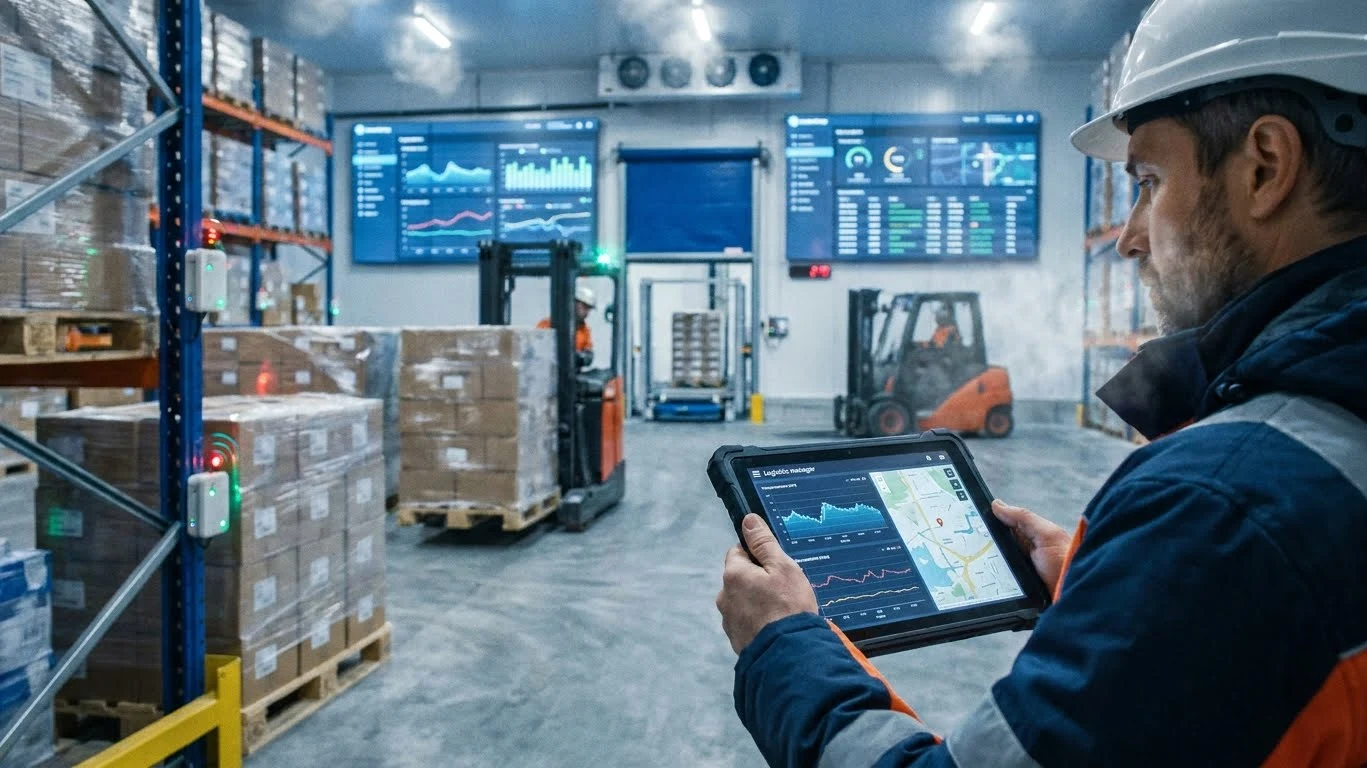
The main technologies used in cold chain logistics are IoT sensors for real-time tracking, data loggers that create temperature records for compliance, automated storage and retrieval systems in warehouses, and AI-driven predictive monitoring that flags risks before they cause damage.
IoT and Real Time Tracking
IoT sensors placed inside shipments and storage facilities record temperature data continuously. This gives logistics managers complete visibility across the entire operation at all times.
Data Loggers and Sensors
Data loggers create a full temperature history for each shipment. This record can be reviewed at delivery to confirm the cold chain was maintained and is often required for regulatory compliance.
Automation and Smart Warehousing
Automated storage and retrieval systems are reducing labor costs in cold storage facilities. These systems can operate in very cold environments without the limitations that human workers face at low temperatures.
AI and Predictive Monitoring
Artificial intelligence analyzes temperature data patterns to identify risks before they become problems. It also helps optimize delivery routes, reduce transit time, and predict equipment maintenance needs before a breakdown occurs.
Importance of Cold Chain Logistics in Supply Chains
Cold chain logistics is important to supply chains because it makes global trade in perishable and temperature-sensitive goods possible. Without it, international food trade could not function, pharmaceuticals could not be distributed globally, and vaccines could not reach remote communities.
It plays a huge role in food safety by keeping products out of the temperature zones where harmful bacteria grow. In healthcare it is directly linked to the effectiveness of medicines and vaccines.
Future of Cold Chain Logistics
The cold chain industry is growing fast and the future looks very promising. Here is what is coming next.
- Smart Logistics and Automation Autonomous vehicles, drones, and automated cold storage are making cold chain operations faster and more reliable.
- Sustainable Solutions The industry is moving toward natural refrigerants, solar powered cold storage, and better insulation to reduce energy consumption and environmental impact.
- Growing Demand As e-commerce grows and pharmaceutical supply chains become more complex the demand for cold chain logistics will only keep rising.
Ready to Optimize Your Cold Chain Operations?
Whether you are a food producer, a pharmaceutical distributor, a retailer, or a logistics provider, having the right cold chain strategy in place is not optional; it is the difference between products that arrive safely and products that do not. At Logos Logistics Distribution in Ontario, CA, Contact our team today to schedule a consultation and find out how we can help your operation run smarter, leaner, and more efficiently.
Conclusion
Cold chain logistics is the backbone of modern supply chains for food, healthcare, and pharmaceuticals. It works by maintaining a controlled temperature at every stage: pre-cooling, cold storage, refrigerated transport, last mile delivery, and continuous monitoring, so that products arrive exactly as safe and effective as when they left the facility.
The businesses that manage it well see the clearest benefits: less spoilage and waste, fewer compliance issues, longer shelf life, and stronger customer trust. The ones that don’t manage it well face spoiled inventory, ineffective medicine, failed audits, and damaged reputations. As demand for fresh food delivery, biologics, and temperature sensitive pharmaceuticals keeps growing, a reliable cold chain isn’t optional. It’s the difference between a shipment that arrives usable and one that doesn’t.
Logos Logistics Distribution helps food, pharmaceutical, and retail businesses in Ontario, CA keep that chain intact from receiving to last mile delivery. Contact our team today to schedule a consultation and find out how we can help your cold chain operation run smarter, leaner, and more efficiently.
Frequently Asked Questions
What is cold chain logistics?
Cold chain logistics is simply the process of keeping temperature sensitive products like food, medicines, and vaccines at the right temperature from the moment they are made until they reach you.
Why is cold chain logistics important?
Without it fresh food would spoil, medicines would stop working, and vaccines would become useless before they even reached a patient. It keeps products safe every step of the way.
What temperature are chilled products like vaccines kept at?
Most vaccines and fresh produce are kept between 2°C and 8°C. This slows down bacteria growth and keeps the product fresh without freezing it.
What happens when the cold chain breaks down?
Even a short temperature shift can cause serious problems. Food spoils, medicines lose their effectiveness, and in some cases consumers face real health risks.
What technology is used to monitor temperature during transit?
IoT sensors and data loggers are placed inside shipments to record temperature continuously. If anything goes wrong an alert is sent immediately so the problem can be fixed before any damage is done.