
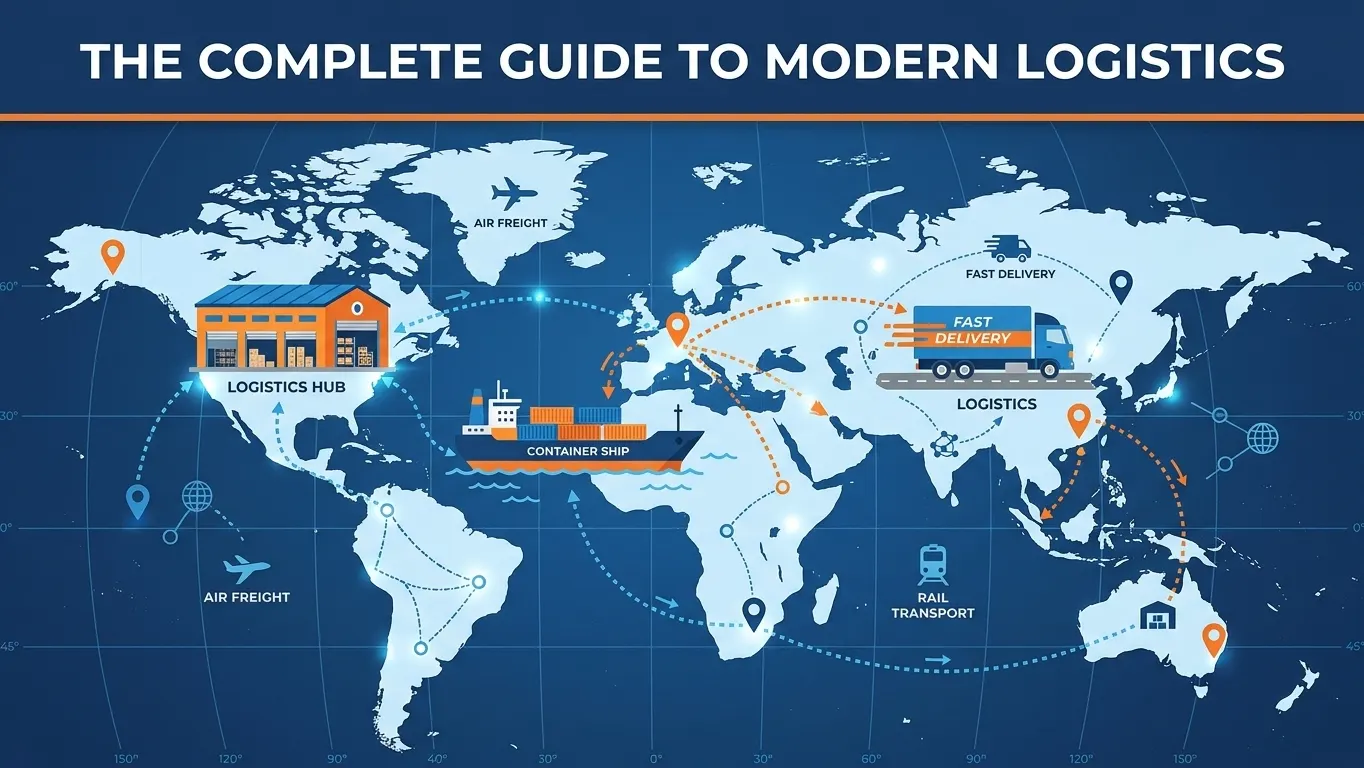
Logistics involves organizing and controlling how goods, services, and related information move from the point of origin to the final customer. It includes every stage of the journey, from sourcing raw materials and storing inventory to transportation and last-mile delivery. By keeping products moving efficiently, logistics helps businesses reduce costs, meet delivery deadlines, and maintain a reliable supply chain.
Businesses that manufacture or sell physical products rely on strong logistics operations every day. Fast deliveries, fully stocked store shelves, and smooth order fulfillment are all made possible through effective logistics management. When the system breaks down, delays, inventory shortages, and unhappy customers often follow. Companies such as Logos Logistics Distribution in Ontario, CA, help businesses keep operations running smoothly by offering dependable warehousing, transportation, and fulfillment solutions.
How Logistics Works
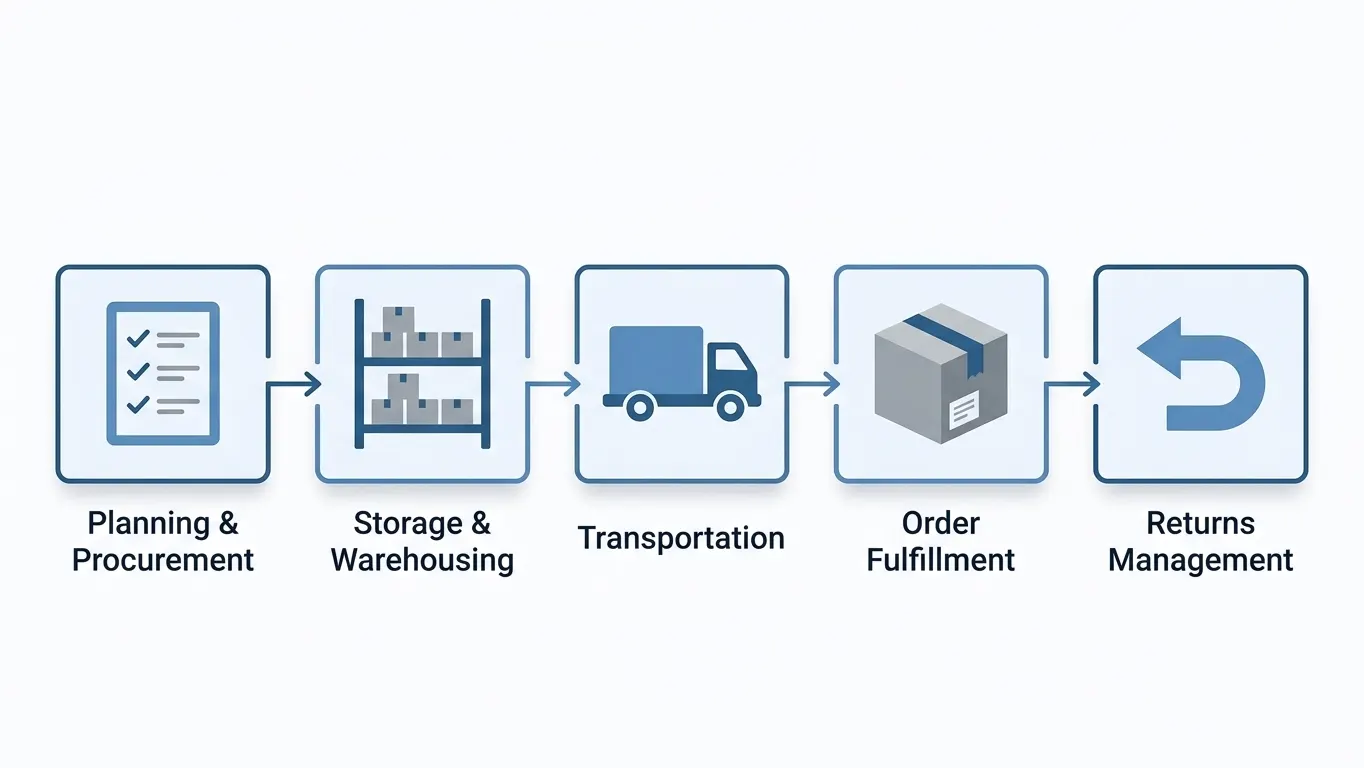 Logistics works as a chain of steps, with each step depending on the one before it. If one part slows down, the entire process feels the delay. A single mistake at any stage can push back delivery times across the whole order. Understanding these steps makes it easier to identify where problems usually start. It also helps a business know exactly where to focus when something goes wrong.
Planning and Procurement
Everything starts with planning. A business first determines which products it needs, how many units to order, and when they are required. It then procures raw materials or finished goods from suppliers to meet those needs. Effective planning helps prevent stock shortages while also avoiding excess inventory that ties up valuable storage space and capital.
Storage and Warehousing
Once goods arrive, they need to be stored until they are ready for use or delivery. This is where warehousing comes in. A well-organized warehouse keeps products properly stored, making it easier for workers to locate, handle, and move items efficiently. Poor warehouse organization, on the other hand, can lead to misplaced inventory, damaged goods, and delays in order processing.
Transportation
Transportation is the process of moving goods from one location to another using trucks, ships, trains, or airplanes. Its primary goal is to deliver products safely, quickly, and as cost-effectively as possible. Since transportation involves fuel, labor, and operating expenses, it is often the largest cost component in the logistics process.
Order Fulfillment
Order fulfillment begins as soon as a customer places an order. It involves picking the correct item from storage, packing it securely, and preparing it for shipment. Speed and accuracy are essential throughout the process, as shipping the wrong item or delivering an order late can quickly reduce customer satisfaction and trust.
Returns Management
Not every order stays with the customer. Some items are returned because they are damaged, the wrong size, or simply no longer needed. Returns management handles this process by receiving the returned item, checking its condition, and deciding whether it should be restocked, repaired, or disposed of.
Core Functions of Logistics
Logistics is made up of several functions that work together every day. Each one plays a different role, but they all support the same goal, which is getting products where they need to go.
Inventory Management
Inventory management is the process of tracking what stock is available and where it is stored. It helps businesses avoid running out of popular products while preventing excess inventory that ties up valuable resources.
Transportation Management
Transportation management focuses on selecting the most efficient shipping methods and routes. It includes choosing carriers, comparing shipping costs, and tracking deliveries to ensure goods arrive safely and on time.
Warehouse Operations
Warehouse operations include all the activities that take place inside a storage facility. These include receiving shipments, organizing inventory, picking orders, and packing products for delivery.
Packaging and Distribution
Packaging helps protect products during transportation and can also affect shipping costs. Distribution is the process of delivering finished goods to stores, distributors, or directly to customers.
Demand Planning
Demand planning uses past sales data and market trends to forecast customer demand. It helps businesses stock the right products in the right quantities at the right time.
Types of Logistics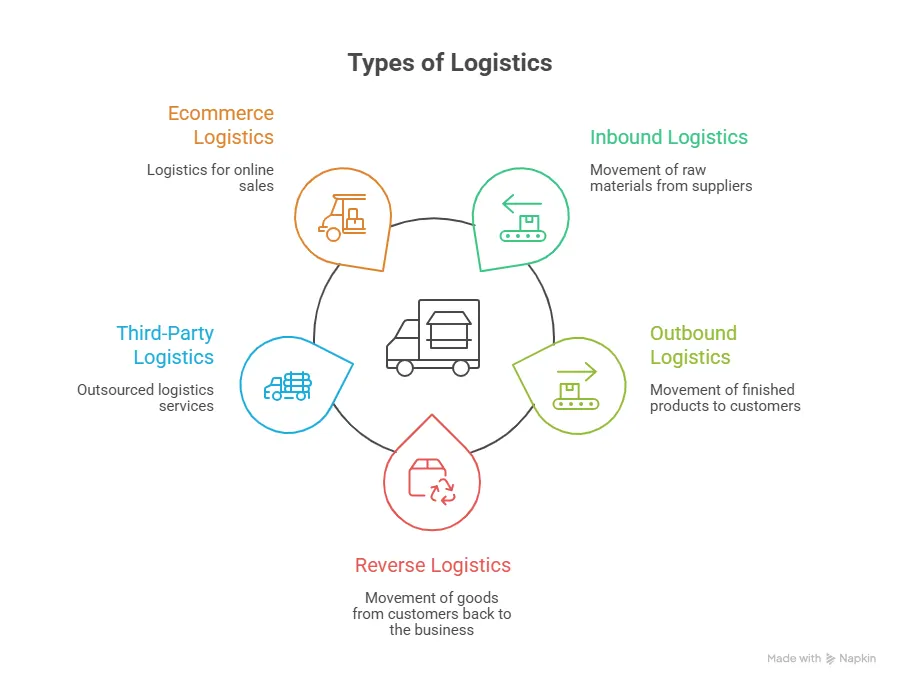
Not all logistics work the same way. Businesses use different types depending on where the goods are coming from and where they are going.
Inbound Logistics
Inbound logistics involves the movement of raw materials and supplies from suppliers into a business. It includes purchasing, receiving, and storing materials before production begins.
Outbound Logistics
Outbound logistics involves the movement of finished products from a business to customers or retailers. It includes order processing, packaging, and final delivery.
Reverse Logistics
Reverse logistics manages the movement of goods from customers back to the business. It includes returns, repairs, recycling, and disposal.
Third-Party Logistics (3PL)
A third-party logistics provider manages warehousing, transportation, and fulfillment on behalf of another business. Many companies use 3PL partners to reduce costs and avoid building their own logistics network from scratch.
Ecommerce Logistics
Ecommerce logistics focuses on the specific needs of online selling. It includes fast shipping, accurate order tracking, and smooth returns handling, as online customers expect quick and reliable service.
What Are the 7 C’s of Logistics?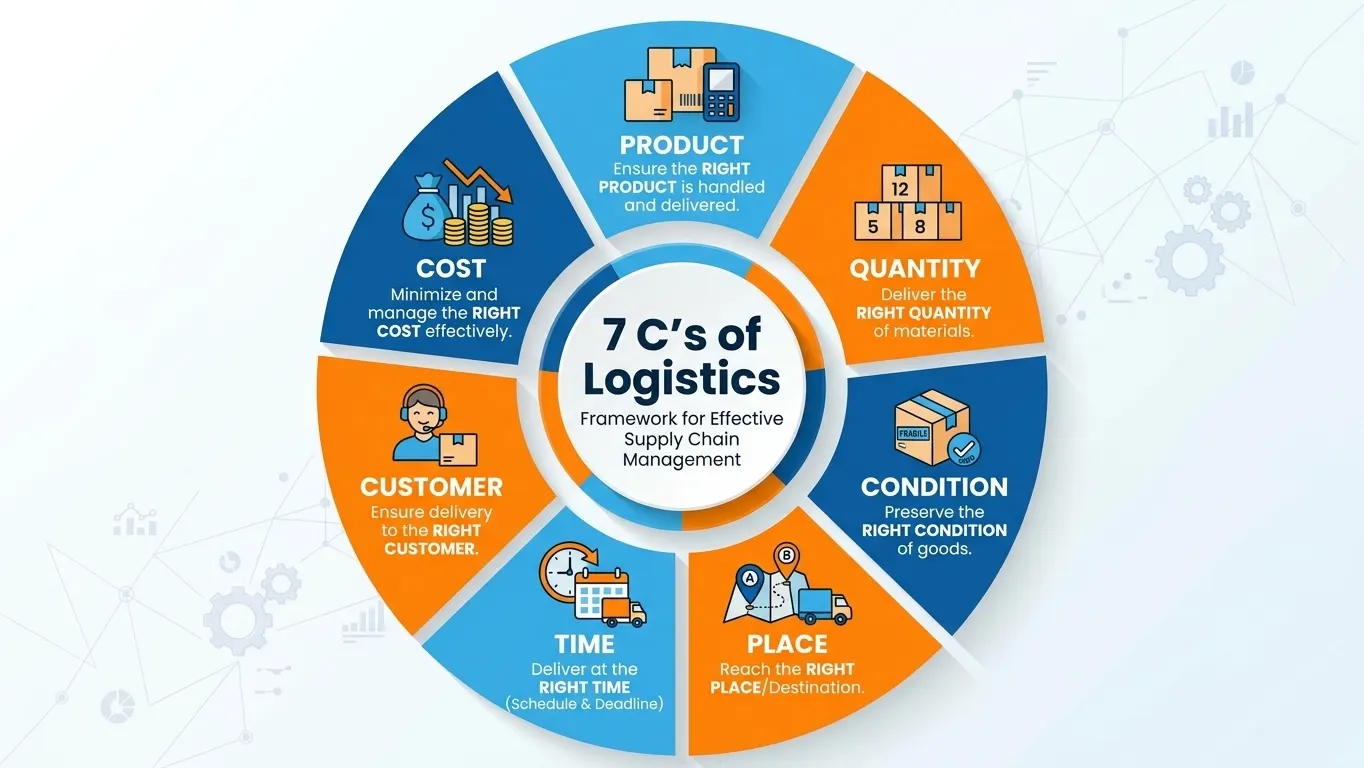
The 7 C’s of logistics are a simple checklist for what a delivery needs to get right: the right product, in the right quantity, in the right condition, at the right place, at the right time, for the right customer, at the right cost.
It works because it turns a vague goal like “run logistics well” into seven specific things you can actually measure. A late delivery fails on time. A damaged item fails on condition. An order sent to the wrong warehouse fails on place. Most logistics problems trace back to a breakdown in one of these seven areas, which is exactly why the framework has stuck around for decades.
Why Logistics Is Important
Logistics touches nearly every part of a business. When it runs smoothly, the entire company benefits. Good logistics reduces wasted time and effort. Products move through the supply chain more efficiently, resulting in fewer delays and lower operating costs. Customers expect fast and accurate delivery.
When logistics works efficiently, orders arrive on time and in good condition, building trust and encouraging repeat business. Transportation, storage, and labor costs can add up quickly. Efficient logistics helps reduce these costs without compromising quality or speed. A strong logistics system enables a business to handle more orders without disruption. This makes it easier to expand into new markets and scale operations over time.
Common Logistics Challenges
Even well run businesses run into logistics problems. Knowing these challenges in advance makes them easier to manage.
Rising Costs Fuel prices, labor costs, and warehouse rent continue to increase. Businesses need to actively manage these expenses to prevent their profits from shrinking.
Supply Chain Disruptions Natural disasters, port delays, and supplier issues can disrupt the flow of goods without warning. A single disruption can affect deliveries for weeks.
Last-Mile Delivery The final stage of delivery, from the local warehouse to the customer’s door, is often the most expensive and difficult part to manage.
Inventory Management Keeping the right amount of stock is a constant balancing act. Too much stock ties up money, while too little stock leads to missed sales and frustrated customers.
Technology in Modern Logistics
Technology has changed how logistics operates. Businesses that use the right tools move faster and make fewer mistakes.
AI and Automation
Artificial intelligence helps predict demand, optimize routes, and identify potential problems before they cause delays. Automation speeds up repetitive tasks such as sorting and packing.
WMS and TMS
A warehouse management system (WMS) controls the movement of goods within a warehouse. A transportation management system (TMS) manages shipping routes and carrier selection. Together, they help daily operations run more smoothly.
Real-Time Tracking
Real-time tracking allows businesses and customers to see exactly where a shipment is at any moment. This builds trust and reduces customer service calls about missing orders.
IoT and RFID
Internet of Things (IoT) sensors and RFID tags track the location and condition of goods as they move. This helps businesses identify problems such as temperature changes or delays before they become serious.
Logistics vs. Supply Chain Management
People often use these terms interchangeably, but they have different meanings. Supply chain management covers the entire journey of a product, from raw materials to the final customer. It includes sourcing, manufacturing, and selling.
Logistics is one part of the broader supply chain. It focuses specifically on the movement and storage of goods. In simple terms, supply chain management is the bigger picture, while logistics is the engine that keeps goods moving within it.
What Are the 4 Types of Supply Chains?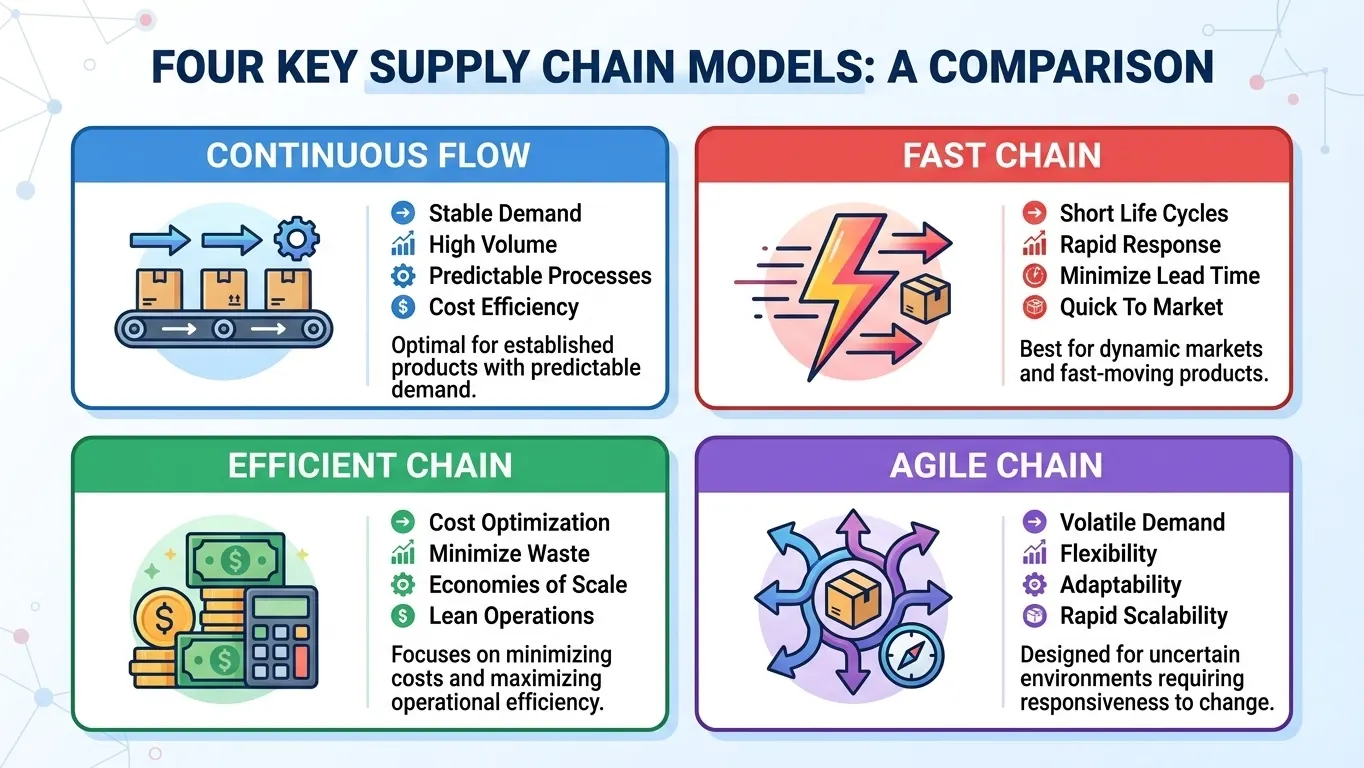
Supply chains generally fall into four categories, based on how they respond to demand:
- Continuous flow – built for steady, predictable demand, common in manufacturing
- Fast chain – built for speed, common with trend-driven or seasonal products
- Efficient chain – built to minimize cost, common in competitive, thin-margin markets
- Agile chain – built for flexibility, used when demand is unpredictable or customized
Most businesses don’t run just one. A company might use a continuous flow model for its core products and switch to an agile approach for limited or seasonal releases, matching the chain type to what each product line actually needs.
Industries That Depend on Logistics
Almost every industry relies on logistics to operate efficiently. Retail and ecommerce businesses depend on it to deliver products to customers on time and keep shelves stocked with popular items. Manufacturing companies rely on logistics to receive raw materials on schedule and ship finished goods without production delays.
Healthcare depends on logistics to transport medical supplies, equipment, and medicines safely, often under strict time and storage requirements. Food and beverage companies require fast, temperature-controlled logistics to keep products fresh from the farm or factory to store shelves. Construction businesses use logistics to deliver materials and heavy equipment to job sites on schedule, as a single late delivery can delay an entire project. Automotive companies also rely heavily on logistics, since a missing part can shut down an entire assembly line for hours or even day
Future of Logistics
Logistics is evolving rapidly. Automation and robotics are taking over repetitive warehouse tasks, helping speed up order processing. Businesses are also investing in sustainable logistics by using electric vehicles and improved packaging to reduce their environmental impact.
Customers now expect faster and more flexible delivery options, prompting companies to open smaller local warehouses closer to their customers. Data and predictive tools will continue to play a larger role, helping businesses identify and solve problems before they occur instead of reacting afterward.
Best Practices for Logistics Success
Businesses that succeed in logistics tend to follow a few common practices. They regularly track performance by monitoring metrics such as on-time delivery rates and order accuracy. They invest in the right technology instead of relying on manual processes that slow operations down.
They build strong relationships with suppliers and carriers, as a reliable partner network helps prevent most disruptions. They also train their staff well because a skilled team makes fewer errors and works more efficiently. Finally, they review their processes regularly and make small improvements over time rather than waiting for a major failure to force change.
Ready to Simplify Your Logistics Operations?
Whether your business needs the speed of cross docking, the control of warehousing, or a mix of both, Logos Logistics Distribution has you covered. Our 44,000 square foot facility in Ontario, CA is strategically located to keep your goods moving faster and your costs staying lower.
Our services include cross docking, secure storage, inbound and outbound handling, transloading, repacking, labeling, and everything your supply chain needs under one roof. Contact us today and let our team build a logistics solution that works for your business.
Conclusion
Logistics is the backbone of nearly every business that sells physical products. It determines how quickly orders arrive, how much a company spends on shipping, and how satisfied customers are after making a purchase. A business that manages logistics effectively saves money, operates more efficiently, and builds stronger customer trust over time.
As technology continues to improve and customer expectations continue to rise, logistics will become even more important. Businesses that invest in better planning, smarter tools, and reliable partners today will be better positioned to stay ahead in the future.
Frequently Asked Questions
What is logistics?
Logistics is the process of planning, storing, and moving goods from one place to another, covering everything from procurement to final delivery.
Why is logistics important?
Logistics keeps products moving efficiently, helping reduce costs, improve delivery speed, and keep customers satisfied.
What are the main types of logistics?
The main types include inbound logistics, outbound logistics, reverse logistics, third-party logistics, and ecommerce logistics.
What is logistics management?
Logistics management is the process of planning and controlling the movement and storage of goods to ensure they reach the right place at the right time.
How is logistics different from supply chain management?
Supply chain management covers the entire product journey, from raw materials to the final customer. Logistics is one part of that journey, focused on transportation and storage.