
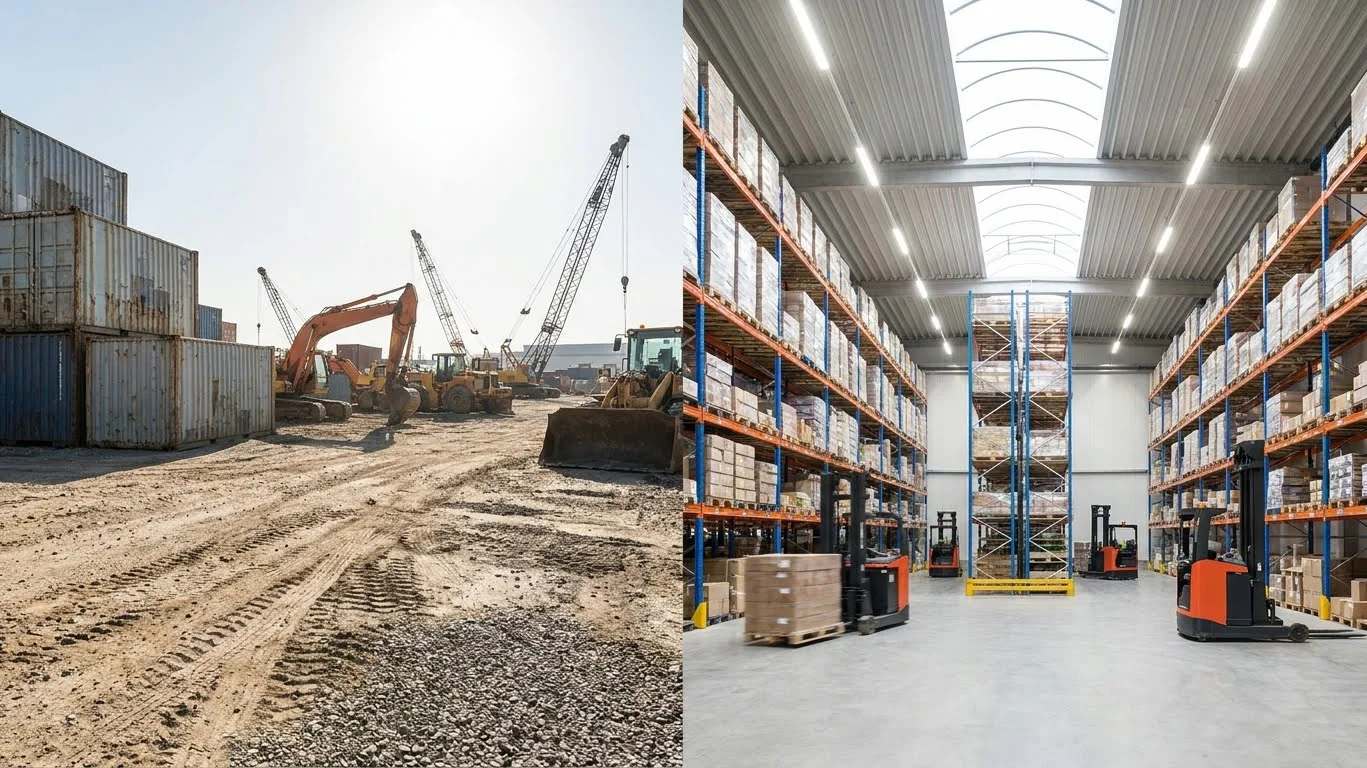
The words warehouse and storage are sometimes used the same way, but they are not the same. Warehousing is usually for longer-term storage and includes extra services. Storage is often more short-term. They are also different in location, size, and the services they offer. Yard storage is when items like heavy equipment, trailers, and shipping containers are kept outside. Warehouse storage is when goods are kept inside a building. You have a shipping container sitting at the port and nowhere to put it.
A lot of businesses get this wrong. They either pay for climate-controlled warehouse space for goods that sit outside just fine, or they leave sensitive inventory exposed to rain and theft in an open lot. We are based in Ontario, CA, providing 3PL warehousing and storage solutions for businesses. Whether you need outdoor staging space or enclosed warehouse storage, our team is ready to build a plan around your operation.
What Is Yard Storage?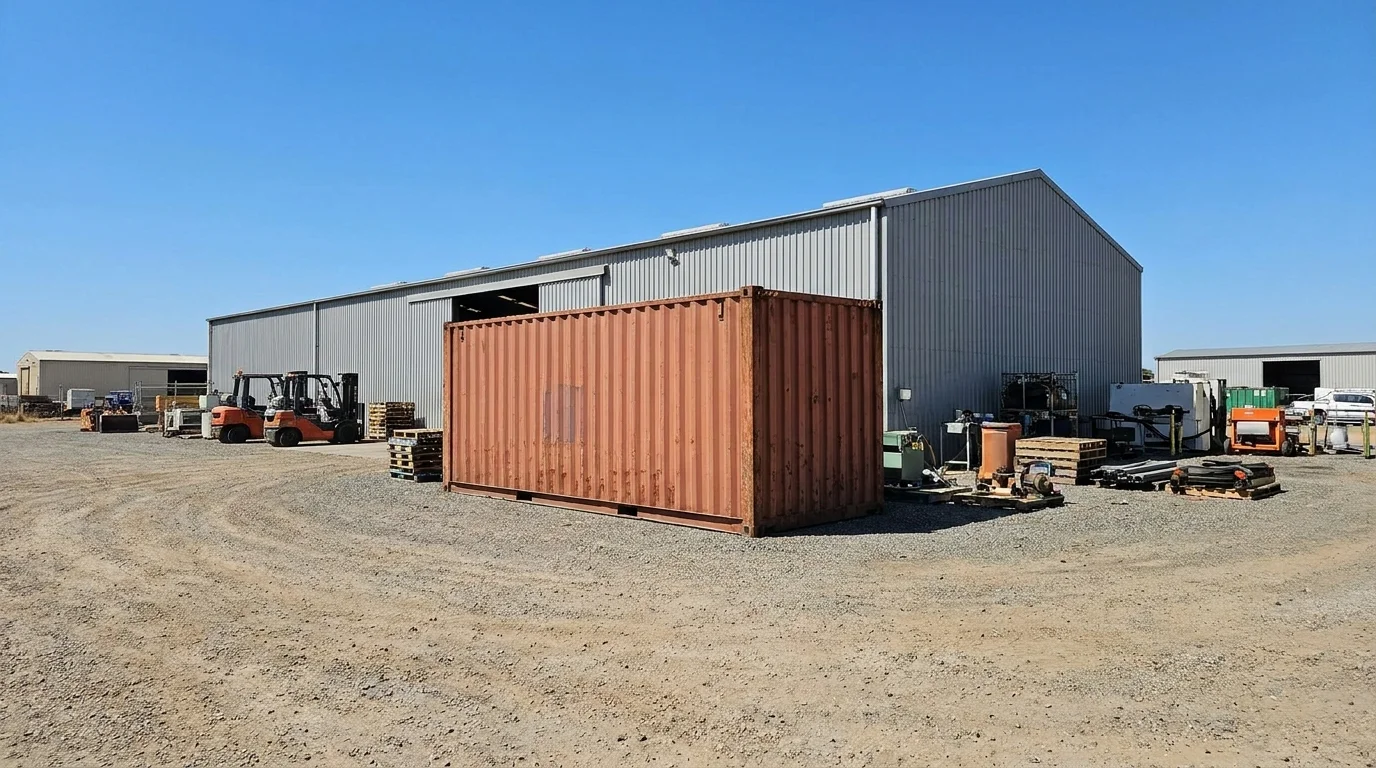
Yard storage is an open-air, outdoor space used to hold large or heavy items that do not need to be kept inside a building. Some are part of a larger logistics facility, while others operate as standalone industrial outdoor storage (IOS) sites. Businesses use yard storage when they are dealing with oversized cargo, heavy equipment or construction materials that simply cannot fit inside a standard building.
There is no roof or climate control involved, yard storage is almost always cheaper per square foot than warehouse space. That lower cost is one of the main reasons businesses in logistics, construction, and transportation rely on it. Yard storage works well for drainage and intermodal operations, where containers move in and out frequently and need a staging ground near ports.
What Is Warehouse Storage?
Warehouse storage takes place inside an enclosed building designed to protect goods from weather, theft, and damage. They use shelving systems, pallets, forklifts, and inventory management software to track goods and move them efficiently. The goal inside a warehouse is not just to hold items but to manage them, which is why warehouse storage often comes with services like pick and pack, order fulfillment, and shipping coordination.
Warehouses are the right call for goods that cannot be exposed to heat, cold, moisture, or direct sunlight. Electronics, pharmaceuticals, food products, apparel, and retail inventory all need the controlled conditions a building provides.
Yard Storage vs Warehouse Storage: Key Differences
Understanding the difference between yard storage and warehouse storage comes down to seven core factors. Each one affects what you can store, how long you can store it, and how much you will pay.
Outdoor vs Indoor
Yard storage is entirely outdoors. Warehouse storage is entirely indoors. This is the most obvious difference, but it drives almost every other factor on this list. Outdoor storage means no climate control, limited protection from the elements, and a much larger usable footprint for oversized items. Indoor storage means controlled conditions, but the physical size of what you can store is limited by the building itself.
Cost Structure
Yard storage is usually more affordable than warehouse storage. This is because it does not require buildings, climate control, or heavy facility maintenance. Warehouse storage tends to cost more since it includes indoor space, equipment, labor, and added services like inventory management.
Security Levels
Warehouses offer stronger security. Enclosed buildings with access control systems, surveillance cameras, alarm monitoring, and controlled entry points are the standard setup at a commercial warehouse. Yard storage facilities are typically fenced and may have security lighting or basic CCTV, but the open nature of the space means higher exposure risk. For valuable or theft-prone inventory, warehouse storage is the safer option.
Weather Protection
This is where many businesses make mistakes. Yard storage gives you no weather protection. If your cargo cannot handle rain, heat, UV exposure, or freezing temperatures, it should not go in a yard. Warehouse storage keeps goods in a stable environment. Climate-controlled warehouse facilities go a step further, maintaining specific temperature and humidity levels that sensitive goods require.
Storage Capacity and Flexibility
Yard storage wins on raw capacity for large items. An open lot can hold dozens of containers, trailers, or heavy machines side by side without height restrictions. Warehouses are limited by ceiling height, floor load ratings, and aisle space. However, warehouse space is more flexible for diverse inventory because shelving systems let you use vertical space efficiently for smaller packaged goods.
Accessibility and Operations Speed
Yard storage is fast and simple to access. Trucks can pull in, load or unload, and leave without navigating dock bays or scheduling receiving windows. This makes yard storage ideal as a staging area for inbound and outbound freight. Warehouse operations require more coordination. Dock scheduling, receiving processes, and inventory check-ins add time but also add accuracy and traceability.
Equipment and Handling Requirements
Moving items in a yard typically requires heavy equipment like cranes, reach stackers, or yard trucks. Warehouses use forklifts, pallet jacks, conveyor systems, and pick carts for smaller packaged goods. If you are storing items that need specialized outdoor handling equipment, a yard is the right operational fit. If your goods move in boxes, or need regular picking and packing, a warehouse operation handles that far better.
Pros and Cons of Yard Storage
Businesses that store large, weather-resistant items outdoors save a considerable amount compared to paying for enclosed warehouse square footage they do not actually need. Yard storage also handles oversized or irregularly shaped items that simply cannot fit inside a standard building. Movement is fast, truck access is straightforward, and the space is scalable when demand spikes.
The downside is exposure. Rain, heat, UV radiation, and freezing temperatures will all reach your inventory. If anything in your storage needs protection from the elements or from theft, the open-air format of yard storage is a real risk.
Pros and Cons of Warehouse Storage
Warehouse storage protects your goods. Rain does not reach your inventory, temperature stays stable. For businesses storing valuable, fragile, or regulated products, that protection is not optional. Warehouses also offer better inventory management through WMS software, real-time stock visibility, and organized picking systems that reduce errors and speed up fulfillment.
Warehouse space costs more, lease terms are often longer, and moving heavy or oversized equipment in and out takes more time and coordination. If your goods are large, durable, and do not need climate control, paying for warehouse storage can mean overpaying for features you are not using.
When to Use Yard Storage
Yard storage is the right call when your items are large, heavy, and built to handle weather. Shipping containers waiting for dispatch, construction equipment sitting between job sites, bulk materials like steel or lumber, and commercial trailers being staged for routes all belong in outdoor storage yards.
Businesses in drayage, intermodal logistics, energy, and construction use yard storage regularly because the items they handle are not going inside a building anyway. If your warehouse is full during a peak season and you have container freight or pallet overflow that can sit outside safely for a few weeks, a yard is a cost-effective bridge until your indoor capacity opens back up.
When to Use Warehouse Storage
Warehouse storage belongs in your plan whenever your goods cannot handle weather or need tight security. Retail inventory, electronics, pharmaceuticals, food products, medical equipment, and anything fragile or high-value should be inside an enclosed facility. If your business depends on fast, accurate order fulfillment, the inventory management infrastructure of a warehouse is also essential.
Regulated products and hazardous materials often require the controlled environment and compliance documentation that only warehouse facilities can provide. If your storage needs include any of those categories, outdoor storage is not just a bad fit. It may violate industry regulations entirely.
Which Is More Cost-Effective?
For large, durable goods that can handle outdoor conditions, yard storage is almost always the more cost-effective choice. The lower per-square-foot rate, simpler operations, and minimal overhead make it a smart financial decision for the right type of inventory. But cost-effectiveness is not only about the storage rate.
If you put moisture-sensitive inventory in a yard to save money on rent and it gets damaged in a rainstorm, the loss far outweighs the savings. Warehouse storage costs more upfront but protects against losses that would cost even more. Use yard storage for durable, oversized goods and warehouse space for high-value, sensitive inventory.
Yard Storage vs Warehouse Storage: Which One Is Better for Your Business?
The right storage type depends entirely on what you are storing, how long you need to store it, and what conditions your inventory requires.
Construction companies, freight operators, port logistics businesses, and energy sector operators tend to lean heavily on yard storage because their assets are big, heavy, and outdoor-capable. E-commerce brands, pharmaceutical distributors, electronics retailers, and food businesses need warehouse space because their products cannot tolerate uncontrolled conditions.
Larger enterprises often run both. They use a yard to handle container staging and heavy equipment while keeping their packaged goods in a warehouse that integrates with their order management system. Smaller businesses tend to start with whichever option fits their primary inventory type and expand from there.
Need flexible storage that fits your operation?
If your business is based and you are trying to figure out the right storage setup, Logos Logistics Distribution can help. We offer scalable 3PL warehousing solutions from our distribution center in Ontario, CA, designed for retail, e-commerce, manufacturing, and wholesale businesses. Contact our team today and get a storage plan that actually fits what you are moving.
Conclusion
The difference between yard storage and warehouse storage is not complicated once you understand what each one is built for. Yard storage is open, affordable, and suited for large durable goods that can handle the outdoors. Warehouse storage is enclosed, more expensive, and built for goods that need protection, security, and organized management.
Choosing the wrong one costs you either money or inventory. Choosing the right one means your storage solution actually fits what you are storing. Match your storage type to your goods, and you will make a smarter decision every time.
Frequently Asked Questions
What is the main difference between yard storage and warehouse storage?
Yard storage is an open-air outdoor space for large, weather-resistant items like containers and heavy equipment. Warehouse storage is an enclosed indoor facility that protects goods from weather and provides higher security and inventory management.
Is yard storage cheaper than warehouse storage?
Yard storage generally costs less per square foot than warehouse storage. There is no building infrastructure or climate control to maintain, which keeps operational costs lower. However, the right choice depends on what you are storing, not just what is cheaper.
What items should not be stored in yard storage?
Electronics, pharmaceuticals, food products, medical equipment, high-value retail inventory, and anything sensitive to moisture, heat, or cold should not go in outdoor yard storage. These items require the climate control and security that only a warehouse can provide.
Can businesses use both yard and warehouse storage together?
Many growing businesses do exactly that. Using yard storage for durable, oversized goods while keeping sensitive or high-value inventory in warehouse space is a common hybrid approach that balances cost and protection effectively.
Which storage option is safer?
Warehouse storage offers stronger security overall. Enclosed buildings with access controls, alarm systems, and CCTV provide much better protection against theft and damage than open outdoor lots. For high-value or sensitive inventory, warehouse storage is the safer choice.