

Many business owners confuse logistics with supply chain management, thinking they’re the same thing. In reality, logistics focuses on the day-to-day movement, storage, and delivery of goods, while supply chain management (SCM) oversees the entire flow of products,
information, and finances from suppliers to customers.
Understanding the difference isn’t just a matter of terminology it directly impacts efficiency, costs, and customer satisfaction. Knowing where logistics ends and SCM begins helps businesses optimize operations, reduce disruptions, and make smarter strategic decisions.
What Is Supply Chain Management? A Strategic Overview
Supply Chain Management (SCM) is the coordination of all steps to produce and deliver a product, from sourcing materials to final delivery. It ensures efficiency, reduces costs, and keeps customers satisfied. SCM connects suppliers, manufacturers, and retailers, helping businesses respond to market changes, improve quality, and stay competitive.
Mastering the Supply Chain Journey
Supply chain management oversees the journey of a product from raw material to the customer, including sourcing production storage transportation, and delivery. It’s strategic, focusing on long-term decisions like supplier selection, production networks, and risk management to keep the business running smoothly.
Key Objectives of SCM
The main objectives of supply chain management are to reduce costs, improve efficiency, ensure timely delivery, and maintain high customer satisfaction. It achieves this through smart sourcing, optimized inventory, and streamlined logistics.
Core Components of SCM
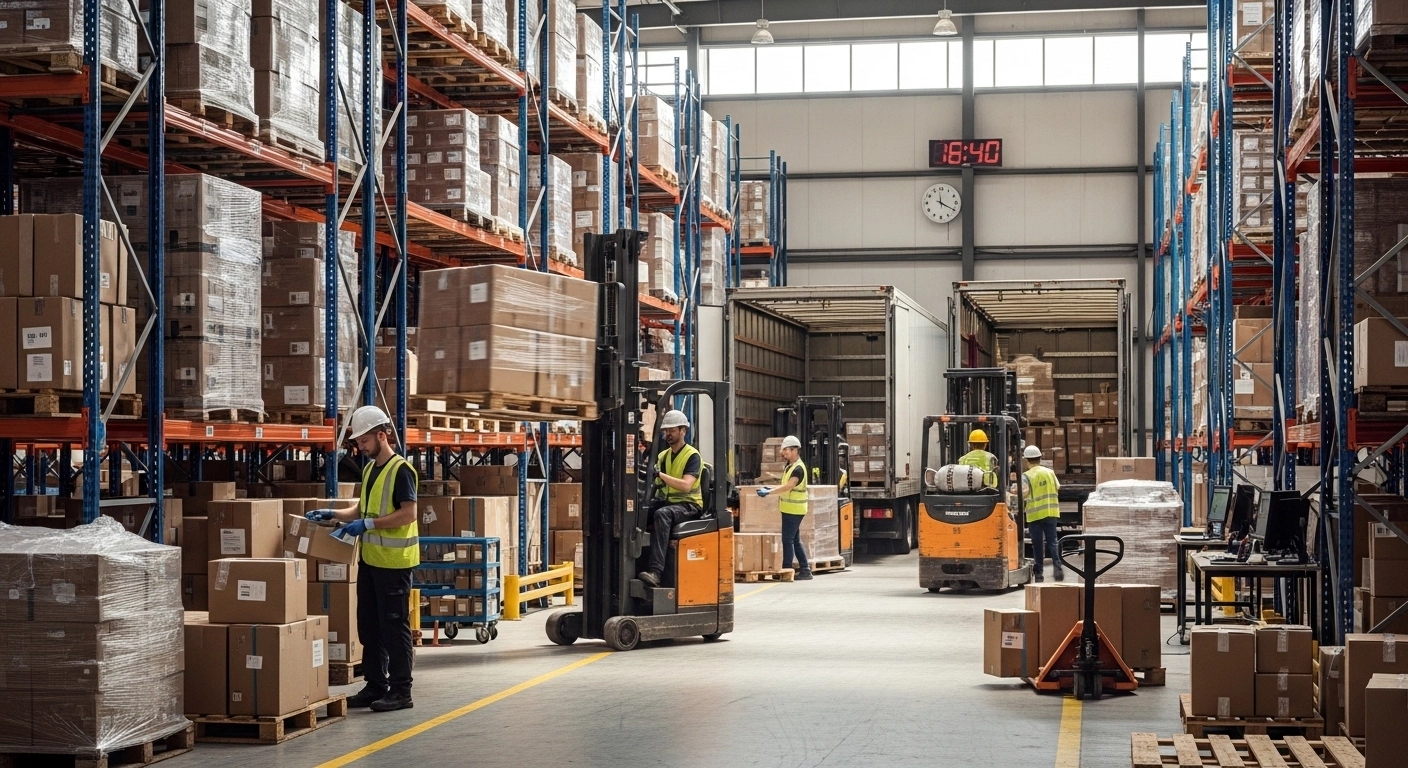
Procurement and sourcing is where the supply chain starts. It involves identifying suppliers, negotiating contracts, managing supplier relationships, and ensuring the business has a reliable flow of materials at the right price and quality.
Production and manufacturing planning ensures that goods are made in the right quantities, at the right time, without wasting materials or creating excess inventory. SCM coordinates production schedules with demand forecasts and supply availability.
Warehousing and inventory management covers where goods are stored, how much stock is held at each location, and how inventory is tracked and controlled. Getting this wrong leads to either stockouts or excess inventory tying up capital.
Transportation and distribution involves moving goods between every stage of the supply chain from supplier to factory, factory to warehouse, and warehouse to customer.
Demand forecasting and planning uses data to predict what customers will need and when. Accurate forecasting allows every other part of the supply chain to be planned more efficiently.
What Is Logistics Management? Operational Excellence in Action
Logistics management is the planning, implementation, and control of the movement and storage of goods, services, and information within a supply chain. It ensures that products reach the right place, at the right time, in the right condition, while minimizing costs and maximizing efficiency.
Types of Logistics
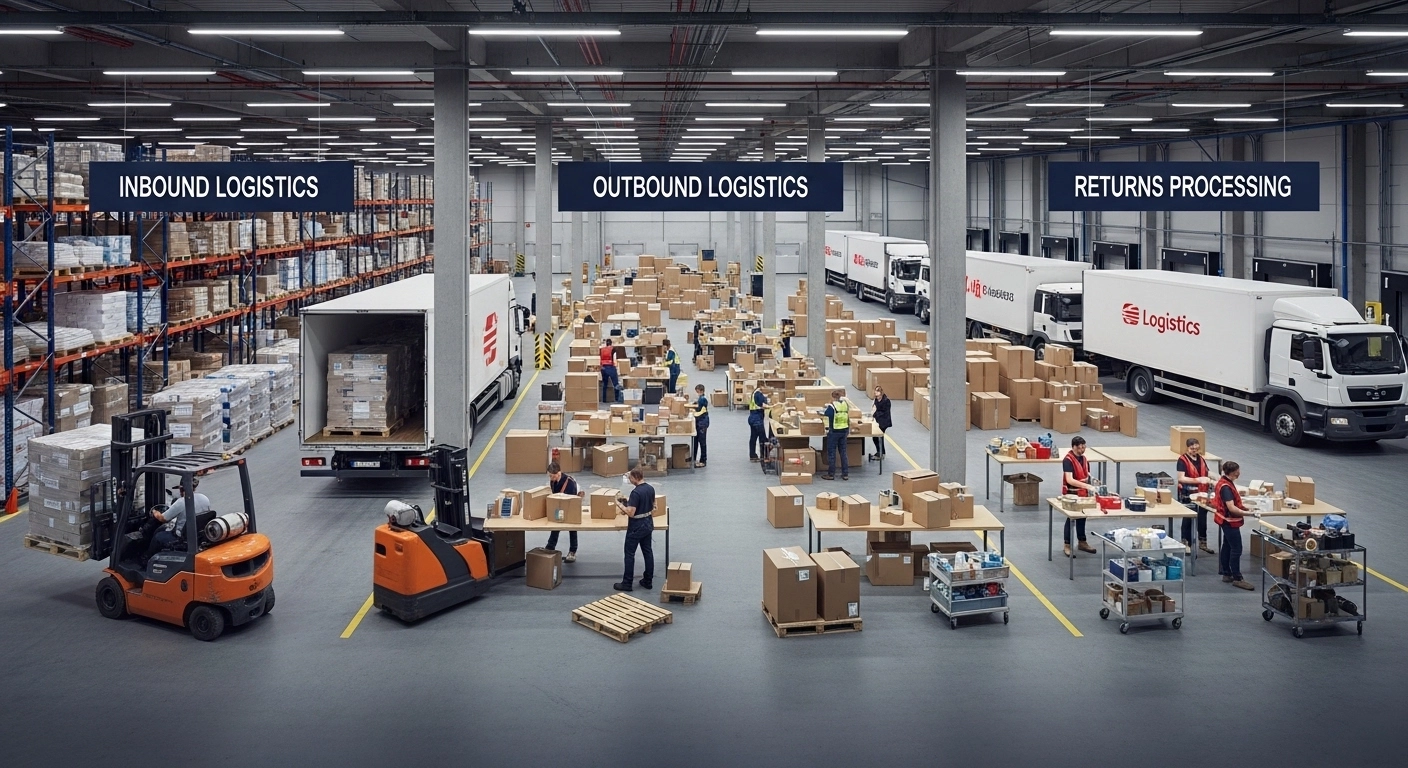
Inbound logistics deals with the movement of goods coming into the business. This includes receiving raw materials or components from suppliers, managing the transport of those goods, and processing them into the business’s inventory.
Outbound logistics handles the movement of finished products leaving the business. This covers picking, packing, dispatching, and delivering orders to customers or retail partners.
Reverse logistics manages goods moving backwards through the chain, customer returns, product recalls, recycling, refurbishment, and disposal. This function is often underinvested in, despite its significant impact on cost and customer experience.
Distribution logistics focuses on the final stage of delivery getting goods from a distribution centre to the end customer. Last-mile delivery sits here, and it’s typically the most expensive and operationally complex part of the logistics process.
Key Functions of Logistics
Transportation planning and fleet management involves deciding which routes to use, which carriers to work with, and how to balance delivery speed against cost. Fuel efficiency, vehicle utilisation, and on-time performance are all measured here.
Warehouse operations and inventory control cover how goods are received, stored, picked, and dispatched within a facility. Efficient warehouse operations reduce handling time, improve order accuracy, and lower the cost per order.
Order processing and delivery tracking ensures orders are received correctly, fulfilled accurately, and tracked from dispatch to delivery. Real-time tracking has become a customer expectation, not a premium feature.
SCM vs Logistics: Understanding the Key Differences
Supply Chain Management (SCM) is the strategic oversight of the entire flow of goods, information, and finances from suppliers to customers. It covers sourcing, production, warehousing, transportation, and distribution while planning for efficiency and risk
management.
Logistics is a subset of SCM that focuses on moving, storing, and delivering products efficiently. SCM sets the strategy, and logistics ensures smooth day-to-day operations. Knowing the difference helps businesses reduce costs, optimize processes, and improve overall performance.
Difference Summary
| Aspect | SCM | Logistics |
|---|---|---|
| Scope | End-to-end, whole supply network | Part of SCM, focused on movement and storage |
| Focus | Strategic planning | Operational execution |
| Objectives | Long-term cost, efficiency, and resilience | Short-term delivery, accuracy, and speed |
| Decision Level | Executive and senior management | Operational and managerial |
| Timeframe | Months to years | Days to weeks |
Similarities Between SCM and Logistics
Supply Chain Management (SCM) and logistics share a common goal: delivering products to customers efficiently and on time. Both rely on careful planning, coordination, and monitoring of goods and information, while focusing on reducing costs and enhancing overall operational
efficiency.
Technology, data, and analytics are crucial for optimizing processes in both areas, and collaboration among suppliers, manufacturers, and distributors is essential for their success.
Role of Logistics Within SCM
Logistics is a critical part of Supply Chain Management, responsible for the practical movement, storage, and delivery of goods. It ensures that products reach the right place, at the right time, and in the right condition. While SCM sets the overall strategy, logistics
executes the day-to-day operations, coordinating transportation, warehousing, inventory management, and distribution. Effective logistics supports cost efficiency, timely deliveries, and customer satisfaction, making it the operational backbone of the broader supply chain.
Challenges in SCM and Logistics
Effective supply chain management (SCM) and logistics are critical for business success, but companies face numerous obstacles in keeping operations smooth. From sudden disruptions to long-term inefficiencies, understanding these challenges is the first step toward building a resilient supply chain.
Supply Chain Challenges
Demand fluctuations are a constant challenge, influenced by seasons, trends, economic changes, and competitor activity. Supply disruptions and changing trade regulations add further complexity. Factory fires, port strikes, political crises, or extreme weather can halt supply suddenly, while new tariffs or import rules force businesses to quickly adjust sourcing strategies and pricing.
Logistics Challenges
Transportation delays caused by driver shortages, port congestion, fuel spikes, and seasonal demand affect the entire delivery network. These issues put pressure on timely and efficient product movement. Warehouse space is increasingly limited as e-commerce grows, making it harder to store goods near customers.
Solutions and Strategies
Adopting technologies like AI, IoT, and ERP systems improves visibility across supply chains, helping businesses detect issues early. Strategic planning and risk management prepare companies for disruptions in advance, while collaborating with and diversifying suppliers reduces reliance on a single source, making supply chains more resilient.
Technology and Innovation Driving SCM and Logistics
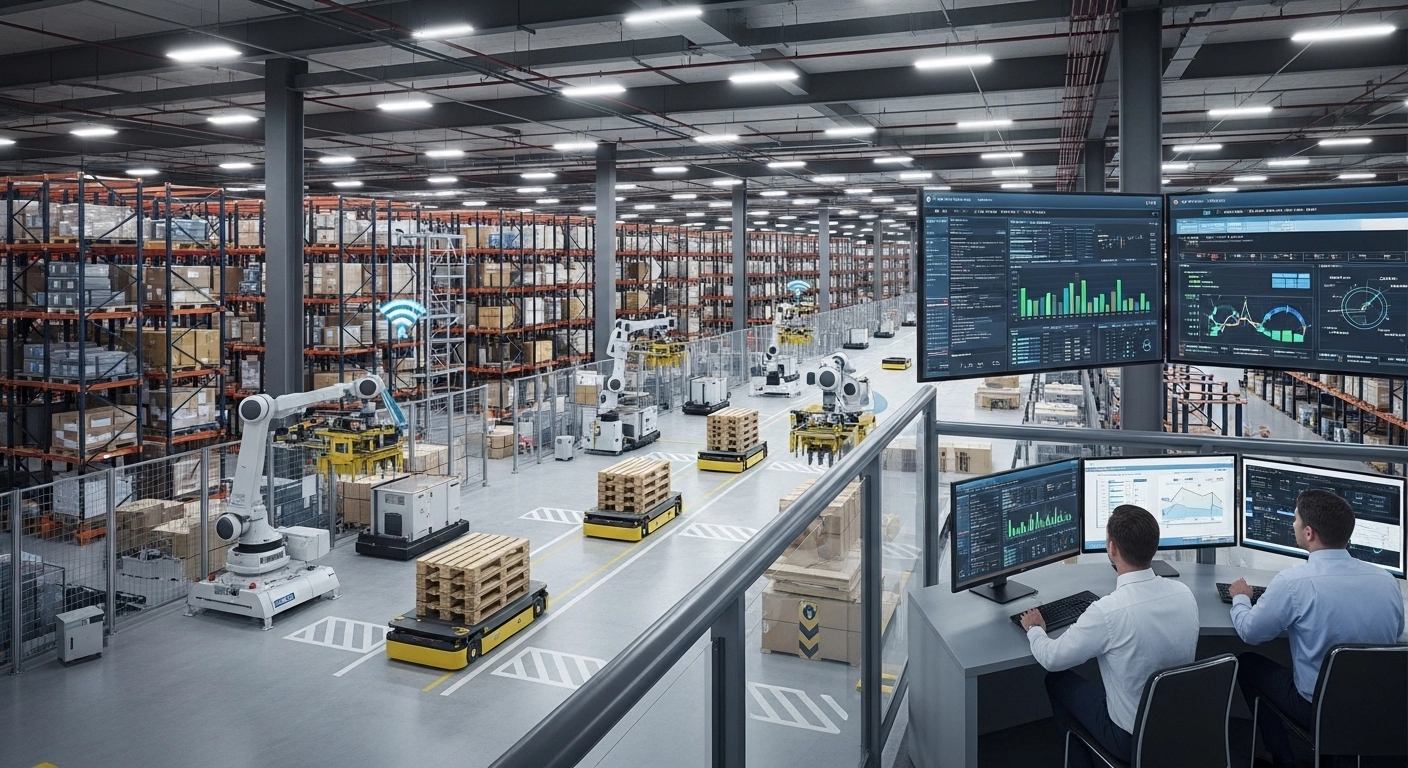
The pace of change in both fields has accelerated sharply. Several technologies are having a genuine impact right now.
AI-powered forecasting and predictive analytics generate demand predictions far more accurate than traditional methods and stockout situations.
Automation and robotics in warehouses are transforming fulfilment. Robotic picking systems and goods-to-person technology allow warehouses to process more orders, faster, with greater accuracy and lower labour costs.
IoT sensors enable real-time tracking of goods throughout the supply chain location, temperature, humidity, and handling conditions. This is particularly valuable for perishable goods, pharmaceuticals, and high-value products where condition monitoring is critical.
Blockchain creates a permanent, tamper-proof record of every transaction and movement in the supply chain. This is being used to improve traceability in food and pharmaceutical supply chains.
Software integration across TMS, WMS, and ERP platforms allows supply chain and logistics teams to work from a single, shared view of operations. When transportation management systems and enterprise resource planning tools share data in real time.
Benefits of Integrating SCM and Logistics
Integrating supply chain management and logistics improves cost efficiency, as decisions consider the entire chain from procurement to delivery. Fulfilment becomes faster, more accurate, and reliable, boosting customer satisfaction. It also enhances resilience and risk management, allowing businesses to spot disruptions early and respond quickly. Overall, full visibility and real-time communication enable smarter decisions, stronger operations, and long-term strategic advantage.
Real-World Examples and Case Studies
Many companies illustrate the power of effective SCM and logistics integration.
Amazon is the most studied example of SCM and logistics working as a single integrated system. Their ability to offer next-day and same-day delivery at scale depends on warehouse locations chosen based on delivery radius data and a logistics network built to move individual parcels with the efficiency of bulk freight.
SCM software and supplier collaboration Companies using platforms like SAP or Oracle have transformed how they work with suppliers by sharing real-time demand forecasts and inventory data. One automotive manufacturer reported a 15 percent reduction in supply disruptions within 18 months of implementing a supplier collaboration platform.
COVID-19 was the biggest stress test for global supply chains. Businesses with single-source suppliers, lean inventories, or no contingency plans struggled the most. The fastest-recovering companies had diversified suppliers, flexible logistics, and clear supply chain visibility, while those that invested in both SCM strategy and logistics capability before the crisis came out strongest.
Ready to Optimize Your Supply Chain?
Don’t let inefficiencies slow your business. At Logos Distribution in Ontario, CA, we help companies streamline supply chain and logistics operations, reduce costs, and improve delivery performance. Contact us today to schedule a consultation and discover how our tailored solutions can keep your business running smoothly and efficiently.
Conclusion
Supply Chain Management (SCM) and logistics are distinct yet interconnected. SCM is the strategic framework that oversees the entire flow of goods, information, and finances, while logistics focuses on the day-to-day movement, storage, and delivery of products. When both work together effectively, businesses gain cost efficiency, operational resilience, faster fulfilment, and higher customer satisfaction. Investing in technology, strategic planning, and supplier collaboration ensures that companies not only survive disruptions but thrive in a competitive global market.
Frequently Asked Questions
What is the main difference between SCM and logistics?
SCM is strategic and manages the entire supply network, including sourcing, production, and distribution. Logistics is operational, focusing on transporting, storing, and delivering products efficiently.
Why is logistics important in the supply chain?
Logistics ensures that products reach the right place, at the right time, in the right condition, supporting customer satisfaction and operational efficiency.
What are the core functions of logistics?
Transportation planning, warehouse management, inventory control, order processing, and last-mile delivery are the main functions.
How do SCM and logistics work together?
SCM sets the strategy and long-term plan, while logistics executes daily operations. Integration ensures smooth processes, cost efficiency, and faster, reliable deliveries.
How can technology improve SCM and logistics?
AI, IoT, blockchain, and integrated ERP systems enhance visibility, automate processes, optimize routes, and enable real-time decision-making across the supply chain.