
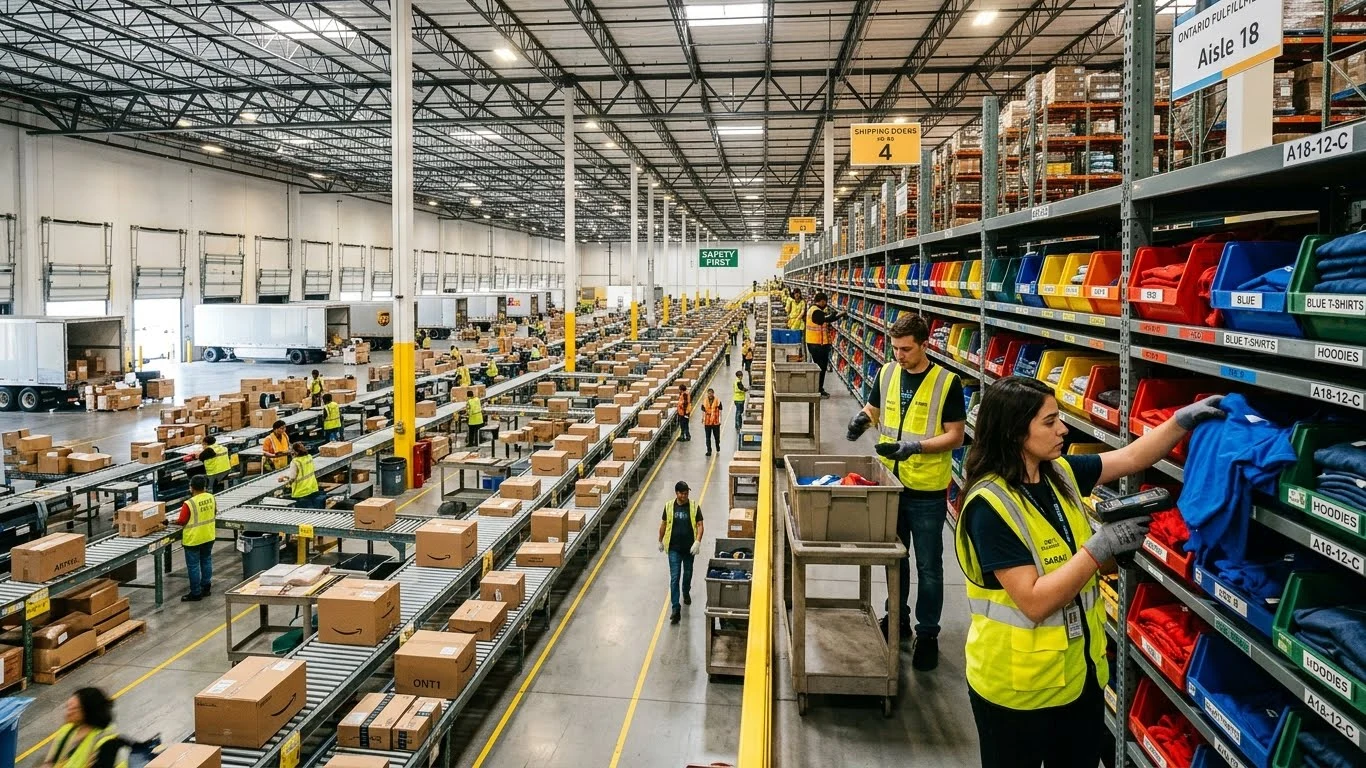
Selling 50 orders a week feels manageable. Then a product goes viral, a sale spikes demand, and suddenly you are hundreds of orders behind with customers asking where their packages are. Every growing apparel brand hits this wall. The difference between brands that push through it and those that lose customers is not the product. It is the fulfillment operation behind it. This guide covers exactly how high-volume apparel fulfilment works and what you need in place before volume overwhelms your operation.
If your apparel brand is ready to build a fulfillment operation that scales, the team at Logos Logistics Distribution in Ontario, CA is here to help. Contact us today to schedule a free consultation.
What Is Apparel Order Fulfilment?
Apparel order fulfilment is the process of receiving, storing, picking, packing, and shipping clothing orders to customers.
It is more complex than other industries because of multiple sizes, colors, and styles, which can lead to errors if not managed properly. It also includes handling returns and meeting fast delivery expectations. In simple terms, it covers every step from storing inventory to delivering the right product to the customer.
Why High-Volume Fulfilment Is Challenging for Apparel Brands
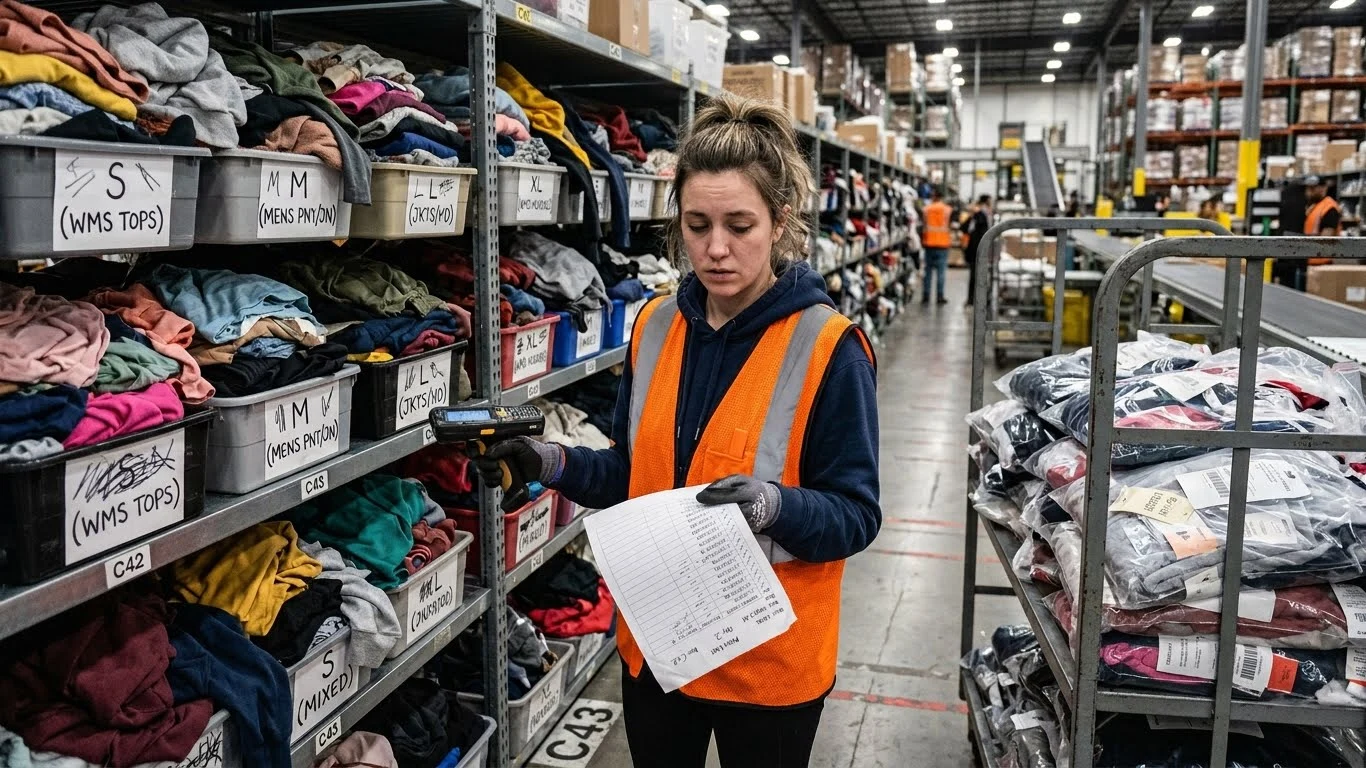
Apparel fulfilment is more complex than most other product categories for four main reasons.
- Multiple SKUs Clothing brands manage hundreds of size and color variations. Keeping track of all of them accurately in a high-volume environment requires proper systems, not spreadsheets.
- High Return Rates The average online apparel return rate was 24.4 percent in 2023. Many customers buy multiple sizes and send the rest back. Managing that volume while keeping inventory accurate and refunds moving quickly is a major challenge.
- Seasonal Demand Spikes A brand shipping 500 orders a week in September may need to fulfil 5,000 in November. Without the right infrastructure, those spikes break operations and damage customer relationships.
- Inventory Accuracy In a high-SKU environment, even small discrepancies cause real problems. Oversells, stockouts, and mis-picks all trace back to poor inventory accuracy.
Key Components of High-Volume Order Fulfilment
Managing high-volume order fulfilment requires a combination of accurate inventory control, efficient warehouse operations, fast order processing, and reliable shipping systems working together seamlessly.
Inventory Management
Real-time stock tracking through a warehouse management system keeps inventory accurate across all locations and sales channels. It prevents stockouts of fast-moving items and flags overstock before it becomes a problem. For apparel brands with high SKU counts, this level of visibility is essential.
Warehouse Operations
An organized warehouse is a fast warehouse. Fast-moving SKUs need to be in the most accessible locations. Clear labeling, consistent bin assignments, and organized storage by size and color all reduce picking time and minimize errors.
Order Processing and Accuracy
Speed matters but accuracy matters more. Barcode scanning at every picking stage, digital checklists, and quality control checks at the packing station all reduce mis-shipments and keep customers happy.
Shipping and Last-Mile Delivery
Carrier selection, rate optimization, and delivery speed all affect the customer experience. Smart fulfilment software automatically compares carrier rates, prints labels, and updates tracking. Strategic warehouse placement shortens delivery times and reduces shipping costs.
Returns and Reverse Logistics
A well-designed returns process receives items quickly, inspects them, and restocks sellable items fast. A slow or disorganized returns process creates inventory inaccuracies, delays refunds, and frustrates customers. For high-volume apparel brands a dedicated returns workflow is just as important as outbound fulfillment.
How Apparel Brands Handle High Order Volumes Efficiently
Handling high order volumes efficiently comes down to using the right systems, processes, and logistics partners to keep operations fast, accurate, and scalable.
Automating Warehouse Operations
Barcode scanning at every stage eliminates manual errors. RFID technology speeds up receiving and stock counts. Automated sorting, robotic picking, and smart packing stations reduce manual labor and increase the number of orders processed per hour. Brands that invest in automation consistently outperform those relying on manual processes when volume spikes hit.
Using Technology and Data
A warehouse management system controls storage locations, directs pickers, and tracks every item in real time. An order management system connects all sales channels so orders from Shopify, Amazon, and wholesale accounts flow into one place and are processed consistently. Together these systems remove the manual work that causes errors and delays.
Multi-Channel Fulfilment
Managing Shopify, Amazon, retail, and direct orders from one unified operation requires systems that handle all channels simultaneously. Multi-channel fulfillment platforms connect all sales channels to a single inventory pool, route orders to the most efficient location, and update stock levels in real time across every channel.
Optimizing Picking and Packing
Batch picking groups multiple orders together so pickers retrieve items for several orders in one warehouse trip. Wave picking organizes orders by carrier deadlines so time-sensitive shipments are processed first. Both strategies significantly speed up fulfilment during high-volume periods.
Planning for Peak Seasons
Using historical sales data and promotional calendars to forecast demand allows brands to stock the right quantities, plan staffing, and book carrier capacity in advance. Brands that plan early and communicate those plans to their fulfilment partners handle peak seasons far more smoothly than those that react after demand has already arrived.
Role of 3PL in High-Volume Apparel Fulfilment
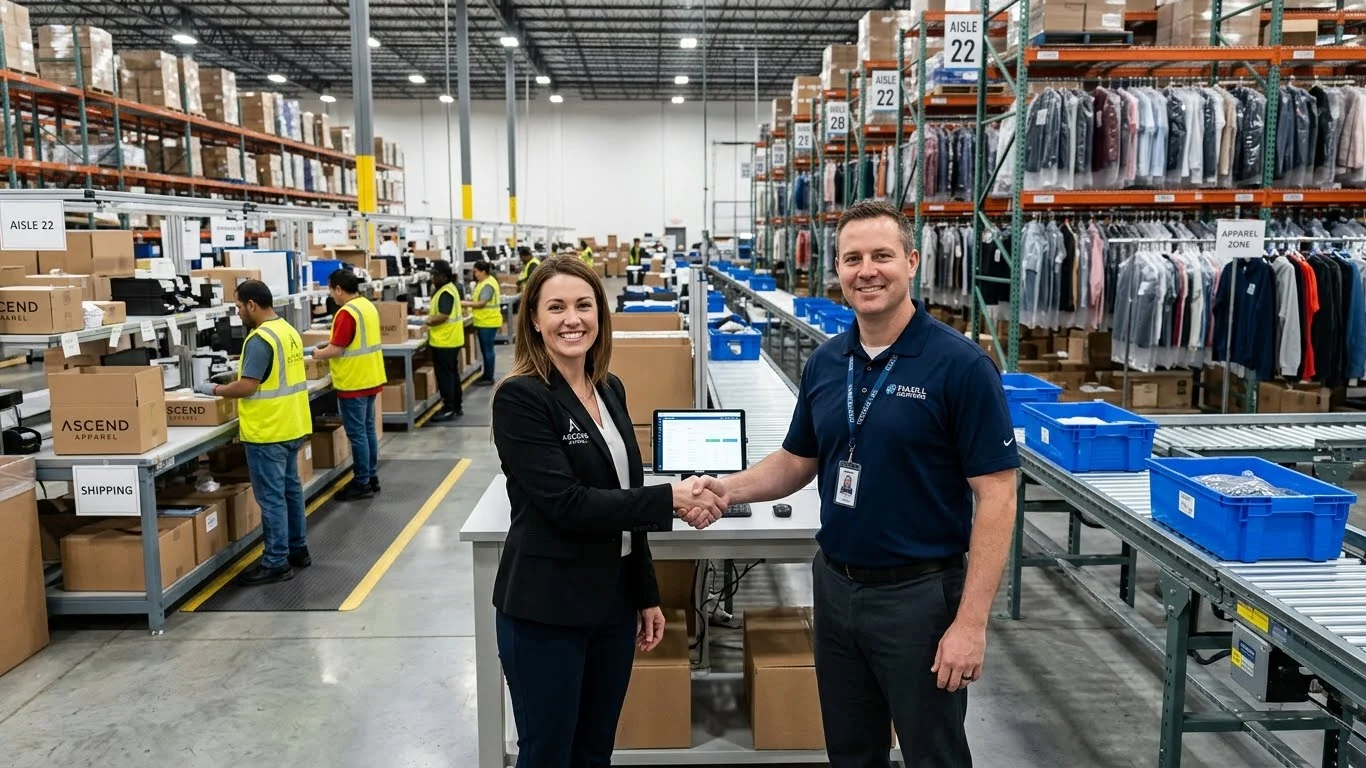
A third-party logistics provider handles warehousing, order fulfilment, and shipping on your behalf. For apparel brands managing high order volumes, a specialized 3PL brings the infrastructure, technology, and expertise that most in-house operations cannot match without significant investment.
A good 3PL already has the warehouse space, automation systems, trained staff, and carrier relationships in place. You plug into that infrastructure rather than building it from scratch. During peak seasons, a 3PL scales up capacity without you needing to hire temporary staff or find extra storage. When demand drops, you scale back without carrying the cost of idle resources.
Benefits of Using a 3PL for High-Volume Orders
- Faster Shipping 3PLs with strategically located warehouses shorten delivery distances and allow brands to offer two-day or next-day delivery without building their own fulfillment network.
- Lower Costs 3PLs negotiate bulk shipping rates that individual brands cannot access. Their automated processes also reduce the cost per order compared to manual in-house fulfillment.
- Scalability and Flexibility A 3PL handles 500 orders a week and 5,000 orders a week using the same infrastructure. You scale up during peak seasons and scale back when demand drops without any extra investment.
- Improved Accuracy Specialist systems, barcode scanning, and quality control processes reduce mis-shipments, lower return volumes caused by fulfillment errors, and improve customer satisfaction.
- Focus on Brand Growth When logistics is handled by a specialist your team gets their time back to focus on product development, marketing, and the things that actually grow the brand.
Best Practices for Managing High-Volume Fulfilment
Successful high-volume fulfillment depends on consistent processes, smart use of technology, and continuous optimization to maintain speed, accuracy, and efficiency as orders grow.
Maintain Accurate Inventory
Keep stock data clean and reliable at all times. Regular cycle counts, barcode scanning at every stage, and real-time updates through a warehouse management system prevent the errors that lead to oversells, stockouts, and mis-picks. In a high-SKU apparel environment, inventory accuracy is the foundation everything else is built on.
Use Automation Tools
Automate order routing, barcode scanning, label generation, and low-stock alerts wherever possible. Automation reduces manual work, speeds up order processing, and keeps error rates low even when order volumes spike unexpectedly during peak periods.
Monitor Performance Metrics
Track order accuracy rate, fulfilment speed, return rate, and on-time delivery consistently. Reviewing these numbers regularly gives you the visibility to spot problems early and make improvements before small issues become costly ones.
Improve Warehouse Layout Regularly
Fast-moving SKUs should always be in the most accessible warehouse locations. As your product range grows and changes with each season, the layout needs to adapt accordingly. A logical and well-maintained warehouse layout reduces picking time and improves accuracy across the entire operation.
Build Strong Supplier Relationships
Inbound inventory needs to arrive on time and in the correct quantities. Delayed or incorrect supplier shipments create problems that ripple through every stage of the fulfilment process. Clear communication, shared forecasts, and strong supplier partnerships make your operation more predictable and resilient.
Common Mistakes to Avoid
Relying on manual processes is the most common mistake. Spreadsheets and paper pick lists break down fast as orders grow. Moving to proper systems early saves significant time and money. Poor demand forecasting leaves brands overstocked or unable to fulfil orders during peak periods. Using historical data and planning ahead with your fulfillment partner prevents this.
Ignoring returns management is costly in apparel. Without a structured process you lose money, lose inventory accuracy, and lose customers expecting faster refunds. Lack of system integration between your eCommerce platform, WMS, and order management system creates errors at every handoff. Seamless integration is essential for high-volume fulfilment to run smoothly.
How to Choose the Right Fulfilment Strategy
The choice between in-house fulfilment and a 3PL comes down to cost, control, and scalability. In-house fulfilment gives you full control and works well at lower volumes. As orders grow, fixed costs for warehouse space, equipment, and staff become harder to justify and the operational complexity harder to manage.
A 3PL trades some direct control for scalability, lower variable costs, and access to specialist infrastructure. For most growing apparel brands the benefits outweigh the costs once order volumes pass a few hundred orders per month. The right choice depends on your volume, growth trajectory, and how much time you want your team spending on logistics versus building the brand. Most brands that scale successfully move to a 3PL earlier than planned and wish they had done it sooner.
Future Trends in Apparel Fulfilment
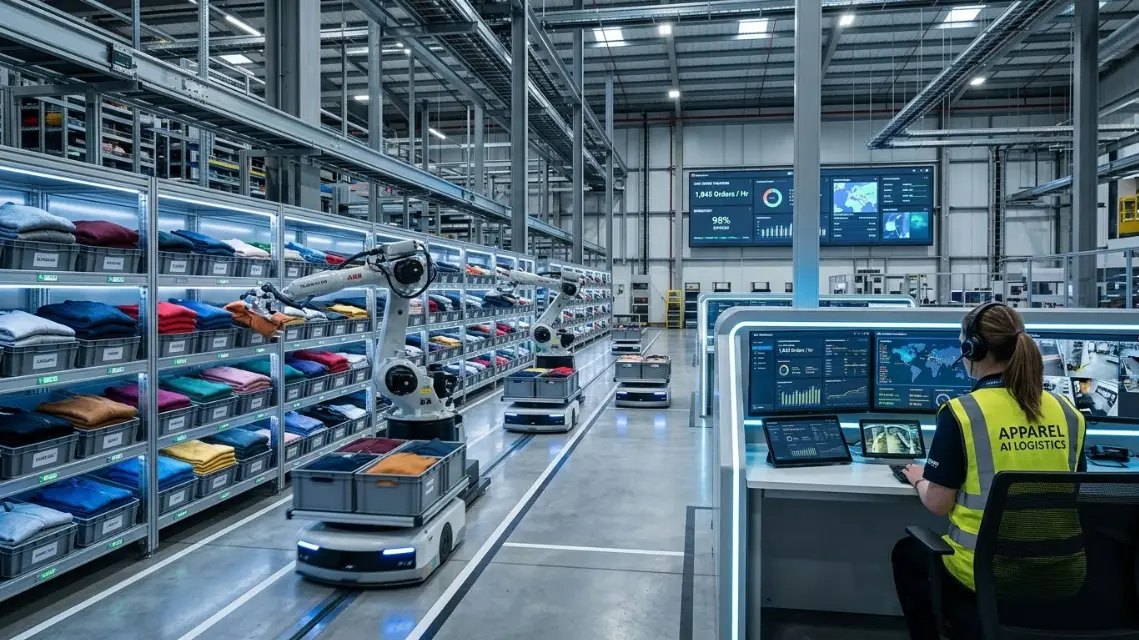
The future of apparel fulfilment is driven by automation, real-time data, and faster delivery expectations, helping brands scale efficiently while improving accuracy and customer experience.
- AI and Automation Robotic picking, automated sorting, and AI-powered demand forecasting are becoming standard in leading fulfilment centers. Brands partnering with forward-thinking 3PLs gain access to these tools without the capital investment of building their own.
- Smart Warehouses IoT sensors and real-time data give managers live visibility into every stage of the operation. Problems are spotted faster, stock levels stay accurate, and decisions are based on live data rather than manual counts.
- Real-Time Tracking Customers now expect to know where their order is at every stage. Fulfilment operations that cannot provide this level of visibility will struggle to retain customers in a competitive market.
- Sustainable Logistics Eco-friendly packaging, carbon-neutral shipping, and ecommerce programs are becoming standard. For apparel brands where sustainability is a core value, having a logistics partner that shares those values is increasingly important.
- Faster Delivery Expectations Same-day and next-day delivery expectations are expanding beyond major cities. Distributed fulfillment networks and strategically placed warehouses are the solution, and for most brands a 3PL with an established network is the most practical way to achieve it.
Ready to Scale Your Apparel Fulfilment?
Managing high-volume orders, multiple SKUs, seasonal spikes, and returns all at once is a lot to handle. At Logos Logistics Distribution in Ontario, CA, we specialize in end-to-end fulfilment solutions built for growing apparel brands. From warehousing and pick and pack to shipping and returns management, we handle the logistics so you can focus on the brand. Contact Logos Logistics Distribution today to schedule a free consultation.
Conclusion
High-volume order fulfilment is not just an operational challenge. It is a growth challenge. Brands that get it right scale confidently and build customer experiences that drive loyalty. Brands that get it wrong lose customers, lose money, and lose time.
The principles are the same whether you manage fulfillment in-house or through a 3PL: accurate inventory, smart technology, efficient warehouse processes, and a returns system that works. Getting these right and fulfilment becomes a competitive advantage.
Frequently Asked Questions
What is high-volume order fulfillment in apparel?
It is the process of managing large numbers of orders efficiently and accurately, including multiple SKUs, seasonal demand spikes, high return volumes, and inventory accuracy across all sales channels.
How do apparel brands manage seasonal demand spikes?
By forecasting demand using historical sales data and planning stock, staffing, and carrier capacity in advance. Partnering with a 3PL that can scale up quickly during peak periods is also a common and effective solution.
What technology do apparel brands use for fulfillment?
The core tools are warehouse management systems, order management systems, barcode scanning for picking accuracy, and carrier management software for shipping rate optimization and label generation.
When should an apparel brand outsource fulfillment to a 3PL?
When orders are growing faster than the team can handle, errors are increasing, warehouse space is running out, or logistics is taking time away from brand growth. Most brands find that moving earlier than planned delivers better results.
How do apparel brands handle high return rates?
By building a structured returns workflow that receives, inspects, and restocks items quickly. Good returns management keeps inventory accurate, processes refunds fast, and maintains customer trust.