
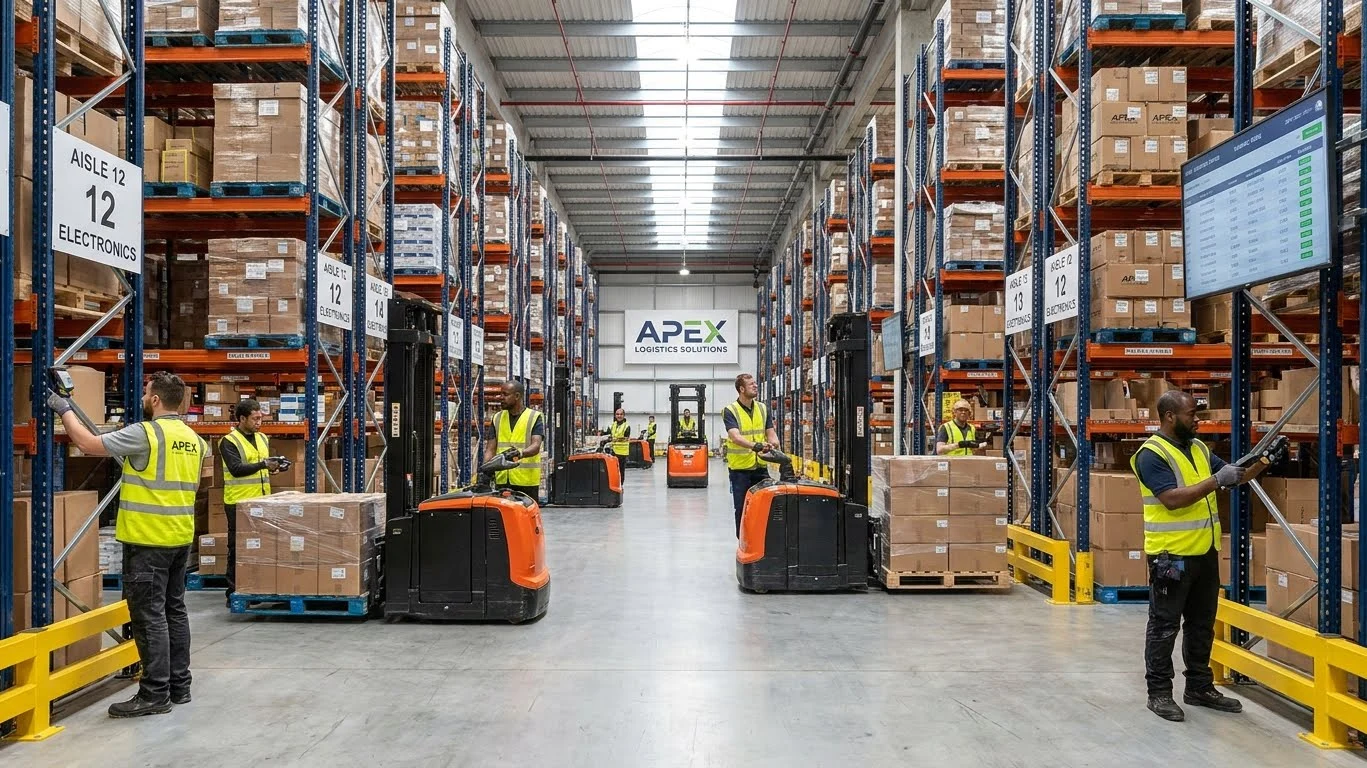
Third-party logistics (3PL) companies handle the physical side of your supply chain on your behalf, storing your inventory, picking and packing orders, shipping them to customers, and processing returns. In simple terms, a 3PL is the outside partner that stores, ships, and scales your product so you don’t have to build a warehouse or delivery system yourself.
The third-party logistics market was valued at USD 1.5 trillion in 2024 and is growing at 10.1% per year, making 3PL one of the fastest-adopted solutions for businesses that ship physical products. From order fulfillment and inventory management to transportation and specialized industry handling, 3PL providers use technology and warehouse expertise to move products faster and more accurately than most businesses can manage in-house.
If you’re looking for a trusted 3PL partner in the United States, Logos Logistics Distribution helps businesses of every size store, ship, and scale with confidence, without the overhead of running their own warehouse or fulfillment team.
What Is a Third-Party Logistics (3PL) Company?
A third-party logistics company is an outside business that manages some or all of a company’s supply chain and logistics operations. Instead of storing products in your own warehouse and shipping orders yourself, you hand those tasks over to a 3PL provider who has the space, staff, systems, and experience to do it better and faster. Think of a 3PL as a logistics partner. You focus on selling your product and growing your brand. They focus on getting that product to your customer safely and on time.
Not all 3PLs operate the same way. Some are asset-based, meaning they own their own warehouses, trucks, and equipment. Others are non-asset-based, meaning they arrange and coordinate logistics services through a network of partners rather than owning the infrastructure themselves. Asset-based providers tend to offer more direct control over storage and fulfillment, while non-asset-based providers often offer more flexibility and a wider carrier network. Many 3PLs, including full-service fulfillment companies, blend both models depending on the service.
Examples of Well-Known 3PL Companies
To put the concept into context, 3PL providers range from large national and global players to regional specialists. Companies like FedEx Supply Chain, UPS Supply Chain Solutions, XPO Logistics, and C.H. Robinson are examples of major 3PL and freight-focused providers, while regional and niche providers like Logos Logistics Distribution focus on specialized services such as FBA prep and apparel fulfillment for growing e-commerce brands. The right fit depends less on company size and more on whether the provider’s services, technology, and industry experience match what your business actually needs.
Core Functions of 3PL Companies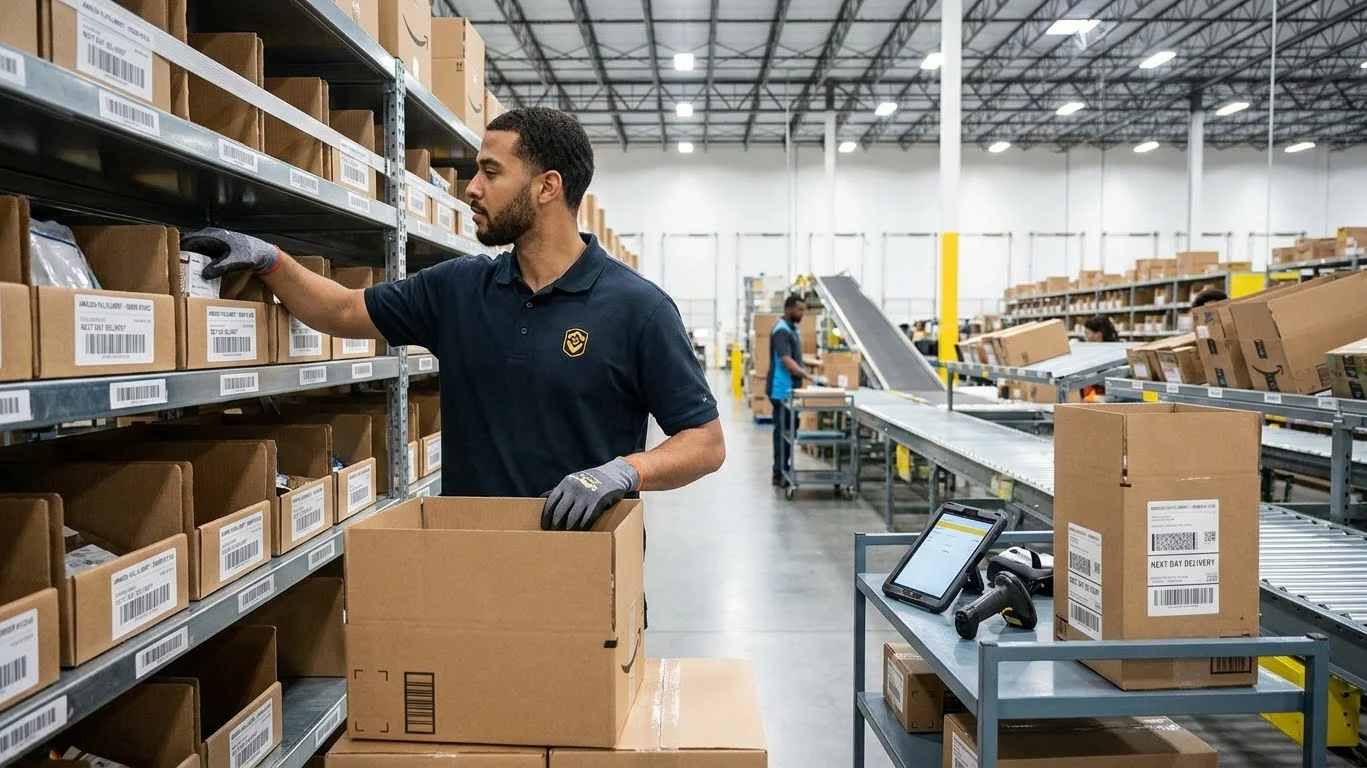
3PL companies handle important logistics tasks that help businesses store, manage, and deliver products efficiently.
Order Fulfillment
When a customer places an order on your website or store, the 3PL receives that order automatically and gets to work. Order fulfillment is the full process of getting that order from the shelf to the customer’s door.
Picking and Packing
After an order comes in, warehouse staff pick the right products from the shelves. They then pack them securely using the right box size and materials. Many 3PLs also offer custom packaging options to match your brand.
Transportation Management
Some 3PLs also manage freight and transportation, which means they coordinate how products move from your supplier or manufacturer to the warehouse. They find the best routes, negotiate carrier rates, and make sure shipments arrive on time.
Inventory Management
Keeping track of what you have in stock is a full-time job. 3PL providers use advanced software to track every unit in real time. You can usually log in to a dashboard and see exactly how much inventory you have, what has sold, and when you need to reorder.
Kitting and Value-Added Services
Beyond the core functions of storing, picking, and shipping, many 3PLs also offer kitting, which means combining multiple individual products into a single ready-to-ship package. This is common for subscription boxes, product bundles, and promotional sets. Some 3PLs also offer light assembly, custom labeling, and product customization, allowing businesses to offer more variety to customers without adding extra work to their own operations.
Types of 3PL Services
Different types of 3PL services help businesses manage warehousing, shipping, inventory, and order fulfillment more efficiently.
Transportation-Based 3PL
These providers focus mainly on moving goods from one place to another. They manage trucking, air freight, ocean freight, and rail shipping. They are ideal for businesses that need help with transportation but already have their own warehousing.
Fulfillment-Based 3PL
These are the most common types for e-commerce businesses. They handle the complete order fulfillment process from the moment an order is placed to the moment it arrives at the customer’s door.
Technology-Driven 3PL
The top warehouse technologies 3PLs are investing in include AI and machine learning, warehouse management systems, and automated storage and retrieval systems. Technology-driven 3PLs are built around these tools, offering clients real-time visibility, automation, and advanced data reporting.
Specialized Industry 3PL Providers
Some 3PLs focus on specific industries like healthcare, food and beverage, or fashion. They have the right storage conditions, certifications, and processes to handle products that need special care or compliance.
How the 3PL Fulfillment Process Works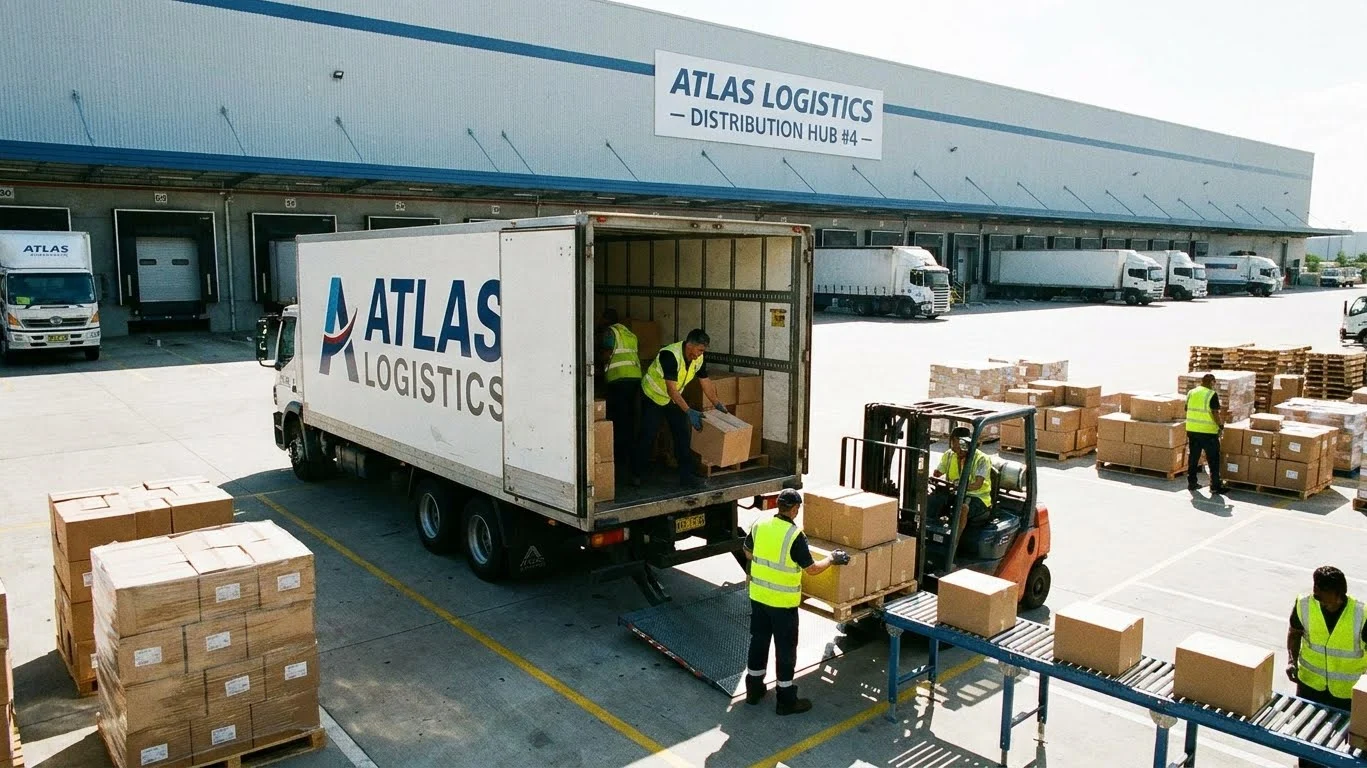
The 3PL fulfillment process starts before your products even arrive. Most 3PLs require an advance shipping notice, sometimes called a warehouse receiving order, which tells the provider what’s being shipped, how many units, and other key details ahead of time. When your products arrive at the warehouse, staff check them against this notice, count and inspect them for accuracy, and log everything into the warehouse management system before storing them in organized locations. When a customer places an order, it flows automatically into the 3PL’s system, and a warehouse worker picks the right items from the shelves, packs them securely, and hands them over to a shipping carrier.
The customer then receives a tracking number so they can follow their order all the way to their door. If a return comes in, the 3PL handles that too, inspecting the item and restocking or disposing of it based on your instructions. The whole process runs smoothly in the background so you can focus on running your business.
Challenges of Working With a 3PL
While 3PLs offer many benefits, there are some challenges to be aware of. When you hand logistics over to a third party and any mistakes will still reflect on your brand. Some 3PLs can be slow to respond to problems or unclear in their communication, which can cause frustration.
Getting your online store or inventory system to connect properly with the 3PL’s software can also take time and technical effort. On top of that, some providers charge hidden fees for things like account management, long-term storage, or returns processing, so it is always important to read the contract carefully before signing anything.
Industries That Commonly Use 3PL Services
Many different industries rely on 3PL services to manage their supply chains efficiently. E-commerce and retail businesses use 3PLs the most, as they need fast and accurate order fulfillment to keep up with online shopping demand. Healthcare and pharmaceutical companies depend on specialized 3PLs for temperature-controlled storage and strict regulatory compliance.
Manufacturers use 3PLs to move raw materials and finished goods between factories and distribution centers. Fashion and apparel brands rely on 3PLs for seasonal inventory management and easy returns, while electronics companies need secure storage.
3PL vs. Other Logistics Models
Understanding how a 3PL compares to other logistics and fulfillment models can help you choose the right solution for your business. Here’s how the most common models stack up:
Model |
Who Owns Inventory |
Who Handles Fulfillment |
BestFor |
Control Level |
|---|---|---|---|---|
| 3PL | You | Outsourced to the 3PL | Growing businesses that want to outsource storage, packing & shipping | Moderate |
| 4PL | You | Managed strategically across multiple 3PLs | Large businesses needing full supply chain oversight | Low (delegated) |
| Freight Forwarding | You | Forwarder handles international shipping only | Businesses needing customs, cross-border shipping | High (for domestic ops) |
| Dropshipping | Supplier | Supplier ships directly to customer | New or low-inventory businesses testing products | Low |
| In-House Fulfillment | You | Your own team, in your own facility | Businesses with high volume & capital for infrastructure | Full control |
In short, a 3PL gives you the best balance of cost savings, speed, and control for most growing e-commerce and retail businesses, without the overhead of in-house fulfillment or the reduced product control that comes with dropshipping.
Signs Your Business Needs a 3PL Provider
As your business grows, certain challenges may show it’s time to partner with a 3PL provider for better logistics and fulfillment support.
Growing Order Volumes If you are spending more time packing orders than running your business, it is time to outsource. A 3PL can handle high order volumes efficiently and accurately.
Lack of Warehouse Space Running out of room to store your products is a clear sign that you need a logistics partner with dedicated warehouse space.
Shipping Delays and Fulfillment Problems If orders are going out late or with errors, a professional 3PL can bring the accuracy and systems you need to fix these problems.
Rising Logistics Costs If your shipping and storage costs keep climbing, a 3PL’s buying power and shared infrastructure can help bring those numbers down.
Expanding Into New Markets If you want to start shipping to new regions or countries, a 3PL with locations in those areas makes expansion much faster and easier.
How to Choose the Right 3PL Company
Choosing the right 3PL company starts with getting clear on your own business needs, including how many orders you ship and whether you need domestic or international shipping. From there, check where their warehouses are located, make sure their technology integrates with your existing platforms, and compare pricing structures carefully to avoid hidden fees.
Always look for a provider with experience in your specific industry, read reviews from other businesses, and assess whether they can scale with you as your order volumes grow. Before signing anything, review the service level agreement closely to make sure their promises around order accuracy and customer support match what your business actually needs.
Technology Used by Modern 3PL Companies
Modern 3PL companies rely heavily on technology to run their operations efficiently and accurately. They use Warehouse Management Systems to track every item in real time, inventory tracking software to monitor stock levels and send low-stock alerts, and real-time shipment tracking so both businesses and customers always know where an order is.
Many 3PLs are also investing in automation, robotics, and artificial intelligence to speed up warehouse operations, reduce human error, and improve overall accuracy. On top of that, advanced data analytics and reporting tools give businesses clear insights into their order volumes, helping them make smarter decisions and plan ahead with confidence.
Common Costs Associated With 3PL Services
3PL services often include different costs for storage, order fulfillment, shipping, inventory management, and returns handling.
Storage Fees
Storage fees are what you pay for the space your inventory takes up inside the 3PL’s warehouse. This is usually charged by the pallet, bin, or cubic foot on a monthly basis. The more inventory you store and the longer it sits there, the more you pay. Some 3PLs also charge higher rates for long-term storage, so it is important to keep your inventory moving and avoid letting products sit for too long. As a general benchmark, storage fees typically range from about $0.50 to $2.00 per cubic foot per month, though exact pricing depends on your provider, location, and how your inventory is packaged.
Pick and Pack Fees
Every time an order is fulfilled, the 3PL charges a fee for picking the items from the shelves and packing them into a box. This fee may be a flat rate per order or it may vary depending on how many items are in each order. Some providers also charge separately for the packaging materials like boxes, bubble wrap, and tape, so always ask what is included in the pick and pack fee. On average, businesses can expect to pay somewhere between $2.00 and $5.00 per order for picking and packing, not including the cost of shipping itself. Rates vary based on order complexity, item count, and any custom packaging requiremen
Shipping Costs
The actual cost of shipping each order is passed on to you by the 3PL. The good news is that because 3PLs ship in very large volumes, they usually get discounted rates from major carriers like FedEx, UPS, and DHL. These savings are often passed on to you, which means you may pay less for shipping through a 3PL than you would on your own.
Account Management Fees
Some 3PL providers charge a monthly account management fee for managing your account, giving you access to their software, providing reports, and handling customer support. This fee varies from provider to provider. Some include it in their base pricing while others list it as a separate charge, so always ask upfront.
Returns Processing Fees
Every time a customer sends a product back, the 3PL charges a fee to receive it, inspect it, and process it back into your inventory or dispose of it. If you sell products with high return rates, like clothing or electronics, these fees can add up quickly. Make sure you understand the full returns processing cost before choosing a provider so it does not catch you off guard later.
Is your business ready to stop worrying about warehousing, shipping, and order fulfillment?
At Logos Logistics Distribution in Ontario CA, we provide reliable, fast, and fully managed third-party logistics services designed to help businesses of all sizes grow without the stress of managing their own supply chain.
Whether you are an e-commerce brand shipping hundreds of orders a day or a growing business looking to expand into new markets, our team has the warehouse space, the technology, and the experience to get your products to your customers quickly and accurately every single time. Do not let logistics slow your growth. Contact us today and let us handle the hard part so you can focus on building your business.
Conclusion
Third-party logistics companies exist to take the operational weight of running a supply chain off a business’s plate. A 3PL company manages storage, order fulfillment, picking and packing, shipping, and returns, essentially running the physical side of your logistics so you can focus on sales and growth.
Most businesses turn to a 3PL when order volume outpaces their space, staff, or systems, whether that’s rising shipping costs, delayed orders, no more warehouse room, or plans to expand into new markets. E-commerce and retail brands rely on 3PLs the most, but healthcare, manufacturing, fashion, and electronics companies use them just as heavily for specialized handling and compliance.
The right 3PL partner does more than store boxes; it becomes an extension of your operations. When you choose a provider that fits your industry, integrates with your existing systems, and can scale as you grow, the payoff shows up fast: lower logistics costs, faster and more accurate shipping, better customer experiences, and time back to focus on running your business.
Frequently Asked Questions
What does a 3PL company do?
A 3PL company handles logistics operations on behalf of a business. This includes storing inventory, processing orders, picking and packing products, shipping to customers, and managing returns. They essentially run your supply chain so you do not have to.
What industries benefit most from 3PL services?
E-commerce and retail businesses benefit the most, but 3PL services are also widely used in healthcare, food and beverage, manufacturing, fashion, and electronics. Any business that ships physical products can benefit from working with a 3PL.
How much do 3PL services cost?
Costs vary widely depending on your order volume, storage needs, and the services you require. Most 3PLs charge a combination of storage fees, pick and pack fees, shipping costs, and account management fees. Getting quotes from multiple providers and comparing them carefully is always recommended.
What is the difference between 3PL and 4PL?
A 3PL handles the physical operations of your supply chain like warehousing and shipping. A 4PL manages your entire supply chain strategy, often overseeing multiple 3PLs on your behalf. Think of a 4PL as the manager and the 3PL as the operator.
Can small businesses use 3PL services?
Many 3PL providers work with small businesses and startups. In fact, outsourcing logistics to a 3PL is often one of the smartest early moves a growing business can make, since it removes the need for large upfront investments in warehouse space and staff.