
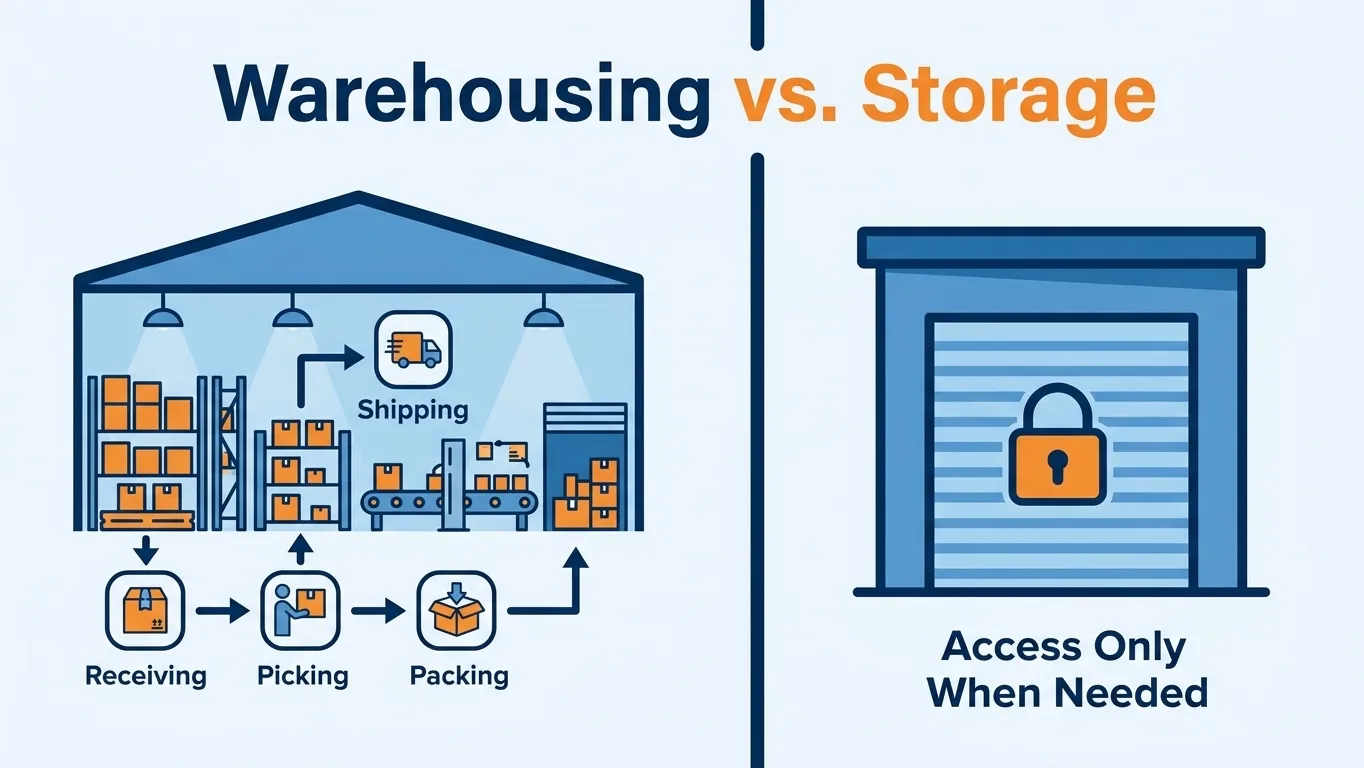
Warehousing is an active service that manages your inventory, including receiving, tracking, picking, packing, and shipping orders. Storage is passive: you rent space, place items inside, and access them only when needed, with no handling included. If you ship orders regularly, warehousing fits your business. If your items mostly sit still, storage is enough.
If you run a business that sells products, you have probably asked yourself where to keep your inventory. Two words come up a lot in this search: warehousing and storage. Many people use these words like they mean the same thing, but they do not. Knowing the difference can save you money and help your business run smoother.
At Logos Logistics Distribution in Ontario, CA, we work with businesses every day who are trying to figure out which option fits their needs. This guide breaks down warehousing and storage in plain language, so you can make the right choice for your goods.
Key Takeaways
- The real dividing line is service versus space. Warehousing does work for you; storage just holds what you already have.
- Turnover rate matters more than business size. A small business shipping daily needs warehousing more than a large business archiving records for years.
- Warehousing scales with growth because labor and space can flex. Storage units are fixed size, so growth usually means renting more units, not expanding one.
- It’s rarely all-or-nothing. Many businesses run active stock through a warehouse and route slow-moving or seasonal stock to storage at the same time.
- Small businesses often outsource sooner than expected, once weekly order volume becomes hard to manage alone, not once the business reaches a certain size.
What Is Warehousing?
Warehousing is a full service that goes beyond just holding your products. It involves managing, tracking, and moving goods as part of a bigger supply chain. A warehouse is a hub of activity, not just a place where boxes sit.
How Warehousing Works
Products arrive at a warehouse, get checked in, and are placed on shelves or racks in an organized system. From there, staff pick, pack, and ship items out based on orders. Everything is tracked using software so the business always knows what is in stock and where it is located.
Core Functions of a Warehouse
A warehouse usually handles several jobs at once. These include receiving goods, storing them, picking and packing orders, shipping products out, and managing returns. Many warehouses also offer extra services like labeling, kitting, and quality checks.
Businesses That Benefit From Warehousing
Warehousing works well for online stores, wholesalers, manufacturers, and any business that ships a large number of orders regularly. If your business needs help managing inventory and fulfilling orders quickly, warehousing is likely the better fit.
What Is Storage?
Storage is simpler than warehousing. It is mainly about keeping items in a safe space until they are needed again. There is usually little to no handling involved once the items are placed inside.
How Storage Works
You rent a space, place your items inside, and lock it up. The items sit there until you come back to get them. There is no picking, packing, or shipping involved on a regular basis.
Common Uses of Storage
People use storage for extra furniture, seasonal items, business records, equipment, or backup stock that is not moving often. It works well for anything that does not need daily attention.
Who Should Use Storage Services?
Storage is a good fit for small businesses with low inventory turnover, people between moves, or businesses that only need extra space during busy seasons. If you are not shipping items often, storage might be all you need.
Difference Between Warehousing and Storage
While both involve keeping goods in a space, the similarities mostly stop there. Warehousing supports an active supply chain, with goods moving in and out often through receiving, tracking, order fulfillment, and shipping. It uses software, barcode scanning, and sometimes robots to manage large volumes of inventory, and staff have daily access to keep things moving. Costs are based on the services used, and the whole setup can scale quickly as order volume changes.
Storage, on the other hand, is limited to simply holding items in place, often for months or years without much movement. It usually comes with no added services, just the space itself, along with basic security like locks and cameras. Access is occasional rather than daily, costs are a flat monthly fee, and it works best for lower volumes of items that do not need to move often.
Warehousing vs. Storage at a Glance
Purpose, services, duration, technology, access, and cost are the six factors that actually separate warehousing from storage. Warehousing wins on speed and visibility. Storage wins on price and simplicity. Everything else follows from that trade-off.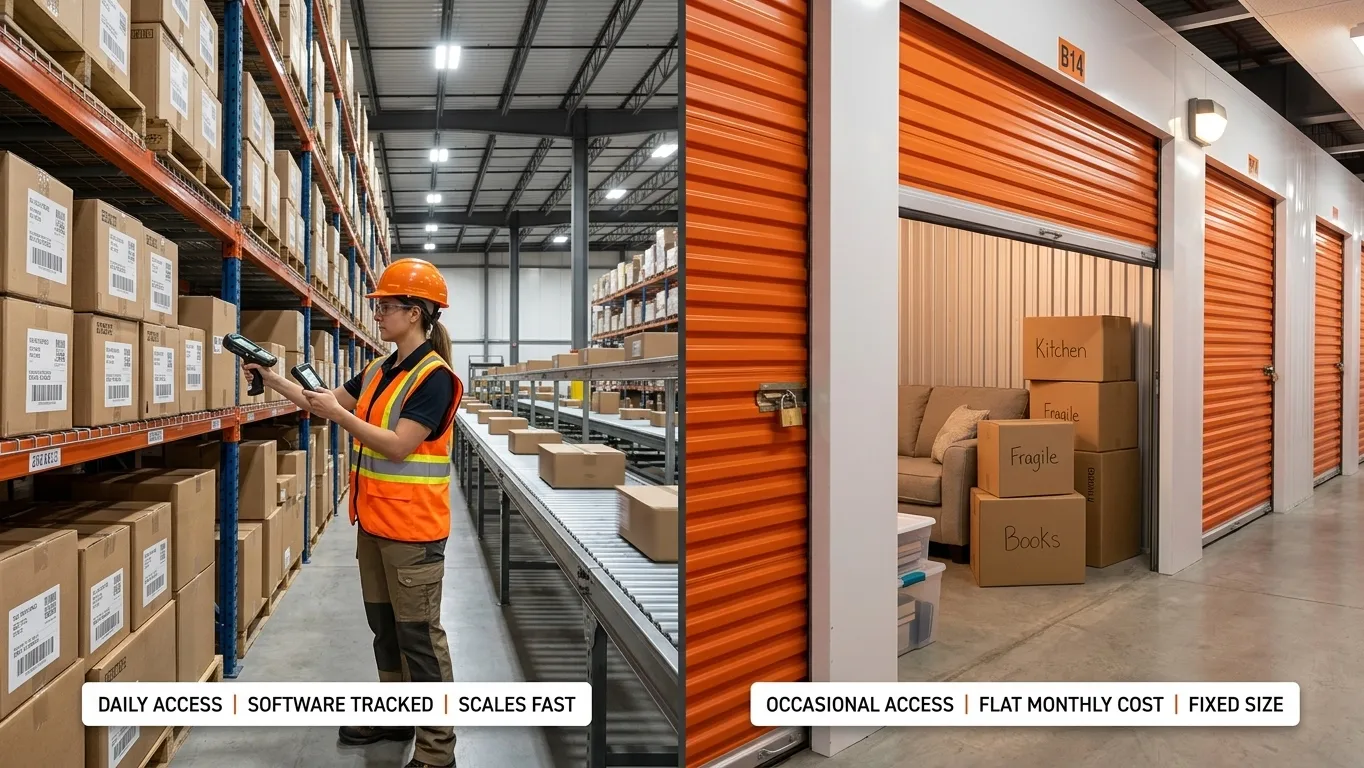
Warehousing vs. Storage Comparison Table
Feature |
Warehousing |
Storage |
| Purpose | Supports active supply chain and order fulfillment | Holds items until needed again |
| Services | Receiving, packing, shipping, inventory tracking | Just the space itself |
| Duration | Short-term, items move often | Long-term, items sit for months or years |
| Technology | Software, barcode scanning, sometimes robotics | Rarely used |
| Access | Staff access items daily | Owner accesses occasionally |
| Cost | Based on services used | Flat monthly fee |
| Best for | Businesses with regular shipping needs | Businesses or people with low-turnover items |
Types of Warehousing
Not all warehouses work the same way. Here are the most common types.
Public Warehouses
These are shared spaces that any business can rent. They are a good option for businesses that do not need a dedicated space full time.
Private Warehouses
These are owned or leased by a single company for its own use. They offer more control but come with higher costs.
Bonded Warehouses
These are used to store imported goods before customs duties are paid. They are common for businesses dealing with international shipping.
Distribution Centers
These are warehouses built specifically for fast movement of goods, often shipping items out within a day or two of arrival.
Cold Storage Warehouses
These are temperature-controlled spaces used for food, medicine, and other items that need to stay cold or frozen.
Automated Warehouses
These use robotics and software to move, pick, and pack items with little human involvement, which speeds up order fulfillment.
Types of Storage
Storage also comes in different forms depending on what you need.
Self-Storage Units
These are small rented units where individuals or small businesses can keep personal items or extra stock.
Bulk Storage
This is a larger space used to hold big quantities of a single type of item, often used by manufacturers or wholesalers.
Climate-Controlled Storage
This type keeps a steady temperature and humidity level, which protects sensitive items like electronics, artwork, or documents.
Automated Storage Systems
Some modern storage facilities use software to track units and manage access, though this is less common than in warehousing.
Benefits of Warehousing
Warehousing offers several advantages for growing businesses.
- Warehouses use tracking systems that show exactly what is in stock and where it is located at all times.
- Since warehouses are built for shipping, orders go out faster, which keeps customers happy.
- Many warehouses offer extra help like labeling, kitting, and quality checks, saving business owners time.
- Warehousing connects receiving, storage, and shipping into one smooth process, cutting down on delays.
- As your business grows, a warehouse can scale up space and services to match your needs without major disruption.
- Warehouses using advanced tracking software see measurable results, not just convenience. According to the MHI Annual Industry Report, companies using advanced warehouse management systems report a 25% improvement in inventory accuracy compared to manual tracking methods.
Benefits of Storage
Storage has its own set of benefits, especially for simpler needs.
- Storage is often cheaper than warehousing since it does not include extra services.
- You can rent storage space for as long or as short a time as you need it.
- Most storage facilities offer locks, gates, and cameras to keep items safe.
- Storage is a smart choice for holiday items, seasonal stock, or temporary overflow.
- Many facilities allow access whenever you need it, giving you control over your own items.
Storage demand has grown steadily for years, not just during moves or emergencies. According to the Self Storage Association’s 2025 Demand Study, household use of self-storage has climbed from 11.1% in 2022 to 12.6% in 2024, showing more people are treating storage as an ongoing solution rather than a one-time need.
Challenges of Warehousing and Storage
Both options come with their own set of challenges to keep in mind. Knowing these ahead of time can help you avoid surprises and choose the option that fits your business best.
Common Warehousing Challenges
Warehousing can come with higher costs due to added services, and managing a large space well takes skilled staff and good systems. Labor shortages can also slow things down, since warehouses depend on trained workers to pick, pack, and ship orders correctly. This isn’t a minor issue. The MHI Annual Industry Report found that 52% of companies now rate hiring and retaining warehouse workers as a major operational challenge, making staffing one of the most consistent pressures the industry faces.
Keeping technology up to date is another challenge, since outdated tracking systems can lead to lost inventory or shipping delays. Seasonal demand spikes can also strain a warehouse if it does not have enough space or staff to handle sudden increases in order volume.
Common Storage Limitations
Storage often lacks inventory tracking, has limited access hours, and is not built for businesses that ship items often. Since most storage facilities do not offer picking or packing services, business owners are left to handle all of that work themselves.
Limited access hours can also be a problem if you need to reach your items outside of the facility’s set schedule. Storage units are usually a fixed size, which makes it harder to scale up quickly if your inventory grows.
Warehousing in 3PL Logistics
Warehousing plays a big role in third-party logistics, often called 3PL. This is one of the fastest growing parts of the logistics industry, since more businesses are choosing to outsource their shipping instead of handling it in-house. Understanding how warehousing fits into 3PL can help you decide if it is the right move for your business.
How 3PL Warehousing Works
A 3PL company manages warehousing, order fulfillment, and shipping on behalf of another business. This lets companies focus on selling instead of managing logistics themselves. The provider handles receiving, packing, and shipping using its own staff and technology, so the business does not need to hire workers or buy equipment.
When to Use a 3PL Warehouse
If your business is growing fast, shipping often, or struggling to manage inventory on your own, a 3PL warehouse can take that weight off your shoulders. It also works well for seasonal businesses that see sudden spikes in orders, since a 3PL can scale space and labor quickly without extra investment.
Warehousing vs. Storage in Third-Party Logistics
In 3PL, warehousing is the active piece that keeps goods moving through the supply chain. Storage, by comparison, is only used for overflow or slow-moving stock, not the main flow of business.
How Automation Is Changing Warehousing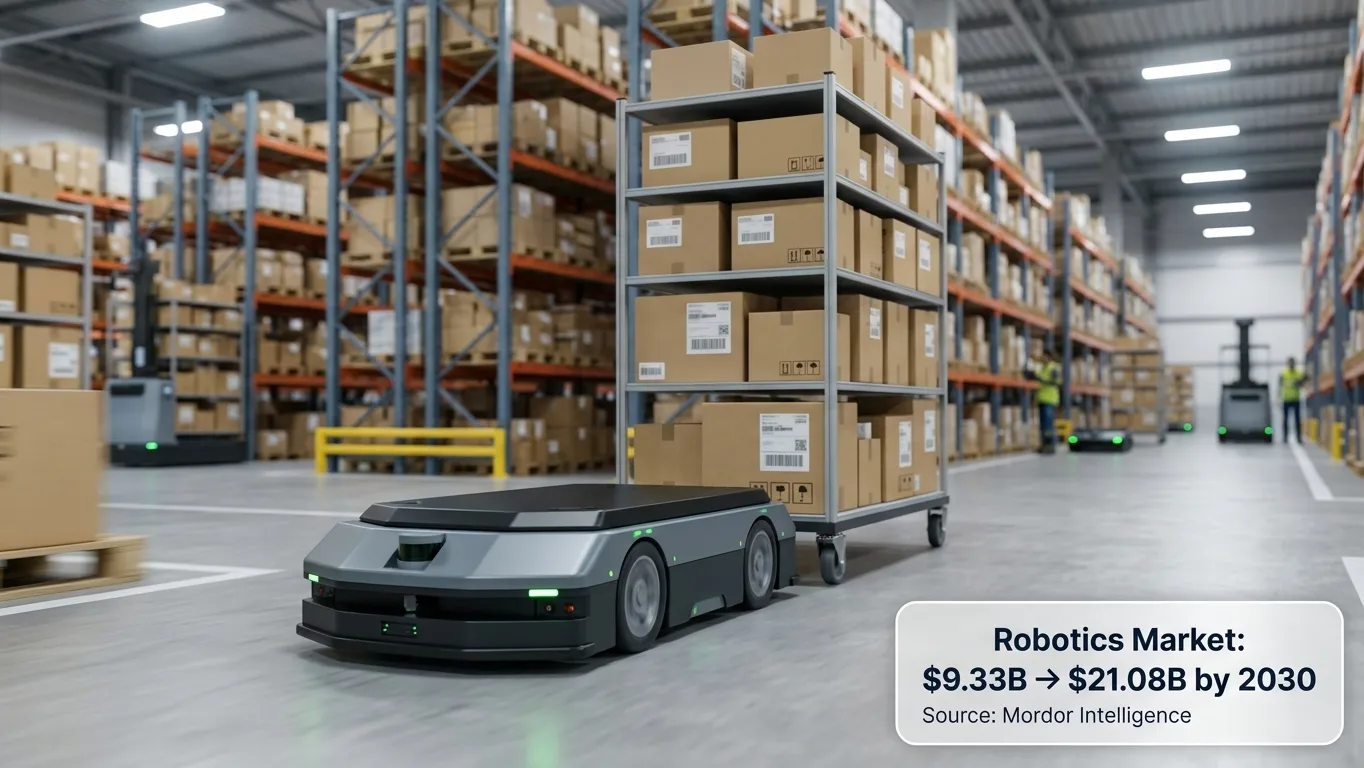
Technology has changed how warehouses operate in recent years. These software systems track inventory levels, order status, and shipping details in real time, helping reduce errors. Some warehouses now use robots to move products around, which speeds up picking and packing. Barcode scanning and RFID tags help warehouses know exactly what is in stock without manual counting.
This shift is happening fast. The global warehouse robotics market is projected to grow from $9.33 billion in 2025 to $21.08 billion by 2030, according to Mordor Intelligence, a pace that reflects how quickly automation is becoming standard rather than optional for warehouses handling high order volumes.
How to Choose Between Warehousing and Storage
Most businesses can settle this decision with two numbers: how many orders they ship per week, and how much that number is likely to grow. High and rising points to warehousing. Low and flat points to storage. Everything else is a secondary factor.
What Questions Should I Ask Before Choosing?
Work through these in order. Each one narrows the decision further than the last.
- How many orders do I ship in a typical week? Frequent shipping, even in small volumes, usually justifies warehousing. Infrequent access points toward storage regardless of how much inventory you hold.
- Do I want someone else to pick, pack, and ship my orders? This is the single clearest divider. Warehousing includes this work as a core service. Storage facilities do not offer it at all.
- Do I need to know my exact stock count and location at any given moment? Businesses managing active inventory usually need this visibility. Warehousing systems track it automatically; storage facilities generally do not track it at all.
- Will my inventory grow over the next six to twelve months? If growth is likely, warehousing absorbs that change more easily than a storage unit, which has a fixed footprint.
- Is this a short-term need or an ongoing one? Seasonal overflow, a move, or temporary excess stock usually fits storage. Recurring fulfillment needs fit warehousing.
When Should I Choose Warehousing?
Choose warehousing if any of these apply to your business:
- You ship orders on a regular schedule, whether that’s daily, weekly, or in predictable seasonal bursts
- You want fulfillment work such as picking, packing, labeling, or kitting handled for you
- You need accurate, real-time visibility into what’s in stock and where it’s located
- Your order volume is trending upward and you need a setup that can grow with you
- You’re already working with, or considering, a third-party logistics provider to handle shipping
When Should I Choose Storage?
Choose storage if any of these apply to your business:
- Your inventory sits untouched for long stretches, often months at a time
- You’re comfortable retrieving items yourself on an occasional basis
- You’re holding seasonal stock, archived records, equipment, or backup inventory rather than active sales inventory
- Cost efficiency matters more to you than added services
- You need space temporarily, such as during a move or a short-term inventory spike
What If My Business Doesn’t Clearly Fit Either One?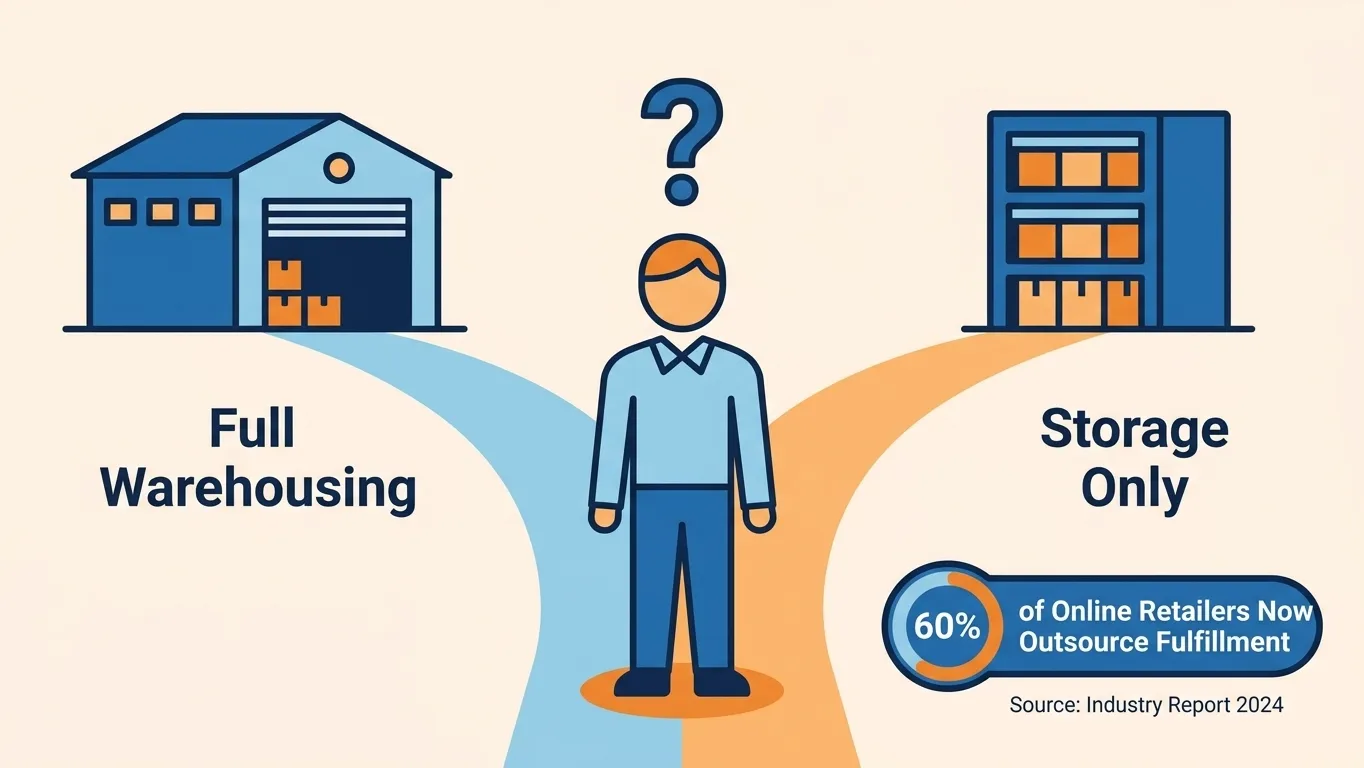
This is the most common situation for small and early-stage businesses. Order volume may not yet be high enough to justify a full warehousing contract, but relying on a storage unit means the business owner personally handles every pick, pack, and shipment, which quickly becomes unsustainable as orders grow. This gray area is more common than most business owners realize: roughly 60% of online retailers now outsource at least part of their fulfillment operations, and industry analysis places the break-even point for outsourcing somewhere between 1,000 and 3,000 orders per month, meaning many small businesses cross that threshold well before they expect to.
The practical middle ground is a scaled fulfillment plan through a third-party logistics provider. Many 3PLs, including Logos Logistics Distribution, offer warehousing plans sized for lower order volumes, so a business doesn’t need to choose between doing everything manually or committing to enterprise-level space. Rather than estimating this from inventory size alone, the more reliable approach is to look at actual weekly order data and let that number drive the decision.
Best Practices for Efficient Storage and Warehousing
Whether you choose warehousing, storage, or both, these tips can help you get the most out of your space.
Organize Inventory Effectively Group similar items together and label everything clearly to save time when searching for products.
Improve Space Utilization Use shelving and vertical space wisely to fit more inventory without wasting room.
Maintain Inventory Accuracy Do regular counts and use tracking systems to avoid running out of stock or overordering.
Strengthen Security Measures Use cameras, locks, and access control to protect your inventory from theft or damage.
Review Performance Regularly Check in on your storage or warehousing setup often to spot problems early and make improvements.
Ready to Simplify Your Warehousing and Storage Needs?
Choosing between warehousing and storage does not have to be complicated. At Logos Logistics Distribution in Ontario, CA, our team can help you figure out exactly what your business needs, whether that means full 3PL warehousing services or simple storage space. We take the guesswork out of managing your inventory so you can focus on growing your business. Contact us today to talk with our team and find the right logistics solution for your business.
Conclusion
Warehousing and storage may sound similar, but they serve different purposes. Warehousing supports an active business with regular shipping, order fulfillment, and inventory tracking. Storage is a simpler option for items that just need a safe place to sit until they are needed again.
Knowing which one fits your business can save you money and help your operations run smoother. Take a moment to think about how often your inventory moves, then choose the option that matches your needs.
Frequently Asked Questions
What Is the Main Difference Between Warehousing and Storage?
Warehousing includes active services like order fulfillment and shipping, while storage is mainly about holding items until they are needed. Warehousing fits businesses with regular inventory movement, while storage fits items that sit still for long periods.
Is Warehousing More Expensive Than Storage?
Often yes, since warehousing includes more services. Storage is usually cheaper because it only covers the space itself. The extra cost of warehousing often pays off through faster shipping and better inventory control.
Can Small Businesses Benefit From Warehousing?
Yes. Many small businesses use warehousing to save time on shipping and focus more on growing their business. It also helps small businesses look more professional to customers through faster, more reliable delivery.
How Long Can Goods Stay in a Warehouse?
Goods can stay as long as needed, though warehouses are built for regular movement, not long-term storage. Items that sit too long in a warehouse without moving may be better suited for a storage unit instead.
Can Warehousing Include Order Fulfillment?
Yes. Most warehousing services include picking, packing, and shipping orders as part of the process. This means a business can hand off its entire shipping workload to the warehouse team.
Is Storage Suitable for Inventory Management?
Not really. Storage does not usually include tracking systems, so it is not ideal for businesses managing active inventory. Businesses that need to know exact stock counts at all times are better off using warehousing instead.
Can a Business Use Both Storage and Warehousing?
Yes. Many businesses use warehousing for active inventory and storage for overflow or seasonal stock. This combination lets a business keep shipping costs low while still having extra space when needed.