
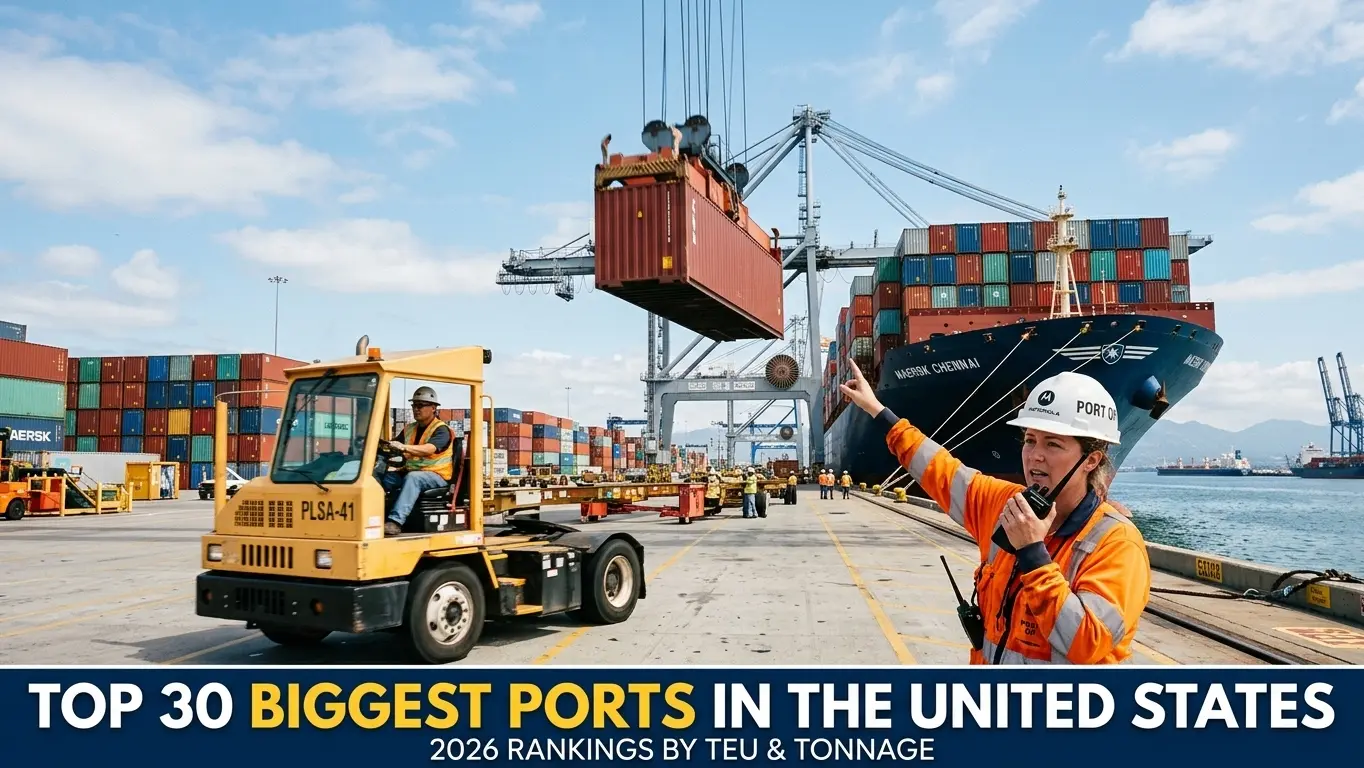
Ports are the doorways that goods pass through before they reach store shelves, warehouses, and homes across the country. Every day, ships loaded with clothes, electronics, food, cars, and raw materials pull into American ports and unload their cargo. Without these ports, the shelves at your local store would be empty and prices on almost everything would climb.
Here at Logos Logistics Distribution in Ontario, California, we work with businesses that move goods through many of these ports every week. Knowing which ports handle the most cargo, and why, helps shippers plan smarter routes, avoid delays, and save money. This guide walks through the biggest ports in the United States, how they are ranked, and what makes each one important to the supply chain.
What Makes a Port One of the Biggest in the United States?
A port earns a spot on this list because of how much cargo moves through it each year. That can mean the number of shipping containers it handles, the total weight of goods passing through, or how many ships dock there. Size is not just about acres of land. A smaller port with deep water and strong rail connections can move more cargo than a much larger port with fewer resources.
The biggest ports usually share a few things in common. They sit near major cities or key trade routes. They have deep channels that let large ships dock without trouble. They connect easily to highways and railroads so cargo can keep moving once it is on land. And they keep investing in new equipment and technology to handle more ships without slowing down.
How Ports Are Measured and Ranked
There is no single way to rank a port. Different groups use different numbers depending on what they want to measure. Here are the main ways ports get ranked.
Cargo Tonnage
Tonnage measures the total weight of everything that passes through a port, including oil, grain, coal, steel, and containers. Ports that handle heavy bulk goods, like Houston or South Louisiana, often rank near the top by tonnage even if they do not move as many shipping containers as other ports.
Container Volume (TEUs)
TEU stands for twenty foot equivalent unit, which is the standard size used to measure shipping containers. This number tells you how much containerized cargo, like clothing, electronics, and furniture, moves through a port each year. Ports like Los Angeles and Long Beach lead the country by this measure.
Vessel Traffic
This counts how many ships, of all types, arrive and depart from a port each year. A port with heavy vessel traffic usually has strong infrastructure to keep ships moving in and out without long wait times.
Port Infrastructure and Capacity
This looks at the physical size of a port, including the number of berths, cranes, warehouses, and channel depth. Ports with more infrastructure can usually handle bigger ships and more cargo at once.
Top 30 Biggest Ports in the United States
The United States is home to many major ports that handle millions of tons of cargo each year and play a key role in global trade and the nation’s economy.
1. Port of Los Angeles, California
The Port of Los Angeles is the busiest container port in the country, moving 9.4 million TEUs in the first 11 months of 2024, a 19 percent increase over the prior year. It sits in San Pedro Bay and serves as the main gateway for goods coming from Asia, including clothing, electronics, furniture, and auto parts.
The port covers thousands of acres along the waterfront and has invested billions of dollars into new cranes, cleaner equipment, and better rail connections. Because of its size and location, it sets the pace for how fast goods move across the entire West Coast supply chain.
 2. Port of Long Beach, California
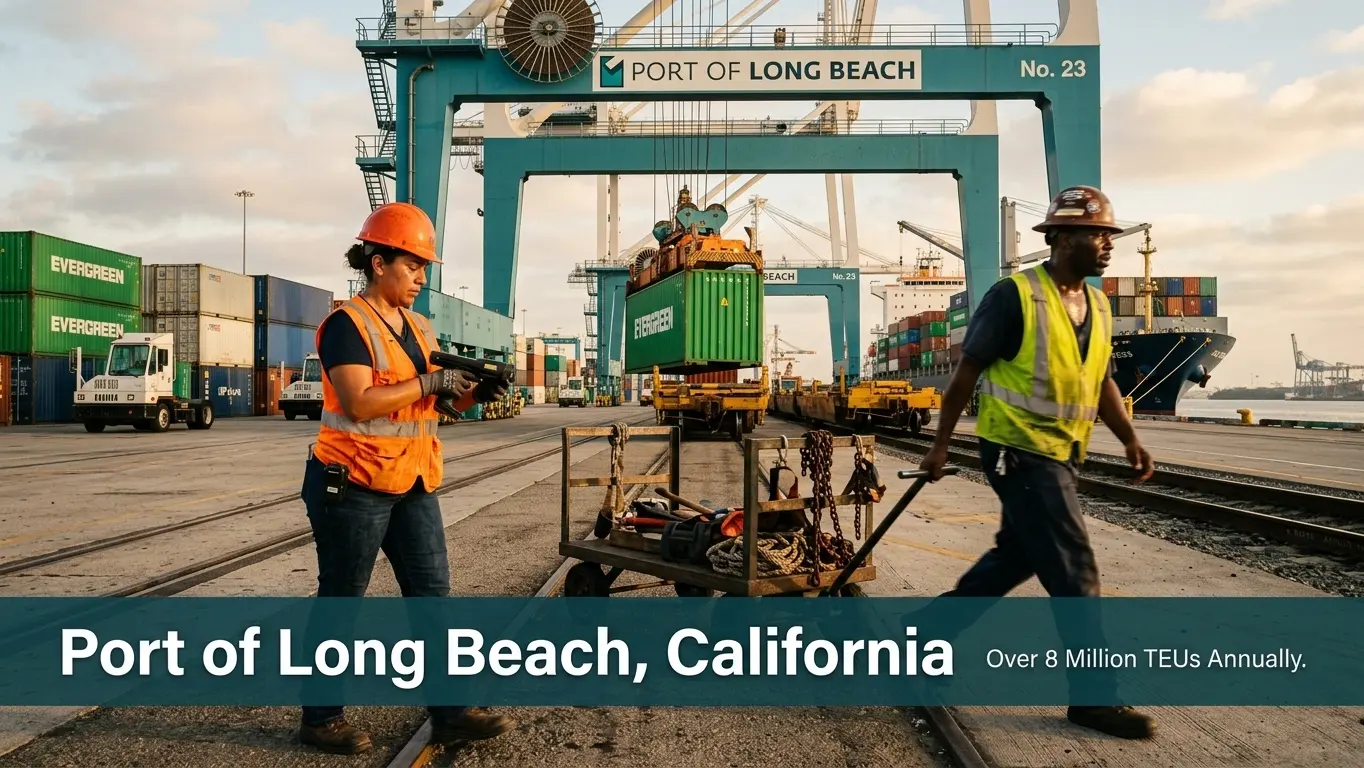
Right next to Los Angeles, the Port of Long Beach handles over 8 million TEUs a year. Together, these two ports form the largest port complex in North America and move a huge share of all goods entering the West Coast.
Long Beach has focused heavily on automation and green energy projects, including electric cranes and cleaner trucking programs. Many shipping lines use Long Beach as a backup or partner port to Los Angeles when volumes get too high for one port to handle alone.
3. Port of New York and New Jersey
This is the busiest port on the East Coast, moving 7.2 million TEUs in 2024. It serves the New York metro area and has strong rail links reaching into the Midwest, which lets goods move inland quickly after they arrive.
The port has spent years raising the Bayonne Bridge and deepening its channels so it can handle the biggest cargo ships now crossing the Atlantic. Its location gives it access to one of the largest consumer markets in the country, which keeps demand steady year round.
4. The Port of Savannah, Georgia
Savannah has grown fast over the past several years and now moves close to 5 million TEUs annually. Its Garden City Terminal is one of the largest single container terminals in North America and keeps expanding to handle more ships.
Strong rail connections link Savannah directly to major cities across the Southeast and Midwest, cutting down on truck traffic and delivery times. This growth has made Savannah one of the fastest rising ports in the entire country over the last decade.
 5. Port of Houston, Texas
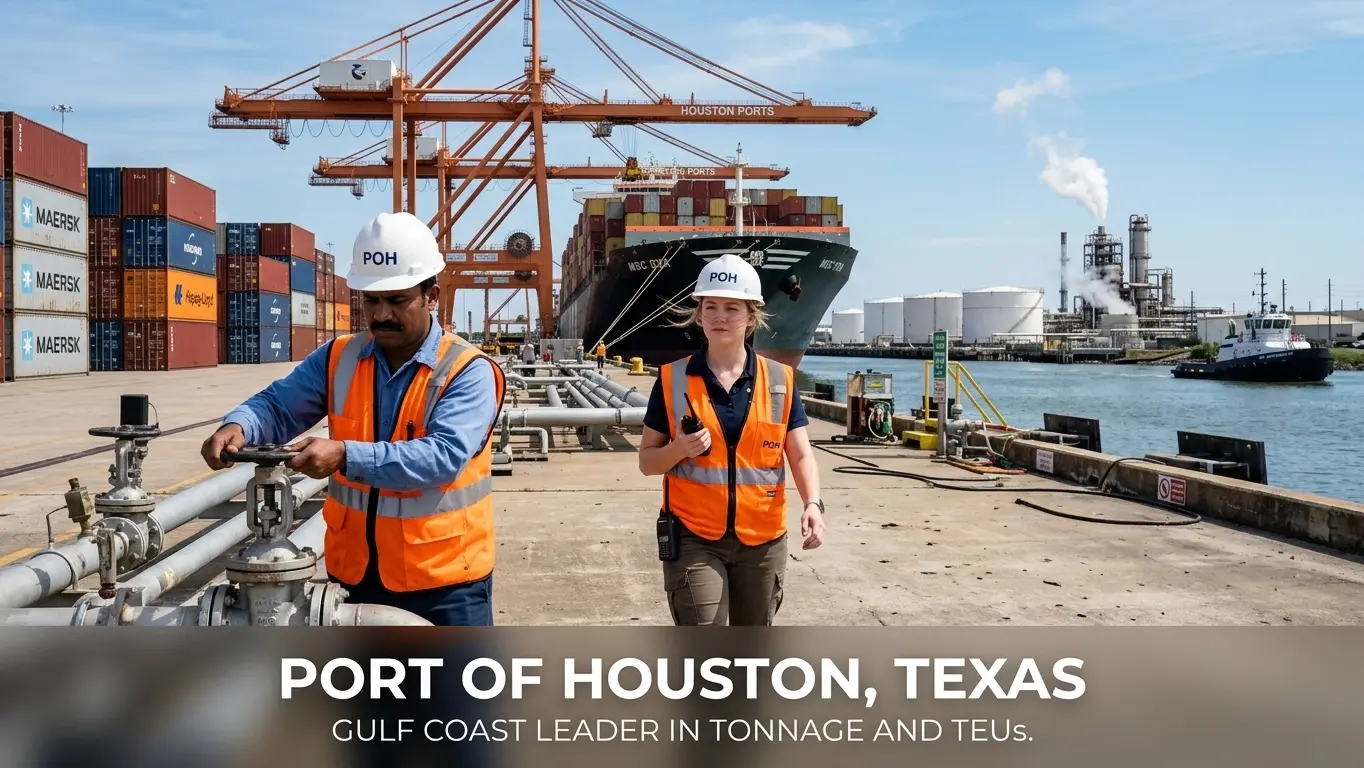
Houston leads the Gulf Coast in both tonnage and container volume, processing approximately 3.8 million TEUs in 2024, alongside heavy tonnage from oil, chemicals, and energy products refined and shipped from the surrounding area.
Unlike ports built mainly around containers, Houston runs a mix of container terminals, oil docks, and chemical plants side by side. This mix makes it one of the most valuable ports in the country for industries tied to energy and manufacturing.
6. Port of Virginia
The Port of Virginia has the deepest channel on the East Coast at 50 feet, letting it handle some of the largest cargo ships in the world. It processed 3.5 million TEUs in fiscal year 2024 (July 2023 to June 2024), its second-best fiscal year on record, and keeps expanding its terminals to handle more traffic.
The port has invested heavily in automation and rail expansion at its Norfolk International Gateway and Virginia International Gateway terminals. This steady growth has helped it become one of the most reliable options for shippers moving goods along the East Coast.
7. Port of Charleston, South Carolina
Charleston ranks among the top ports on the East Coast for both cargo value and container volume, processing 2.85 million TEUs in fiscal year 2021, the most recent verified figure available. Its channel was recently deepened to 52 feet, the deepest on the East Coast, which lets it welcome some of the largest container ships in the world.
The port has also built new inland terminals to help move cargo further from the coast without adding truck congestion near the docks. Its steady growth has made it a favorite stop for major shipping lines serving the Southeast.
8. Port of Baltimore, Maryland
Baltimore is known as the top U.S. port for cars and farm equipment. Around 700,000 vehicles pass through its terminals each year, along with heavy amounts of steel and other bulk goods. The port sits deep inland along the Patapsco River, giving it a natural advantage for handling large, specialized cargo like tractors and construction equipment. Its long history with the auto industry has made it one of the most trusted ports in the country for vehicle importers.
9. PortMiami, Florida
PortMiami is best known for cruise ships, but it also moves close to 10 million tons of cargo a year, making it Florida’s leading container port. Its location gives it strong trade ties with Latin America and the Caribbean, which sets it apart from ports that focus mainly on Asia or Europe.
The port has deepened its channel in recent years to welcome bigger cargo ships alongside its cruise business. This dual role as both a cargo and passenger port makes it one of the more unique major ports in the country.
10. Port of Oakland, California
Oakland is the busiest port in Northern California and one of the top container ports on the West Coast. It was the first Pacific Coast port to build container terminals and still plays a major role in trade with Asia. The port serves a large local market of more than 14 million consumers across the Bay Area. Its long history and steady volume keep it ranked among the top container ports in the country.
11. Northwest Seaport Alliance (Seattle-Tacoma), Washington
This alliance combines the ports of Seattle and Tacoma into one operation. Together they handle a large share of trade with Asia and serve the Pacific Northwest. Combining the two ports lets them share resources, compete more effectively with larger West Coast ports, and offer shippers more terminal options in one region.
This partnership has helped the alliance stay competitive against much larger ports like Los Angeles and Long Beach.
12. Port of South Louisiana
This port ranks among the top in the country by total tonnage, largely because of the grain, petroleum, and chemical products that move along the Mississippi River through its terminals. Its location gives it direct access to farms and grain elevators across the Midwest, making it a key export point for American agriculture. Because it focuses on bulk goods rather than containers, it consistently outranks many container ports when measured by total weight.
13. Port of Corpus Christi, Texas
Corpus Christi is one of the busiest ports in the country by tonnage, moving 203 million tons of cargo in 2023, an 8.1 percent increase from the prior year, driven largely by a jump in crude oil exports to 126.1 million tons.
The port has expanded its docks and pipelines to keep up with rising demand from refineries and energy companies across Texas. Its rapid growth over the past several years has pushed it into the conversation alongside much larger, more well known ports.
14. Port of Beaumont, Texas
Beaumont ranks high in tonnage and is known for handling military cargo. It serves as headquarters for a U.S. Army transportation unit and moves large volumes of petroleum products. Its deep water access and specialized docks make it one of the most important ports for moving military equipment in and out of the country. This unique role sets it apart from most other major U.S. ports.
15. Port of New Orleans, Louisiana
New Orleans sits at a key point on the Mississippi River and handles a mix of containers, steel, coffee, and rubber. Its location makes it an important link between river traffic and ocean shipping. Goods moving up and down the Mississippi often pass through New Orleans before switching between barges and ocean going ships. This role as a connector port keeps it busy year round.
16. Port Everglades, Florida
Port Everglades handles both cargo and cruise traffic and serves as a major fuel supply point for South Florida. It also plays a big role in trade with the Caribbean and Central America. Much of the fuel used by cars and airplanes across South Florida moves through its terminals. This dual role, supplying both fuel and general cargo, makes it one of the more essential ports in the region.
17. Port of Jacksonville, Florida
Jacksonville is a major hub for vehicle imports and also handles containers, bulk cargo, and breakbulk goods. Its location makes it a key gateway for the Southeast. Several major auto manufacturers use Jacksonville as their main entry point for vehicles sold across the southeastern United States. This specialization has helped it grow steadily over the years.
18. Port of Mobile, Alabama
Mobile is Alabama’s only saltwater port and handles a wide mix of cargo, including coal, steel, and containers. It has grown steadily thanks to ongoing channel improvements. Recent dredging projects have deepened its channel, letting it welcome larger ships than in past years. This growth has made it an increasingly important stop along the Gulf Coast.
19. Port of Greater Baton Rouge, Louisiana
This port sits along the Mississippi River and is a major hub for grain, petroleum, and chemical shipments moving to the Gulf of Mexico. Its location between New Orleans and the agricultural heart of the Midwest makes it a key link in the grain export chain. Heavy industry along the riverbanks nearby also relies on the port for shipping raw materials and finished chemical products.
20. Port of Plaquemines, Louisiana
Plaquemines has grown quickly in recent years and now ranks among the top U.S. ports by tonnage. Its location near the mouth of the Mississippi River gives ships easy access to open water without navigating as far upriver. This location advantage has made it an increasingly popular choice for large bulk carriers and grain shippers.
21. Port of Lake Charles, Louisiana
Lake Charles has climbed into the top ten U.S. ports for cargo tonnage, driven largely by petrochemical exports and industrial growth in the region. New petrochemical plants built nearby have pushed export volumes higher year after year. This rapid growth has turned it into one of the fastest rising ports on the Gulf Coast.
22. Port of Tampa Bay, Florida
Tampa Bay is Florida’s largest port by tonnage and handles fuel, fertilizer, and building materials that support much of the state’s construction and energy needs. Its docks supply much of the fuel used across Central Florida, along with fertilizer shipped out to farms nationwide. This steady demand keeps it running at high volume throughout the year.
23. Port of Philadelphia, Pennsylvania
Philadelphia is known for handling fresh produce, especially bananas and other fruit, along with steel, paper, and cocoa beans. It serves as a key import point for the Northeast. Its cold storage facilities make it one of the top ports in the country for perishable goods. This specialty has kept it competitive even as nearby ports handle more total cargo.
24. Port of Freeport, Texas
Freeport handles a growing mix of containers, chemicals, and steel, and has expanded its terminals to keep up with rising demand from the petrochemical industry nearby. Several major chemical plants sit right along its docks, which cuts down on inland transport time for exports. This close industry connection has fueled steady growth in recent years.
25. Port of Portland, Oregon
Portland handles grain, autos, and steel, and serves as an important gateway for goods moving along the Columbia River and out to the Pacific. Its location gives it strong access to farms across the Pacific Northwest, making it a key export point for wheat and other grains. Auto imports also make up a large share of its cargo each year.
26. Port of Richmond, California
Richmond, in the San Francisco Bay Area, handles a large share of the West Coast’s auto imports along with petroleum products refined nearby. Several major refineries sit close to the port, which keeps fuel moving efficiently through the region. Its steady auto and fuel traffic make it an important, if lesser known, West Coast port.
27. Port of Duluth-Superior
This is the largest port on the Great Lakes, moving iron ore, coal, and grain across Lake Superior. It plays a key role in supplying the steel industry, since much of the iron ore mined in Minnesota moves through its docks before heading to steel mills further south.
The port operates seasonally due to ice on the lakes, which makes its shipping calendar different from most coastal ports. Despite being less known than coastal giants like Los Angeles or Houston, it remains critical to the country’s steel and manufacturing supply chain.
28. Port of Pittsburgh, Pennsylvania
Pittsburgh is one of the busiest inland ports in the country, moving coal, steel, and other bulk goods along the Ohio River system. Its location connects the steel industry in the region directly to river transport, cutting down on trucking costs. This inland position makes it one of the most important ports that most people never think of as a port at all.
29. Port of St. Louis, Missouri
St. Louis sits along the Mississippi River and serves as a major hub for grain, coal, and steel moving between the Midwest and the Gulf Coast. Its central location makes it a key transfer point where goods switch between rail, truck, and river barge. This role as a connector keeps it busy with a steady flow of bulk cargo.
30. Port of Huntington Tri-State
This port spans parts of West Virginia, Ohio, and Kentucky along the Ohio River and is one of the busiest inland ports in the country for coal and bulk cargo. Its position along the river lets it serve coal mines and power plants across three states. This regional reach makes it one of the most active inland ports despite being far from any ocean.
Biggest Container Ports vs. Highest Cargo Tonnage Ports
Biggest doesn’t always mean the same thing. Here’s how the top ports stack up by container volume versus total cargo weight.
Rank |
Biggest Container Ports (by TEUs) |
Highest Cargo Tonnage Ports (by weight) |
| 1 | Port of Los Angeles, CA | Port of South Louisiana |
| 2 | Port of Long Beach, CA | Port of Houston, TX |
| 3 | Port of New York and New Jersey | Port of Corpus Christi, TX |
| 4 | Port of Savannah, GA | Port of New York and New Jersey |
| 5 | Port of Houston, TX | Port of Beaumont, TX |
| 6 | Port of Virginia | Port of Long Beach, CA |
| 7 | Port of Charleston, SC | Port of Los Angeles, CA |
| 8 | Port of Oakland, CA | Port of Plaquemines, LA |
| 9 | Northwest Seaport Alliance (Seattle-Tacoma), WA | Port of Baton Rouge, LA |
| 10 | Port of Savannah, GA | Port of Lake Charles, LA |
Why These Ports Are Important to the U.S. Trade
Ports are the main entry and exit points for goods moving between the United States and the rest of the world. Nearly all of the country’s international trade by volume passes through a seaport.
Ports support millions of jobs across trucking, warehousing, manufacturing, and retail. A single major port can add tens of billions of dollars to a local economy each year and support hundreds of thousands of jobs, directly and indirectly.
Ports connect to trucks, trains, and warehouses that carry goods the rest of the way to stores and homes. A slowdown at a major port can ripple through supply chains for months, which is why choosing a reliable port matters so much for businesses.
How to Choose the Right U.S. Port for Shipping
Pick a port close to where your goods need to end up. Shipping through a port on the wrong coast can add days and extra trucking costs. Containers, bulk goods, and vehicles each move best through ports built for that type of cargo. Check what a port specializes in before booking.
Some ports have shorter average wait times for unloading and customs than others. Ask about typical dwell times before choosing a route. Fees vary by port and can add up fast. Compare docking fees, handling charges, and inland transport costs before deciding.
Ports with faster customs processing get your goods moving inland sooner. This can make a real difference for time sensitive shipments.
Need Help Shipping Through One of America’s Busiest Ports?
Every port on this list has its own rules, including different tonnage limits, dwell times, and cargo specialties. Picking the wrong route or partner can cost you days and add unnecessary fees.
Logos Logistics Distribution, based in Ontario, California, helps businesses move cargo through major U.S. ports like Los Angeles, Long Beach, and beyond. Our team chooses the right port for your cargo type, works to reduce dwell times and demurrage fees, coordinates inland transport once cargo clears customs, and builds a shipping plan around your timeline and budget. Talk to Logos Logistics Distribution today and get a shipping plan built around your cargo
Conclusion
The biggest ports in the United States keep the country’s stores stocked, its factories supplied, and its economy moving. From the container giants of Los Angeles and Long Beach to the tonnage leaders along the Gulf Coast, each port plays its own role in keeping goods flowing smoothly across the country.
Whether you are shipping containers full of retail goods or bulk cargo like grain and oil, understanding how these ports rank and what makes each one different helps you plan smarter and avoid unnecessary delays. Choosing the right port for your specific cargo, and the right partner to handle it once it lands, can make all the difference in how smoothly your supply chain runs from here on out.
Frequently Asked Questions
What Is the Biggest Port in the United States?
The Port of Los Angeles is the biggest U.S. port by container volume, moving 9.4 million TEUs in the first 11 months of 2024 from its spot in San Pedro Bay. If you measure by total cargo weight instead, ports like Houston and South Louisiana can rank higher because of the oil, grain, and chemicals they move.
Which Is the Largest Port on the East Coast?
The Port of New York and New Jersey holds this title, moving 7.2 million TEUs in 2024. It serves the largest metro area in the country and has strong rail lines running into the Midwest.
Which U.S. Port Handles the Most Cargo by Tonnage?
The Port of South Louisiana and the Port of Houston consistently rank at or near the top for total cargo tonnage. Both move huge volumes of oil, chemicals, and grain rather than shipping containers, which is why they outrank container heavy ports in this category.
How Many Major Ports Are There in the United States?
The United States has dozens of ports, but the top 25 to 30 handle the large majority of the country’s total cargo volume. Beyond that, hundreds of smaller ports handle local or regional cargo.
Which U.S. Ports Are Best for International Shipping?
Los Angeles, Long Beach, New York and New Jersey, Savannah, and Houston are generally considered the strongest gateways for international trade. The best choice depends on where your goods are coming from and where they need to end up.
What Is the Difference Between a Busy Port and a Large Port?
A busy port refers to how much traffic moves through it each year, measured in ships, containers, or tons. A large port refers to physical size, like acres of land or number of cranes, which does not always match how much cargo it actually handles.