
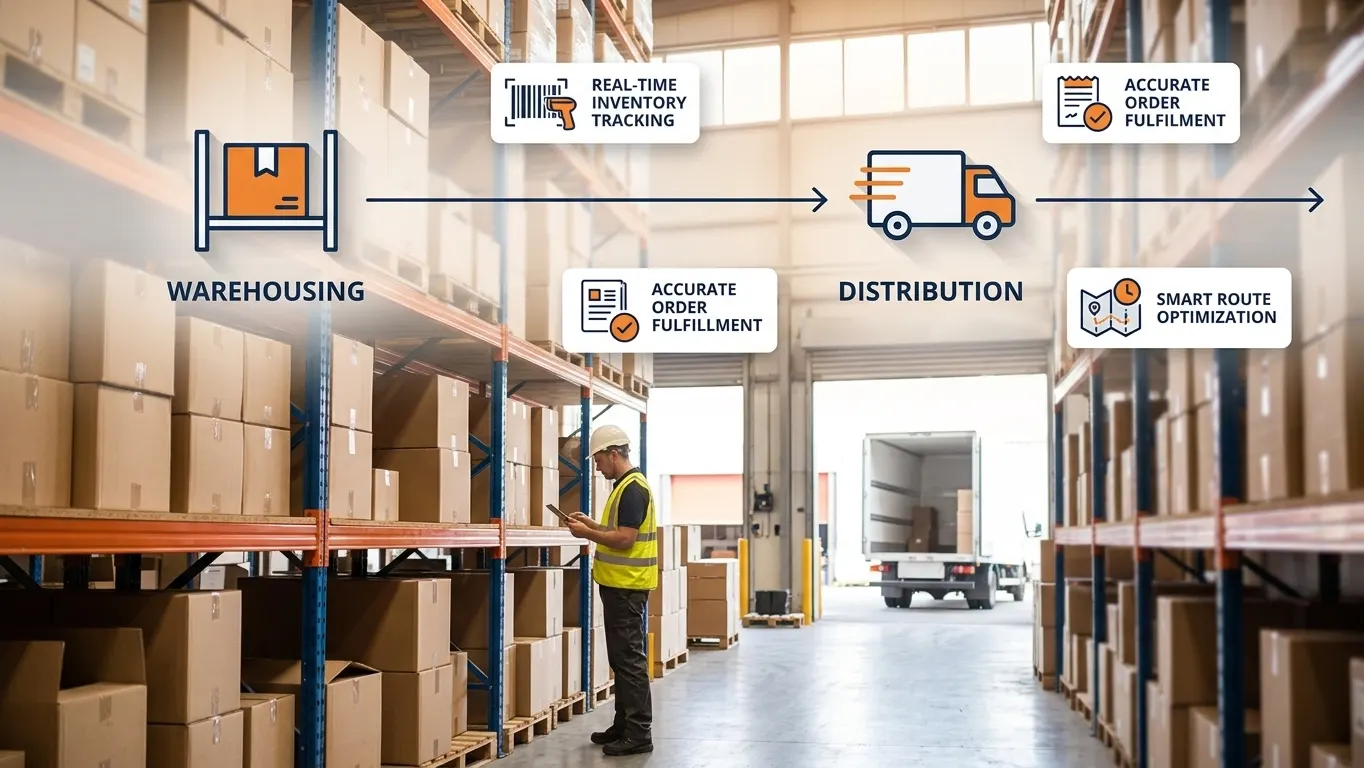
Warehousing stores organises and prepares your products while distribution moves them to the right customer at the right time. Together they form the backbone of your supply chain and how well the two functions work together determines how fast orders go out, how much fulfilment costs, and how reliably customers get what they paid for.
This guide from Logos Logistics Distribution in Ontario, CA covers the connection between warehousing and distribution, what it means for your supply chain, and what a stronger operation looks like in practice. If you are looking to reduce delays, cut costs, and deliver more consistently, you are in the right place.
What Is the Connection Between Warehousing and Distribution
Before you can understand how these two things connect, you need to know what each one actually does.
What Is Warehousing and What Does It Actually Do in a Supply Chain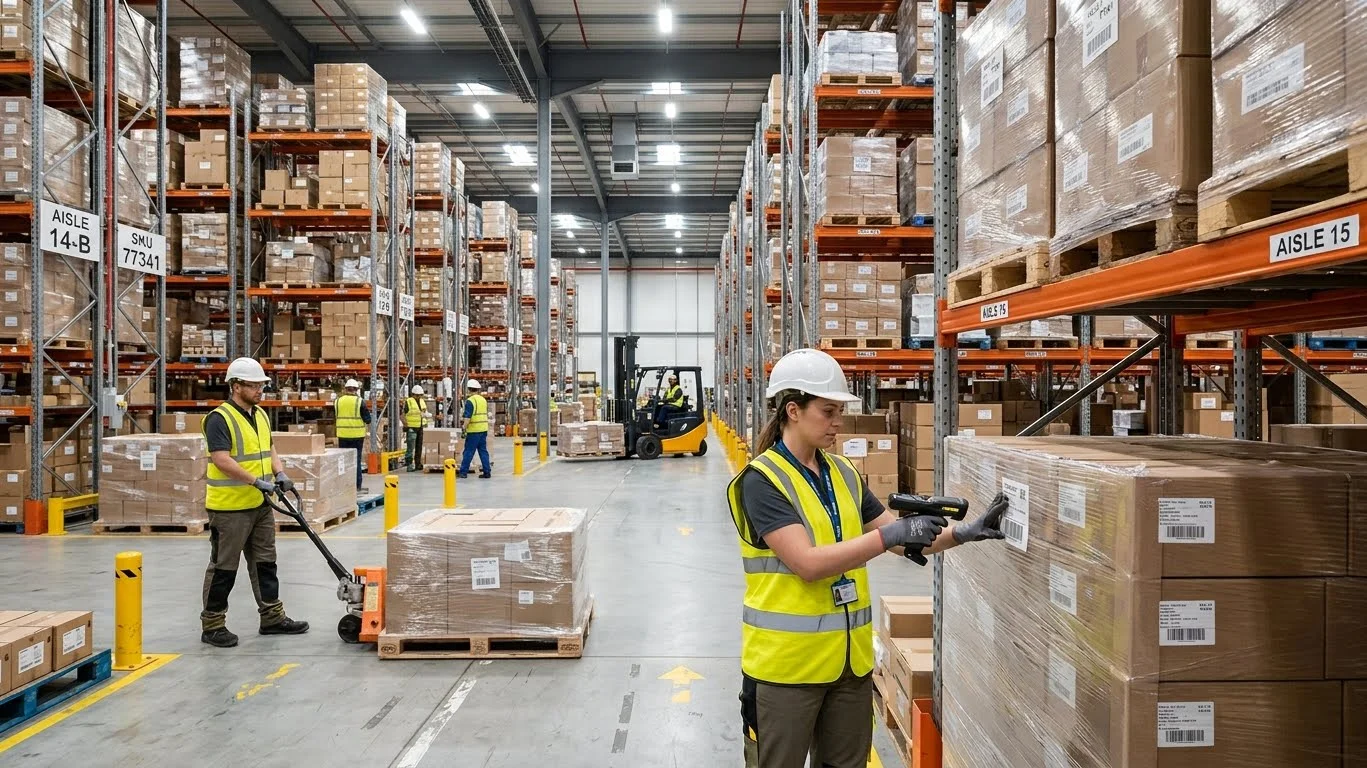
Warehousing is the process of receiving goods, storing them safely, and managing them until they are needed. That sounds simple, but there is a lot more happening inside a warehouse than most people think.
A warehouse tracks every item that comes in and goes out. It organises products so they are easy to find and pick. It monitors stock levels so you never run out of a product at the wrong time. It also prepares goods for shipping by sorting, labelling, and packing them correctly.
What Is Distribution and How Is It Different From Simply Shipping Goods
Distribution is the process of moving goods from the warehouse to the people or businesses that need them. That could be a customer, a retailer, or another warehouse in a different city.
But distribution is more than loading boxes onto a truck. It includes planning the best delivery routes, scheduling shipments, tracking orders in real time, managing delivery partners, and making sure the right product arrives at the right place at the right time. If warehousing is where the work happens, distribution is how that work reaches the world.
How Warehousing and Distribution Work Together as One System
When an order comes in, the warehouse picks and packs the item. Distribution then takes that item and gets it to the customer. If the warehouse is slow or makes mistakes, distribution cannot fix it. If distribution is poorly planned, even a perfectly run warehouse cannot save the delivery.
The connection between the two is where businesses either win or lose on customer satisfaction. Companies that treat them as one connected system reduce lead times, cut costs, and deliver more accurately than those that keep the two apart.
Warehouse vs Distribution Centre and Why Confusing the Two Costs Businesses
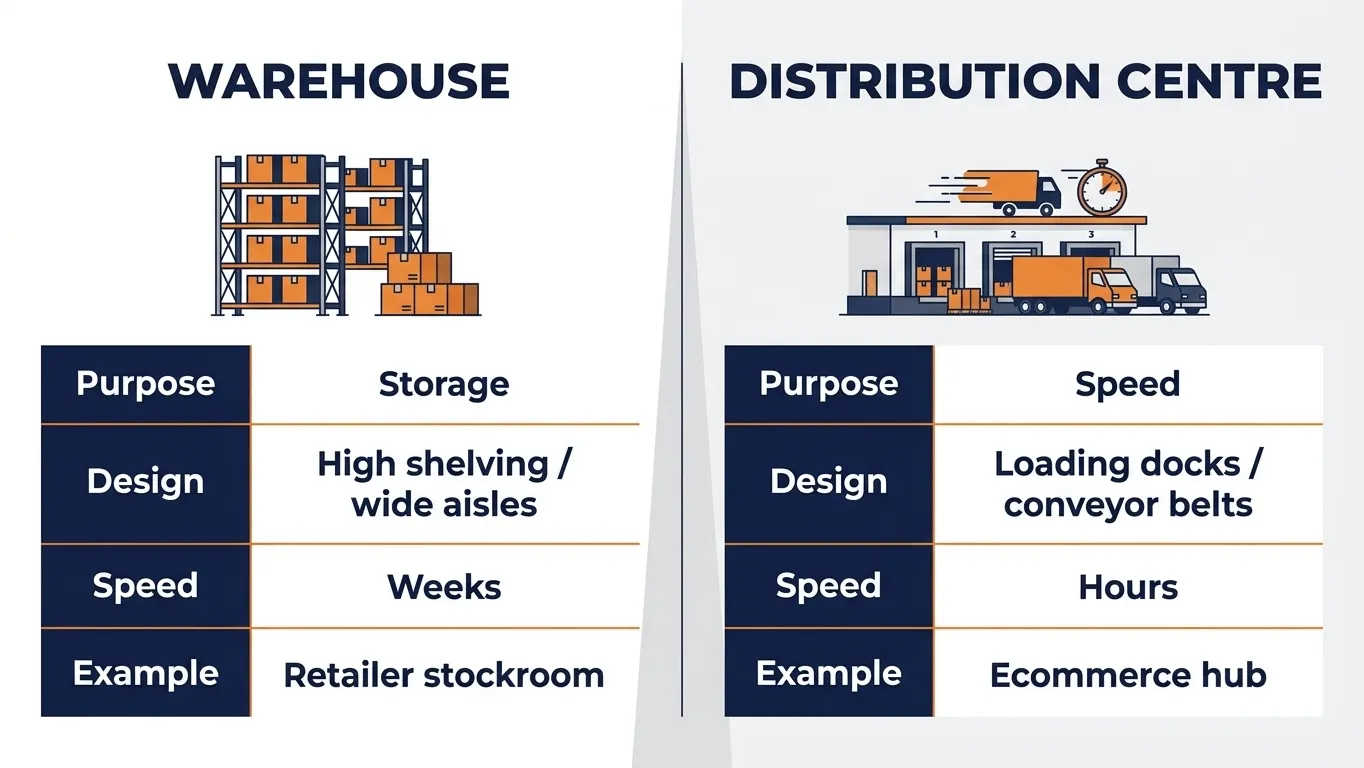 A lot of people use the words warehouse and distribution centre as if they mean the same thing. They do not. Mixing them up can lead to the wrong setup and money spent in the wrong places.
How a Warehouse and a Distribution Centre Differ in Function
A warehouse is built for storage. Goods sit there until they are needed. A distribution centre is built for speed. Products arrive, get sorted, and go back out the door as fast as possible.
How a Warehouse and a Distribution Centre Differ in Design and Speed
Warehouses have high shelving and wide aisles built for storage capacity. Distribution centres have more loading docks and faster conveyor systems built for movement. A warehouse might hold the same pallet for three weeks. A distribution centre might have it in and out in hours.
When Your Business Needs a Warehouse vs When It Needs a Distribution Centre
If you store products before selling, you need a warehouse. If you focus on fulfilling orders fast, you need a distribution centre. Many businesses need both.
The 7 Types of Warehouses Every Business Should Know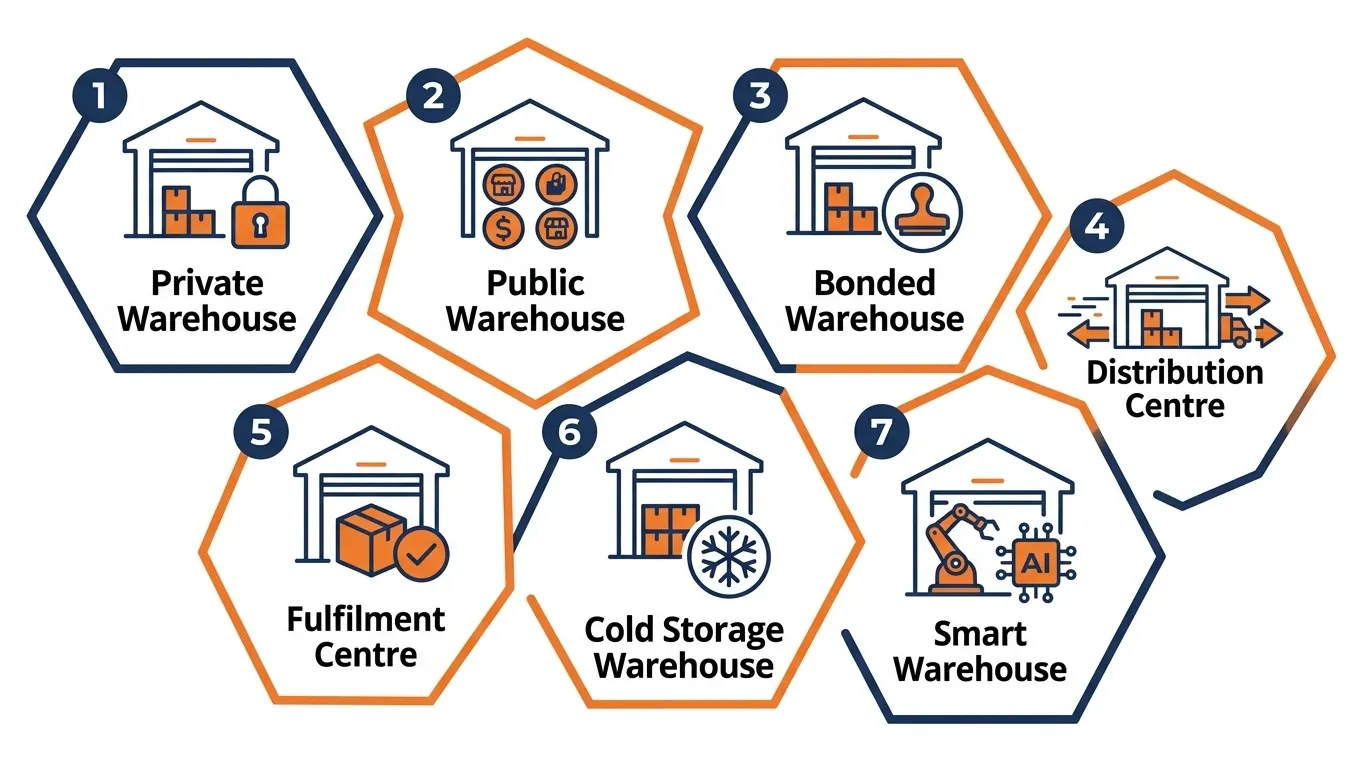
Not all warehouses are the same. Different businesses need different types depending on what they sell and how they operate.
Private Warehouses
These are owned and operated by a single company for its own use. Large retailers and manufacturers often use private warehouses because they want full control over their storage and operations. The downside is the high cost of owning and running one.
Public Warehouses
Public warehouses are shared spaces rented out to multiple businesses. They are a great option for smaller companies or businesses that have seasonal storage needs. You pay for the space you use rather than running an entire facility yourself.
Bonded Warehouses
These are licensed facilities used to store imported goods before customs duties are paid. Businesses that import large volumes of goods use bonded warehouses to manage their cash flow better by delaying duty payments until the goods are sold.
Distribution Centres
As covered above, these are built for speed and order processing rather than long-term storage. Many large retailers and ecommerce businesses run their own distribution centres to keep delivery times short.
Fulfilment Centres
Fulfilment centres are similar to distribution centres but focused specifically on individual customer orders. They receive inventory, store it briefly, pick and pack individual orders, and hand them off to delivery carriers. Ecommerce businesses rely heavily on fulfilment centres.
Cold Storage Warehouses
These are temperature-controlled facilities for products that need to stay cold or frozen. Food, drinks, flowers, and pharmaceutical products are common examples. Cold storage warehouses are a growing part of the market as online grocery and medicine delivery expands.
Smart Warehouses
Smart warehouses use technology like robotics, artificial intelligence, and automated systems to manage inventory and fulfil orders with very little human involvement. A 2025 report found that more than 80 percent of supply chain applications will embed AI and data capabilities by 2026. Smart warehouses are at the front of that shift.
The 4 Types of Distribution Models Used in Supply Chains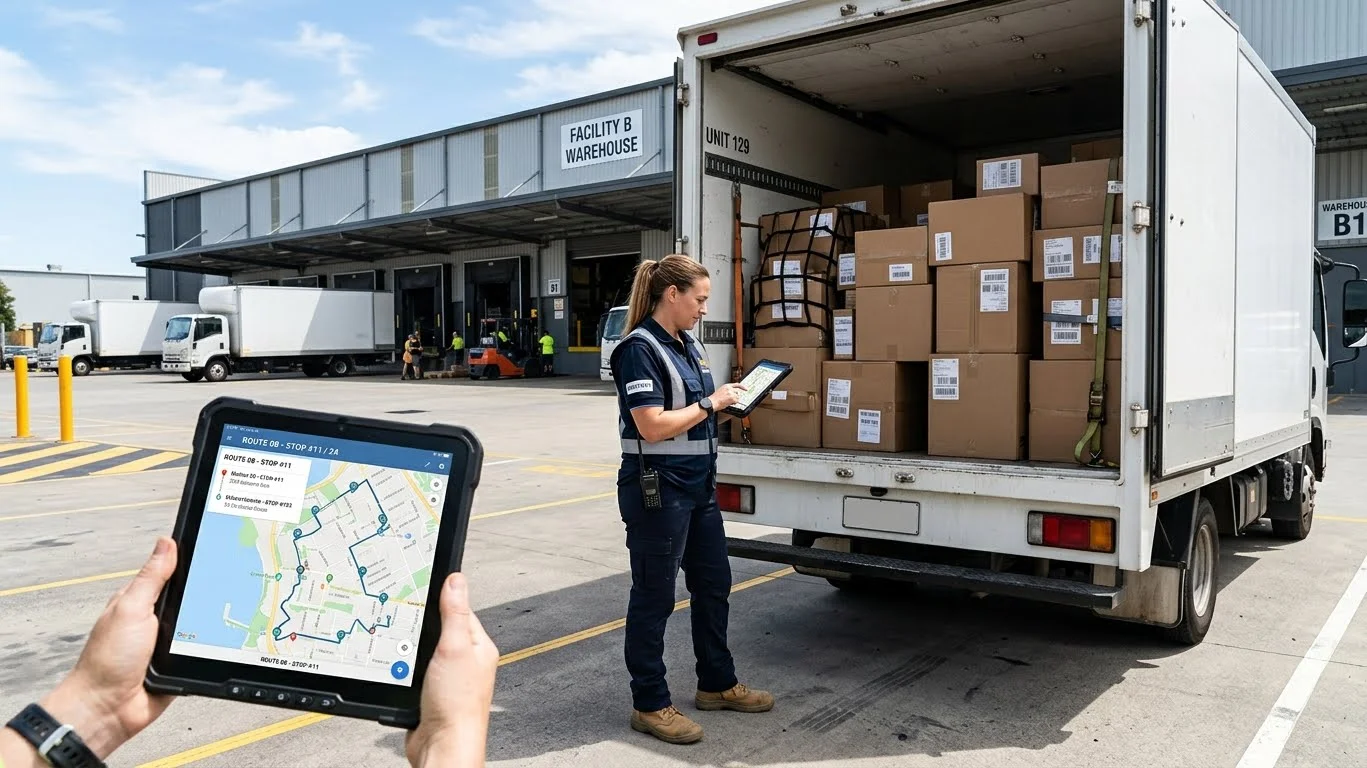
The distribution model you choose has a big impact on your costs, your speed, and how customers experience your brand.
Direct to Consumer Distribution
Products ship straight from your warehouse to the end customer with no middleman. You get more control over the experience and your margins, but you handle all the logistics yourself.
Wholesale Distribution
A manufacturer sells in bulk to a wholesaler who then distributes to retailers. It works well for businesses that want to move large volumes without managing retail relationships directly.
Retail Distribution
Products move from a manufacturer or wholesaler into retail stores. This model relies on consistent, predictable deliveries to keep shelves stocked.
Omnichannel Distribution
The most complex and increasingly the most common model. Businesses fulfil orders through their website, retail stores, third-party marketplaces, and social media at the same time. The challenge is keeping inventory accurate across all channels at once.
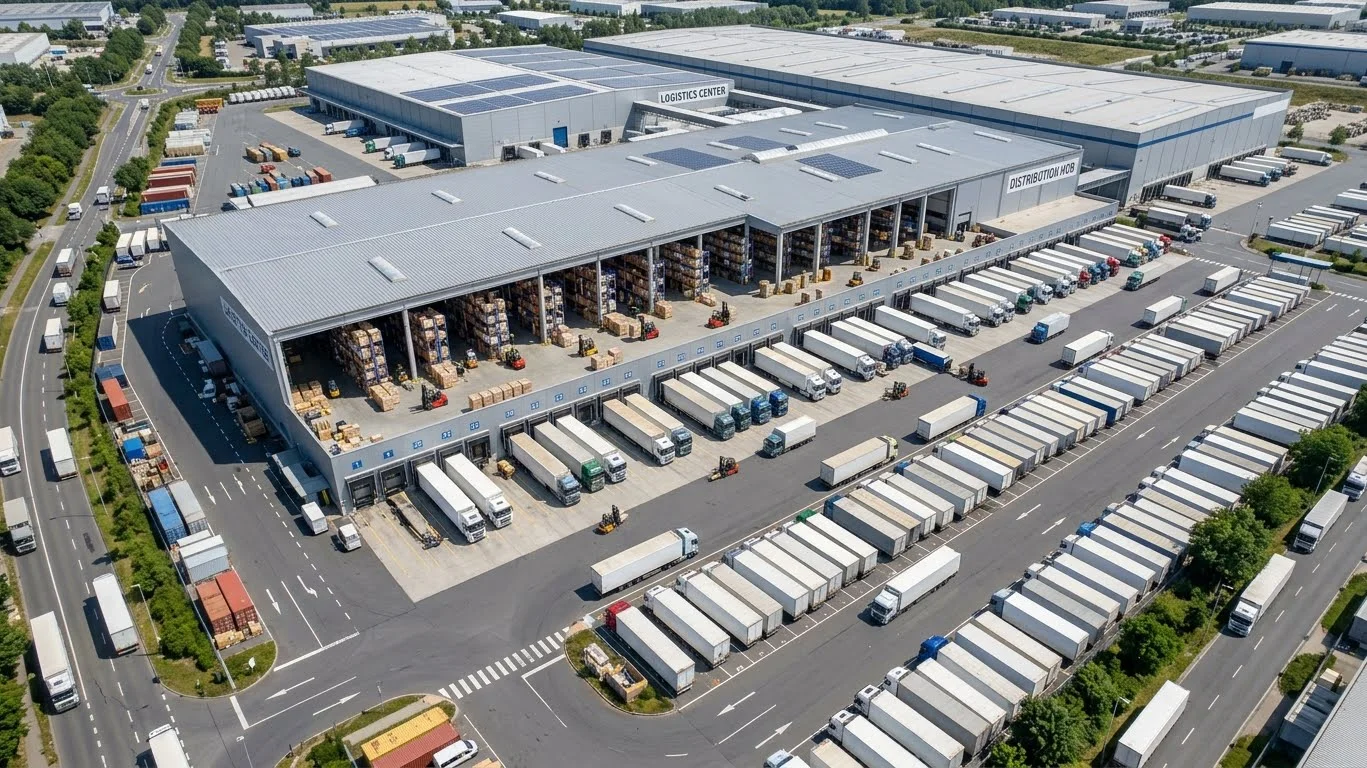 The 5 Duties That Connect Warehousing and Distribution in Daily Operations
There are five daily operations where warehousing and distribution overlap and depend on each other completely.
Inventory Management
The foundation of both functions. The warehouse tracks what is in stock and where. Distribution tracks what is moving out. When inventory data is accurate, distribution can promise the right delivery times every time.
Order Fulfillment
The warehouse picks, packs, and prepares the order, then hands it to distribution to route, track, and deliver. This handover is one of the most critical moments in your supply chain. A smooth one means faster delivery. A broken one means delays and returns.
Cross Docking
Incoming goods move directly from an inbound truck to an outbound truck with little to no storage in between. Freight that would normally sit for three to seven days moves through in hours. Businesses using cross docking report supply chain cost reductions of up to 30 percent.
Shipping and Transportation
Your warehouse layout directly affects how fast orders are packed and loaded. Poor organisation and badly placed loading docks create bottlenecks that slow down every delivery.
Reverse Logistics
Distribution brings the product out. Warehousing brings it back in. A slow or messy returns process creates stock inaccuracies, delays refunds, and damages customer trust.
How Effective Warehousing and Distribution Contributes to Supply Chain Success
When warehousing and distribution work well together, the benefits are real and measurable. Good coordination means you hold the right amount of stock at the right time, cutting waste from over-ordering and avoiding stockouts when demand rises. Warehouse location also plays a big role. Placing your facility close to customers or key transport routes lowers fuel costs, shortens delivery distances, and speeds up order arrival.
The connection also shapes how customers feel about your brand. Every on-time, accurate delivery starts with a well-run warehouse. Accurate picks, secure packing, and smooth handovers to carriers are what keep customers coming back. And when disruptions hit, businesses with tight warehousing and distribution alignment recover faster because they have the visibility to redirect stock and act before problems escalate.
The KPIs That Tell You If Your Warehousing and Distribution Are Actually in Sync
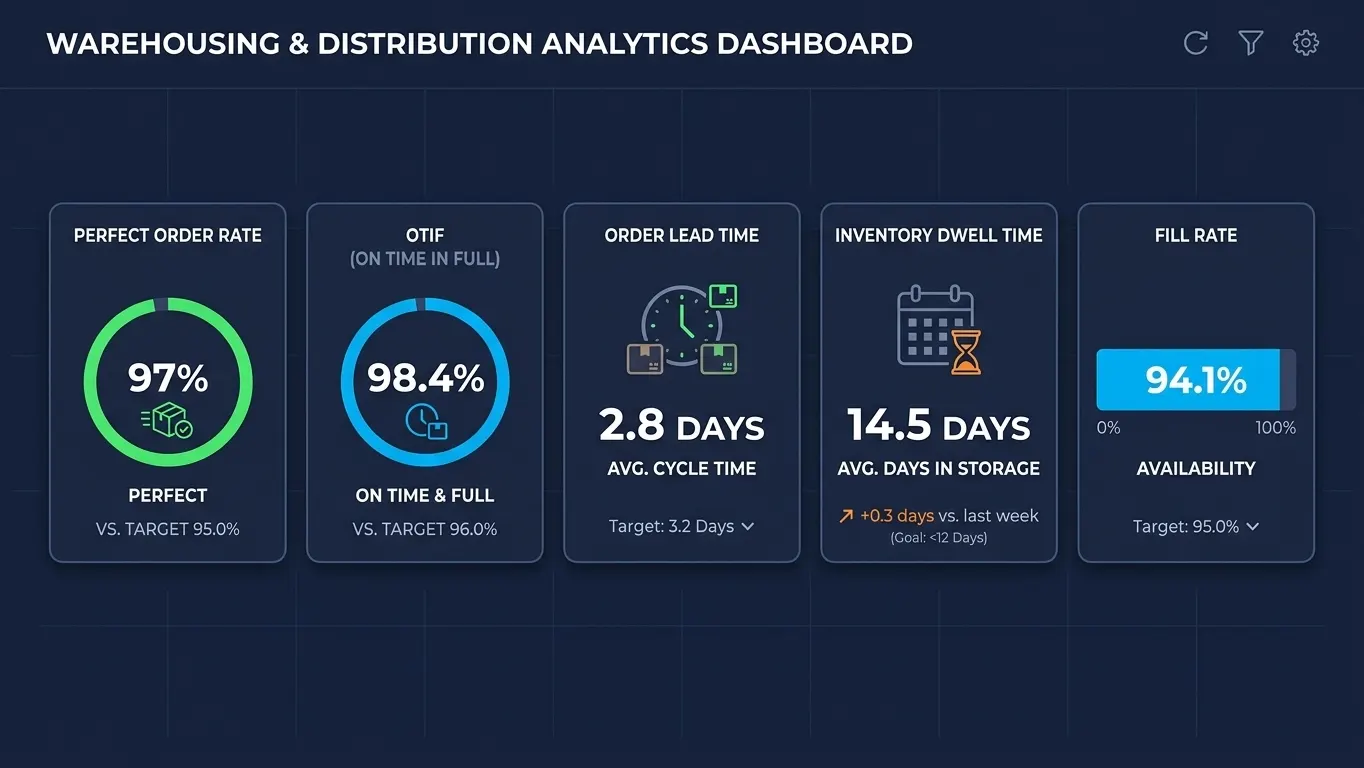 Tracking the right numbers tells you if your warehousing and distribution are working together. The five key numbers to watch are perfect order rate, OTIF, order lead time, inventory dwell time, and fill rate.
Your perfect order rate measures how many orders arrive on time, complete, undamaged, and with the right paperwork. The best operations hit 97 to 98 percent in 2025. OTIF tracks whether the full order reaches the customer by the agreed date. A low score usually means something is going wrong between the warehouse and the carrier.
Order lead time tracks the total time from order placed to order received. If delays are long, this number tells you whether the problem is inside the warehouse or out on the road. Inventory dwell time shows how long stock sits before it ships. High numbers mean you are buying more than your distribution can move.
Fill rate measures how often you can complete an order from stock on hand without a backorder. When it starts dropping, your inventory accuracy or restocking speed needs a closer look.
The Technology That Strengthens the Connection Between Warehousing and Distribution
When a Warehouse Management System and a Transportation Management System work together, everyone in your supply chain is working from the same live information. Orders flow into the warehouse instantly, carriers are notified automatically, and customers get tracking updates without anyone lifting a finger. Businesses that have made this shift have cut logistics costs by 15 percent, lowered inventory levels by 35 percent, and improved service levels by 65 percent according to a 2025 report.
AI and automation are making the connection even faster. Demand forecasting tools help warehouses stock the right products before orders arrive. Picking robots speed up order preparation and smart routing finds the cheapest and fastest delivery paths in real time. The warehouse robotics market was worth 9.3 billion dollars in 2025 and is projected to more than double by 2030. Businesses that adopt these tools now will be well ahead of those that wait.
The Main Challenges in Warehousing and Distribution and How to Solve Them
Warehousing and distribution come with real challenges. Labour is hard to find, wages are rising, and warehouse space is getting more expensive. The fix is not cutting your team but using tools like a WMS to help the people you already have get more done.
Seasonal spikes like Black Friday can also overwhelm an operation that is not ready for them. Businesses that plan ahead, use shared warehouse space when needed, and lock in carrier relationships early handle busy periods without the stress that catches less prepared competitors off guard.
Should You Outsource Warehousing and Distribution to a 3PL or Keep It In House
Deciding whether to outsource to a 3PL or keep warehousing and distribution in house depends on where your business stands. If logistics is consuming more time than growth, volumes are scaling faster than your team can handle, or costs are eating into margins, a 3PL makes sense. If your products need specialised handling or your delivery experience is core to your brand, keeping it in house gives you more control.
If you do go with a 3PL, choose carefully. Confirm they offer both warehousing and distribution under one roof, that their technology integrates with yours, and ask for their OTIF rates and perfect order scores before signing anything. A good 3PL accelerates your growth. The wrong one just moves the problem somewhere harder to fix.
Ready to Optimise Your Warehousing and Distribution Operations
If you have made it this far, you already understand the connection between warehousing and distribution better than most. Logos Logistics Distribution in Ontario, California is ready to put that knowledge to work for you. Whether you need a trusted 3PL partner nearby or a strategically located warehousing and distribution centre to reach customers, contact us today and let us build an operation that moves your business forward.
Conclusion
The connection between warehousing and distribution is not a logistics detail. It is the backbone of how your business delivers on its promises to customers every single day.
Three things to take away from this guide. First, warehousing and distribution are two parts of one system, and they only work well when they are treated that way. Second, the businesses that win on delivery are the ones that measure the right numbers, invest in the right technology, and make decisions about storage and shipping as one joined-up strategy. Third, whether you run your own warehouse or work with a 3PL, the goal is the same: get the right product to the right person at the right time, every time.
Frequently Asked Questions
Can a small business afford proper warehousing and distribution or is it only for large companies?
Public warehouses and 3PL providers offer flexible, pay-as-you-go options. Small businesses can access professional warehousing and distribution without owning a facility or hiring a large team.
How long does it take to set up a warehousing and distribution system from scratch?
Working with a 3PL takes two to six weeks. Building your own operation including space, staff, and systems typically takes three to six months minimum.
What is the difference between last-mile delivery and distribution?
Distribution moves goods from warehouses to regional hubs. Last-mile delivery is the final leg to the customer’s door and is the most expensive part of the process.
Does warehousing and distribution work differently for businesses that sell both online and in store?
Yes. Online orders are individual shipments to customers. Store orders are bulk deliveries on fixed schedules. Both run from the same inventory, requiring systems that handle each separately.
How do returns affect warehousing and distribution costs and is there a way to reduce them?
Returns cost 20 to 65 percent of the original product price to process. Better packaging, accurate orders, and clear product descriptions reduce return rates before they become a cost problem.