
One in three online orders gets returned. Most businesses have a solid plan for getting products out but no real system for when they come back. That gap costs money, damages customer relationships, and slows down your entire supply chain. This guide breaks down everything you need to know about reverse logistics and how to build a process that turns returns into recovered value.
At Logos Logistics Distribution in Ontario, CA, we see this challenge every day across dozens of industries. Most companies spend time and money building their forward supply chain. Very few give the same attention to the reverse side.
What Is Reverse Logistics?
Reverse logistics is the process of moving products from the customer back to the seller, manufacturer, or distribution center for return, repair, resale, recycling, or disposal. It is the opposite of your normal supply chain flow. This process is sometimes called reverse distribution, especially when the focus is on moving unsold or excess goods back through distribution channels rather than handling individual customer returns.
In simple words, forward logistics moves products from a warehouse to the customer. Reverse logistics moves them the other way.
What Is a Reverse Logistics System?
A reverse logistics system is the combination of processes, technology, and infrastructure a business uses to manage products moving backward through the supply chain, including returns, repairs, recalls, and end-of-life recycling. A reverse logistics system typically handles four core functions: return authorization (approving and tracking incoming returns), transportation (getting the product back to a facility), inspection and disposition (deciding what happens to each item), and reintegration (restocking, reselling, or disposing of it). Reverse logistics systems also cover recall management.
When a product is pulled from the market for safety or quality reasons, the same reverse infrastructure is used to retrieve it, whether that’s a manufacturer coordinating a recall or a company retrieving employee-issued equipment like laptops or phones.
Reverse Logistics vs. Forward Logistics: What’s the Difference?
Forward logistics is the standard supply chain process. A product moves from the manufacturer to a warehouse, then to the retailer or directly to the customer. The flow is simple and predictable. You know how many orders are going out and when.
Reverse logistics works in the opposite direction. Products move from the customer back to the business. The goal shifts from delivery to recovery. Instead of getting a product into someone’s hands, you are figuring out what to do with it once it comes back.
| Forward logistics | Reverse logistics | |
|---|---|---|
| Direction of flow | Manufacturer or warehouse to customer | Customer back to seller, manufacturer, or distribution center |
| Primary goal | Delivery | Recovery (restock, repair, resell, recycle, or dispose) |
| Predictability | High. Volume and timing are planned in advance | Low. Return volume and condition are unpredictable |
| Process complexity | Follows a set, repeatable path | Varies by item condition, requiring individual decisions |
| Key activities | Picking, packing, shipping | Inspection, sorting, grading, disposition |
| Success metric | On-time delivery, order accuracy | Recovery value, processing speed, return rate |
Why Reverse Logistics Is Important
Reverse logistics is a core function of modern supply chain management, not a side process, because how a business handles returns directly affects inventory accuracy, warehouse capacity, and customer retention.
The growth of eCommerce has pushed reverse logistics to the front. National Retail Federation data puts the current e-commerce return rate at 19.3% of online sales, and U.S. retailers expect to process $849.9 billion in returns this year. Customer expectations are rising even as return rates ease slightly: 82% of shoppers now say free returns influence where they shop, and 71% say a bad return experience would stop them from buying from that retailer again.
A complicated return experience is enough to push a customer away for good. Beyond customer expectations, reverse logistics also affects business efficiency directly. When returned products are not handled properly, warehouses fill up, inventory levels become inaccurate, and businesses lose money that could have been recovered.
How Reverse Logistics Works (Step-by-Step Process)
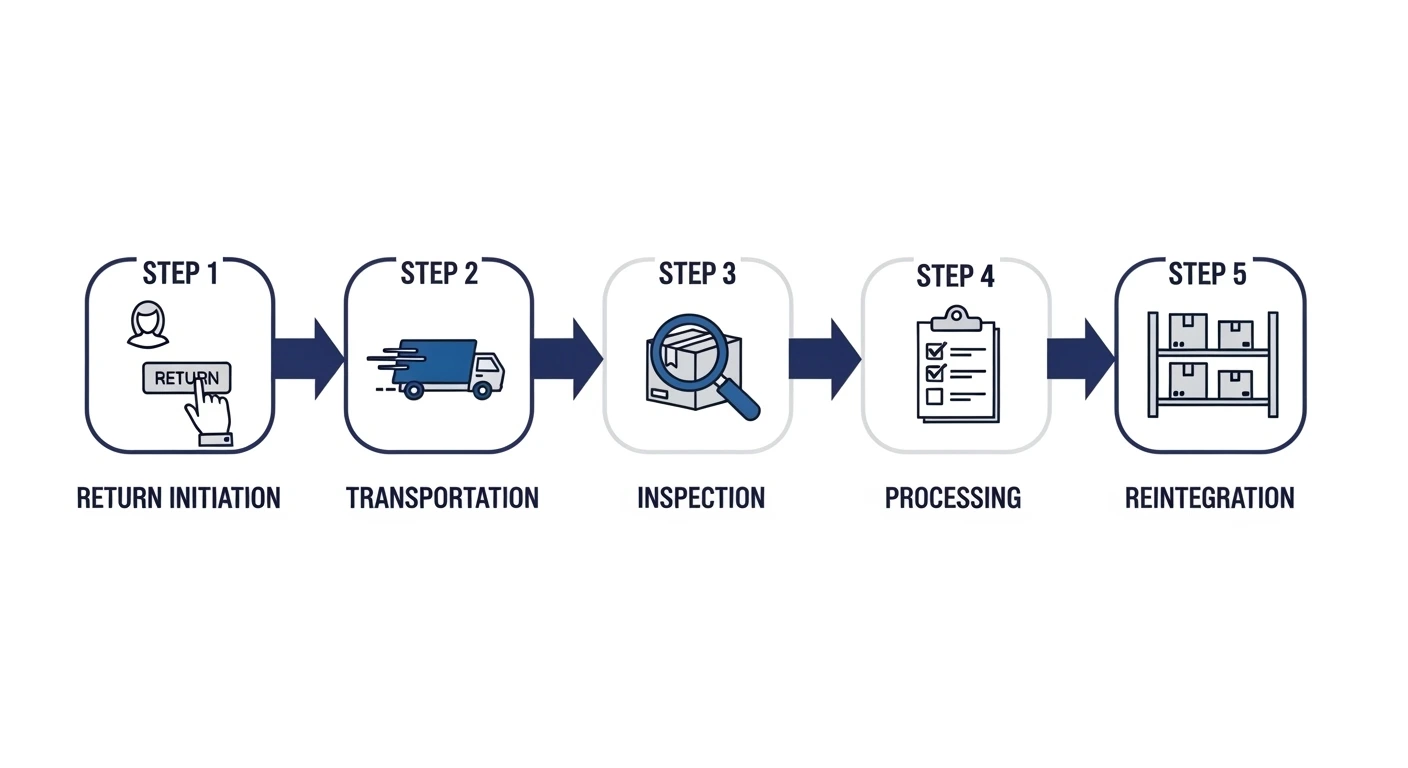
It starts when a customer initiates a return through an online portal, a customer service call, or a return form. Once approved, the product is shipped back using a prepaid label or a scheduled pickup arranged by the business.
Product Return Initiation
The process starts when a customer wants to return a product. This happens through an online return portal, a customer service call, or a return form. Capturing the reason for return at this stage is important because this data helps businesses spot patterns and reduce future returns.
Transportation and Collection
Once the return is approved, the product needs to get back to the business. The company provides a prepaid shipping label or arranges a pickup. For large-scale operations, third-party logistics providers handle this step. Consolidating returns and choosing the right carriers can reduce transportation costs significantly.
Inspection and Sorting
When the product arrives at a returns center, it goes through inspection. Staff or automated systems check the condition of the item. Based on the results, products are sorted into categories. This sorting step determines what happens next and how much value can be recovered from each item.
Processing and Disposition
This is the decision-making step. Based on the product’s condition, a decision is made on what to do with the item. Options include restocking it as new, listing it as refurbished, sending it for repair, or disposing of it. A strong disposition process maximizes recovery value and reduces losses. This recovery step, deciding whether an item is restocked, refurbished, or recycled, is the core of what’s sometimes called recovery logistics: maximizing the value recovered from every returned product.
Reintegration or Disposal
Products that can be resold go back into inventory. Items that need repair go to the repair department. Products made from recyclable materials go to recycling partners. Items with no recovery value are disposed of responsibly. When done well, this step turns returned products into recovered revenue or cost savings.
What Is a Reverse Logistics Center?
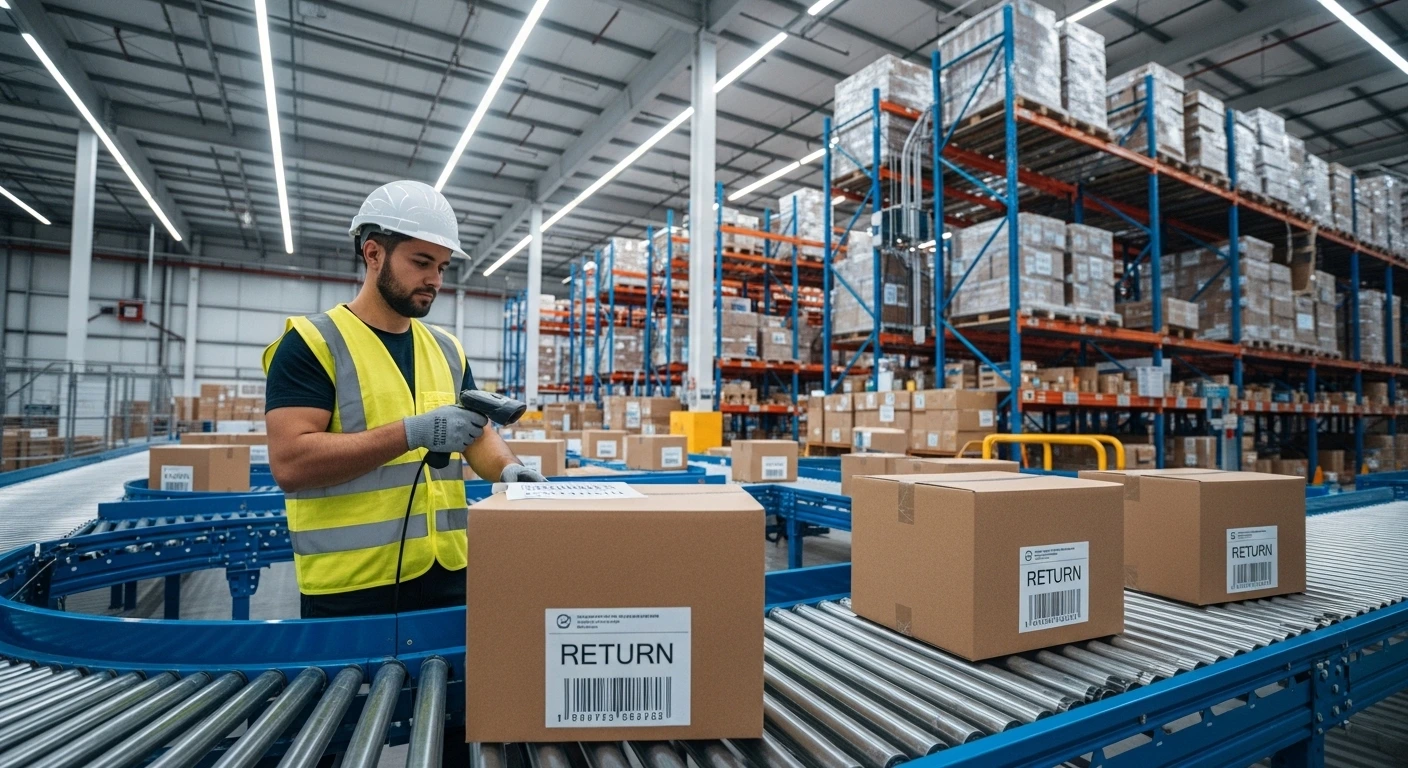
A reverse logistics center is a dedicated facility built to receive, inspect, and process returned products, separate from a standard fulfillment warehouse, which is built to ship product out. Inside a reverse logistics center, returns are unloaded, scanned against the original order, and routed through inspection stations where staff or automated systems grade each item’s condition.
From there, products move to different zones depending on their disposition: a restock zone for resellable items, a repair or refurbishment zone, a recycling staging area, and a disposal zone for items with no recoverable value. Because return volume is unpredictable and every item requires an individual decision, reverse logistics centers are typically laid out and staffed differently than forward-fulfillment warehouses, with more emphasis on inspection throughput and less on high-speed picking and packing.
A 2024 UN Institute for Training and Research (UNITAR) study found that global electronic waste reached over 62 million tonnes in 2022, up 82% from 2010, a volume growing five times faster than documented e-waste recycling.
Types of Reverse Logistics
There are several types of reverse logistics, and each one depends on the industry and the kind of product involved.
Returns Management
This is the most common type. A customer returns a product because it is damaged, defective, or not what they expected. For eCommerce businesses especially, returns management is the backbone of the entire reverse logistics operation.
Remanufacturing and Refurbishment
Some returned products cannot be resold as new but still have value. Remanufacturing restores a product to like-new condition. Refurbishment is a lighter process that cleans, tests, and repairs a product before resale. Cisco is a clear example. Its Takeback and Reuse Program has run since 2001 across more than 80 countries, and the company reports that over 99% of returned equipment is sent to reuse or recycling rather than disposal. That equipment is resold through Cisco Refresh at 25-70% below new pricing, under the same warranty Cisco offers on new products, turning what would otherwise be a cost center into a revenue line.
Recycling and Waste Management
Products at the end of their useful life need to be handled responsibly. Recycling programs allow businesses to recover raw materials and reduce waste. Levi Strauss collects old jeans and turns them into new raw materials. H&M accepts used clothing in stores and either reuses or recycles the garments based on condition.
Unsold Goods Handling
Retailers often send unsold seasonal inventory back to manufacturers or distributors. Managing this stock efficiently prevents write-offs and helps recover some of the original cost.
Delivery Failure Returns
Sometimes a package cannot be delivered because the address is wrong or the customer is unavailable. These items need to be processed quickly to free up space and recover value before the product deteriorates.
Repair and Maintenance
Products under warranty that develop faults are sent back for repair. This is common in electronics, automotive parts, and industrial equipment. A good repair process reduces replacement costs and builds customer trust over time.
Packaging Management
Reusable packaging, pallets, and shipping containers are often recovered and reused. Collecting and reusing packaging materials reduces costs and supports sustainability goals across the supply chain.
The 3Rs of Reverse Logistics
The 3Rs of reverse logistics are Reduce, Reuse, and Recycle. Together they form a simple framework that helps businesses handle returns more efficiently and sustainably.
- Reduce means stopping returns before they happen. Businesses do this by improving product quality, writing clear descriptions, and giving accurate size guides. When fewer products come back, companies save money on returns.
- Reuse means using returned products again instead of wasting them. This can include fixing, repackaging, or reselling items. It is usually more profitable than throwing products away.
- Recycle means breaking down products that cannot be reused and turning them into raw materials. This helps reduce waste, lower costs, and support environmental goals.
Benefits of Reverse Logistics
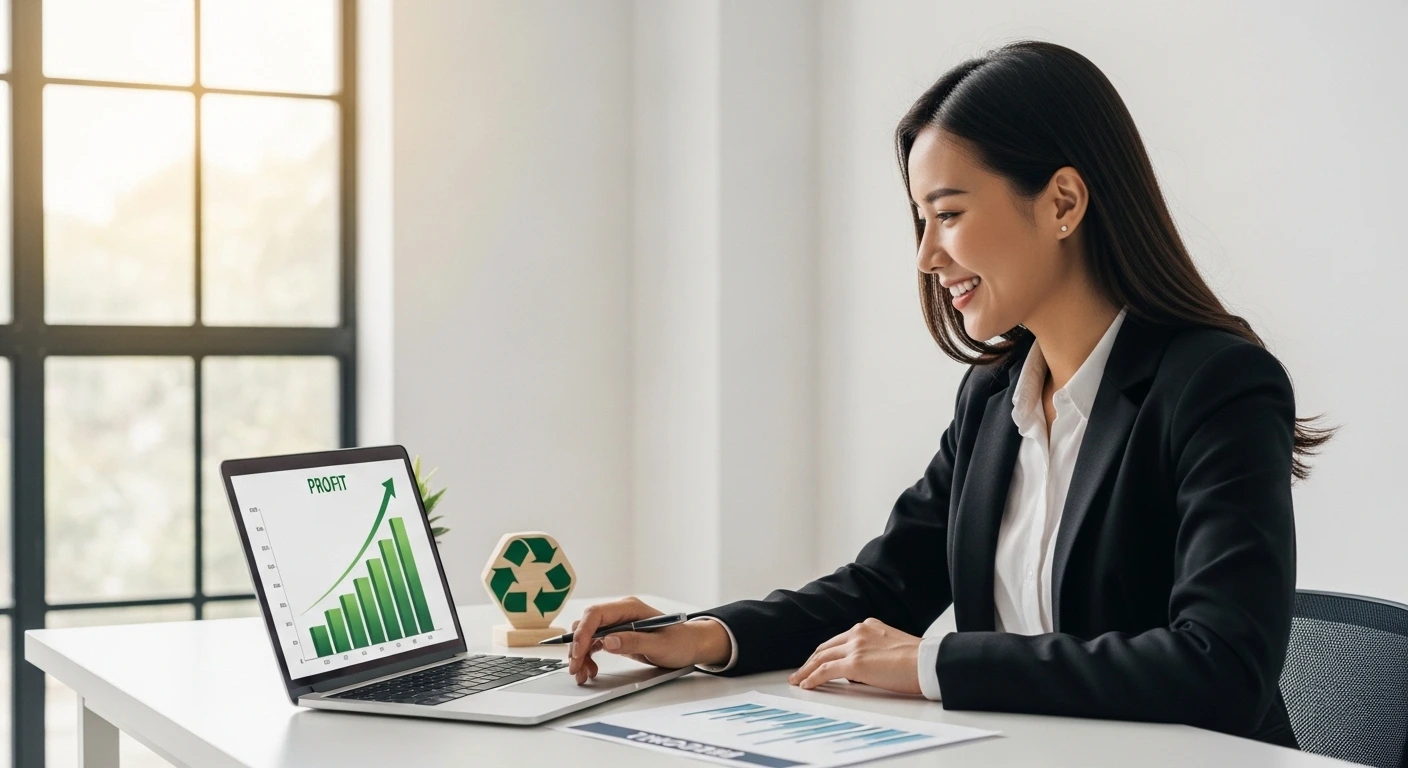
A well-run reverse logistics operation delivers real, measurable benefits to your business. Here is a detailed look at each one.
Cost Reduction
Every returned product that gets resold, refurbished, or recycled is money back in the business. Without a good reverse logistics process, these products sit in a warehouse or get written off entirely. Efficient returns management turns potential losses into recovered revenue.
Better Customer Satisfaction
Customers remember how you handled their return. A fast, hassle-free return process builds trust and drives repeat purchases. A slow or confusing return process often ends the customer relationship permanently.
Improved Brand Reputation
Companies that handle returns professionally build stronger reputations. Customers share their experiences online, and a business known for easy returns and responsible recycling stands out in a crowded market.
Sustainability and Environmental Impact
Reverse logistics is one of the most practical tools businesses have for reducing their environmental impact. Refurbishing products keeps them out of landfills. Recycling materials reduces the need for new raw materials. As consumers and regulators push for greener business practices, companies with strong reverse logistics programs are better positioned for the future.
Inventory Optimization
When returned products are processed quickly, they get back into inventory faster. This keeps stock levels accurate, prevents overproduction, and strengthens the supply chain overall.
Common Challenges in Reverse Logistics
High return costs are a major issue. For low-value products, processing a return can cost more than the item itself. Complex processes add to the problem since every returned item is different and reliable technology to manage properly.
Lack of visibility makes things harder. Without real-time tracking, businesses lose control over returned items. On top of that, customers now expect free returns and fast refunds, while global logistics brings added complexity through customs, longer transit times, and cross-border paperwork.
Return fraud adds another layer of cost. NRF and Happy Returns found that 9% of all returns in 2025 were classified as fraudulent, and while 85% of retailers now use AI tools to catch it, only 45% say those tools are effective so far.
Reverse Logistics Examples (Real-World Use Cases)
Companies use reverse logistics in simple but effective ways. Amazon handles returns by restocking, reselling, donating, or recycling items. Apple and Samsung run trade-in programs where old devices are refurbished or reused for parts. The automotive industry recycles and remanufactures used parts like engines and batteries. In retail, unsold clothing is returned, sold in outlets, or recycled to reduce waste.
Reverse Logistics in eCommerce
Companies use reverse logistics in simple but effective ways. Amazon processes returns by restocking, reselling, donating, or recycling items. Apple and Samsung offer trade-in programs where old devices are refurbished or used for parts. The automotive industry remanufactures and recycles components like engines and batteries. In retail, unsold clothing is returned, sold through outlets, or recycled to reduce waste.
Tools and Technology in Reverse Logistics

Warehouse management systems (WMS) help track returned items in real time and manage what happens next. Inventory software keeps stock levels updated when items are restocked.
Automation and AI speed up sorting and processing. They can predict return volumes, detect common issues, and suggest the best action for each item. Data analytics tools also help businesses understand why returns happen and reduce them over time. Real-time tracking lets both the business and the customer see exactly where a returned item is in the process, a factor that directly affects customer satisfaction, since unclear return status is one of the top complaints in post-purchase surveys.
Key Metrics to Track in Reverse Logistics
Return rate shows what percentage of sold products are coming back. A rising number points to product or description problems.Processing time measures how fast returns are handled. Faster means better cash flow and accurate inventory. Customer satisfaction scores show how the return experience affects repeat purchases.
Strategies to Improve Reverse Logistics
Automate the return process wherever possible. Online portals and automated labels reduce manual work and speed up the experience for customers. Use return reason data to find which products come back most and fix the root cause.
Use data to predict return volumes so you can plan ahead instead of reacting under pressure. For large volumes, partnering with a third-party logistics provider is often more efficient than handling returns in-house.
The Future of Reverse Logistics
AI and automation are already transforming returns processing, with fully automated returns centers becoming standard for large operations. Sustainable supply chains are also becoming a business requirement as governments tighten rules on disposal and recycling.
The circular economy is gaining momentum across industries. Products are being designed to be repaired, refurbished, and recycled rather than thrown away. As global eCommerce grows, businesses that treat reverse logistics as a strategic function rather than a cost center will gain a real competitive advantage.
Reverse Logistics Services: What to Look For in a Provider
Many businesses don’t build reverse logistics in-house. Instead, they partner with a third-party logistics (3PL) provider that specializes in returns processing, inspection, refurbishment, and recycling. A strong reverse logistics service typically includes: real-time visibility into returned inventory, flexible disposition options (restock, refurbish, liquidate, recycle, or dispose), fast turnaround from receipt to resale-ready, and reporting on return reasons so you can fix root causes upstream. For growing eCommerce and retail brands, outsourcing reverse logistics often costs less than building dedicated warehouse space and staff for a return volume that fluctuates by season and product line.
Ready to streamline your reverse logistics operation?
If returns are eating into your profits or slowing down your operations, it is time to fix the process, not just manage the problem. A well-designed reverse logistics system can cut costs, recover lost value, and improve customer satisfaction at the same time.
Contact Logos Logistics Distribution in Ontario, CA today and let us help you build a returns process that cuts costs, satisfies customers, and supports your sustainability goals. Reach out now and take the first step toward a smarter supply chain.
Conclusion
Reverse logistics is no longer a back-office problem. It is a core part of modern supply chain management that affects your costs, customer relationships, and brand reputation.
Businesses that get it right turn returns into a source of value. They recover revenue, build customer loyalty, and meet the growing demand for sustainable operations. If your process is still reactive and manual, now is the time to change that.
Frequently Asked Questions
What is a reverse logistics center?
A reverse logistics center is a facility dedicated to receiving, inspecting, and processing returned products, separate from a standard fulfillment warehouse that’s built to ship goods out rather than take them back in.
What’s the difference between reverse logistics and reverse distribution?
The terms are often used interchangeably. Reverse logistics is the broader term covering all backward product flow, including returns, repairs, and recycling. Reverse distribution more specifically refers to moving unsold or excess inventory back through distribution channels.
Can reverse logistics be outsourced?
Yes. Many businesses partner with a third-party logistics (3PL) provider to handle return authorization, inspection, refurbishment, and recycling, rather than building that infrastructure in-house.
Who handles reverse logistics during a product recall?
Recall logistics typically runs through the same reverse logistics infrastructure used for standard returns. The manufacturer or a 3PL coordinates retrieval, inspection, and disposition of the recalled product, often under stricter documentation and compliance requirements.
What technology is used to track returns in reverse logistics?
Warehouse management systems (WMS) and dedicated returns-management software give real-time visibility into where a returned item is in the process, from pickup through final disposition.
How does reverse logistics affect customer satisfaction?
Slow or unclear return handling is one of the most common post-purchase complaints. Real-time tracking and fast processing directly improve customer satisfaction and repeat-purchase rates.
How is reverse logistics used in retail?
Retailers use reverse logistics to process customer returns, send unsold seasonal inventory back to manufacturers or distributors, and route damaged or end-of-life products to liquidation, recycling, or disposal.
What does a reverse logistics system actually manage?
A reverse logistics system manages four core functions: return authorization, transportation back to a facility, inspection and disposition, and reintegration (restocking, reselling, repairing, or recycling the product).